
Browse by Genre
Industrial Music / Industrial Metal / Aggro Industrial / Electro Metal
Industrial Noise / Power Noise / Harsh Noise
Synth Pop / Electro Pop / Synth-Electronica
Techno / Trance / Goa / Drum'n'Bass / Jungle / Tribal / Trip-Hop
Ambient / Electronica / Ethereal / Dub / Soundscapes / Abstract
Experimental / Avantgarde / Weird & Wired / Glitch / Noise / Field Recording
Dark / Gothic / Wave / New Wave / Dark Wave / Industrial Gothic
New Music / Downtown / Avantgarde Jazz / New Classical / World
Search Reviews
Music Reviews
Matthias Puech: La Traversée
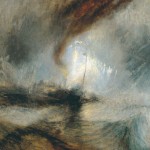
Matthias Puech has always struck me as the kind of composer who doesn’t use electronics so much as interrogate them - politely, but with persistence. With "La Traversée", his second outing for Hallow Ground, that interrogation turns into a journey in the old-fashioned sense: not a sightseeing tour, but a crossing where you’re changed simply by staying afloat.
Loosely inspired by "The Odyssey", this is not one of those records that announces its classical reference with a laurel wreath and a footnote. Homer is here less as a narrative blueprint than as a gravitational field. Longing, fear, repetition, the seduction of detours, the exhaustion of returning - these ideas seep into the music the way salt creeps into wood. You don’t hear Cyclopes or sirens; you feel the instability that makes such figures necessary.
Puech’s Eurorack modular system is the sole vessel for this voyage, but the results are strikingly human. These four pieces are among his most emotionally direct works to date, and that’s saying something for an artist often associated with density, abstraction, and a certain ascetic rigor. Here, complexity doesn’t posture. It breathes. Gestures emerge, hesitate, loop back on themselves. Systems are set in motion, then gently sabotaged from within.
The shorter pieces - "Ennosigaios", "Polyphármakos", "Nekuia" - feel like episodes rather than tracks: self-contained yet incomplete, as if they’re aware they belong to a larger arc. There’s a sense of narrative recursion at play, motifs resurfacing not as repetition but as memory. Puech has spoken about forgetting the technical processes behind these compositions when revisiting them later, and that amnesia turns out to be a gift. What remains is intention stripped of mechanism, affect divorced from instruction manual.
Then there’s "Ithákê", an 18-minute slow burn that earns every second of its duration. It unfolds with the patience of someone who knows the destination matters less than the act of moving toward it. Tensions accumulate, dissolve, reappear slightly altered - like recognizing a coastline from a distance and realizing it’s not the one you left. It’s immersive without being engulfing, demanding attention without punishing distraction. A rare balance.
What’s quietly remarkable about "La Traversée" is how intuitive it feels despite its technical underpinnings. This isn’t modular synthesis flexing its muscles; it’s modular synthesis learning to walk barefoot. Puech’s background as an instrument designer and scholar is evident, but never didactic. He knows exactly what the machine can do - and more importantly, when to let it drift.
There’s a faint irony in framing such a record around "The Odyssey" while releasing it on vinyl in 2025, a format that requires you to physically get up, flip sides, re-engage. But perhaps that’s the point. "La Traversée" resists frictionless consumption. It asks for presence. It invites you to cross something - not necessarily an ocean, but maybe a stretch of inner weather you’ve been avoiding.
In a musical landscape obsessed with arrival, Puech dares to linger in transit. And in doing so, he reminds us that the crossing itself is the story.
Loosely inspired by "The Odyssey", this is not one of those records that announces its classical reference with a laurel wreath and a footnote. Homer is here less as a narrative blueprint than as a gravitational field. Longing, fear, repetition, the seduction of detours, the exhaustion of returning - these ideas seep into the music the way salt creeps into wood. You don’t hear Cyclopes or sirens; you feel the instability that makes such figures necessary.
Puech’s Eurorack modular system is the sole vessel for this voyage, but the results are strikingly human. These four pieces are among his most emotionally direct works to date, and that’s saying something for an artist often associated with density, abstraction, and a certain ascetic rigor. Here, complexity doesn’t posture. It breathes. Gestures emerge, hesitate, loop back on themselves. Systems are set in motion, then gently sabotaged from within.
The shorter pieces - "Ennosigaios", "Polyphármakos", "Nekuia" - feel like episodes rather than tracks: self-contained yet incomplete, as if they’re aware they belong to a larger arc. There’s a sense of narrative recursion at play, motifs resurfacing not as repetition but as memory. Puech has spoken about forgetting the technical processes behind these compositions when revisiting them later, and that amnesia turns out to be a gift. What remains is intention stripped of mechanism, affect divorced from instruction manual.
Then there’s "Ithákê", an 18-minute slow burn that earns every second of its duration. It unfolds with the patience of someone who knows the destination matters less than the act of moving toward it. Tensions accumulate, dissolve, reappear slightly altered - like recognizing a coastline from a distance and realizing it’s not the one you left. It’s immersive without being engulfing, demanding attention without punishing distraction. A rare balance.
What’s quietly remarkable about "La Traversée" is how intuitive it feels despite its technical underpinnings. This isn’t modular synthesis flexing its muscles; it’s modular synthesis learning to walk barefoot. Puech’s background as an instrument designer and scholar is evident, but never didactic. He knows exactly what the machine can do - and more importantly, when to let it drift.
There’s a faint irony in framing such a record around "The Odyssey" while releasing it on vinyl in 2025, a format that requires you to physically get up, flip sides, re-engage. But perhaps that’s the point. "La Traversée" resists frictionless consumption. It asks for presence. It invites you to cross something - not necessarily an ocean, but maybe a stretch of inner weather you’ve been avoiding.
In a musical landscape obsessed with arrival, Puech dares to linger in transit. And in doing so, he reminds us that the crossing itself is the story.
The Stargazer's Assistant: Modular Fields

Artist: The Stargazer's Assistant
Title: Modular Fields
Format: CD + Download
Label: Zoharum (http://zoharum.com/) (@)
Rated:

Title: Modular Fields
Format: CD + Download
Label: Zoharum (http://zoharum.com/) (@)
Rated:
There’s a particular kind of patience that "Modular Fields" quietly demands. Not the clenched-jaw, stopwatch kind, but the looser, lunar patience of staring at the sky until your sense of scale gives up and wanders off for a cigarette. This diptych by The Stargazer’s Assistant doesn’t rush, doesn’t flatter, and certainly doesn’t explain itself. It unfolds instead like a nocturnal terrain you cross slowly, guided less by landmarks than by subtle shifts in gravity.
Comprised of four long-form pieces, "Modular Fields" situates itself firmly within the lineage of British experimental ambient that values atmosphere over assertion and duration over drama. Think less “statement record” and more “environment you accidentally move into and then decide to stay”. The music breathes through modular synthesis, but avoids the usual techno-fetish of patch cables and voltage gymnastics. These are not demonstrations; they’re conditions.
The ensemble behind the project reads like a quiet roll call of underground pedigree: David J. Smith (Guapo, The Holy Family), David J. Knight (UnicaZurn), Michael J. York (formerly of Coil), and Antti J. Uusimaki (Uzu Noir). That lineage matters - not as a badge, but as a shared sensibility. You can hear it in the way the sound resists resolution, in how tension is allowed to remain unresolved, hovering like mist rather than snapping into form.
Each “Field” functions less as a composition than as a zone. Tones drift, cluster, recede. Harmonics appear and dissolve without ceremony. There’s a faintly esoteric undertone throughout, but it’s closer to quiet ritual than grand occult theatre - no capes, no candles, just a low hum suggesting that something older than melody is at work. The Coil connection, often invoked lazily in this territory, feels earned here not through mimicry but through a shared respect for ambiguity and psychic space.
What "Modular Fields" does particularly well is sidestep the ambient trap of becoming wallpaper. This is music that seems static at first glance, yet subtly reconfigures itself the longer you listen. Small movements accrue meaning over time; repetition becomes variation by stealth. It rewards attention, but never scolds you for drifting - an increasingly rare courtesy.
There’s a gentle irony in how grounded this cosmic music feels. Despite its astral leanings and lunar associations, "Modular Fields" is deeply physical: vibrations felt more than heard, pressure changes in the room, sound as weather. It’s less about escape than recalibration, a reminder that stillness can be active and darkness can be generous.
In the end, "Modular Fields" isn’t trying to guide you anywhere specific. It offers no map, only a compass that spins slowly, thoughtfully, refusing to settle. Whether you hear it as a ritual, a landscape, or a long conversation with the night depends entirely on how long you’re willing to stay. Patience, after all, is the real instrument being played here.
Comprised of four long-form pieces, "Modular Fields" situates itself firmly within the lineage of British experimental ambient that values atmosphere over assertion and duration over drama. Think less “statement record” and more “environment you accidentally move into and then decide to stay”. The music breathes through modular synthesis, but avoids the usual techno-fetish of patch cables and voltage gymnastics. These are not demonstrations; they’re conditions.
The ensemble behind the project reads like a quiet roll call of underground pedigree: David J. Smith (Guapo, The Holy Family), David J. Knight (UnicaZurn), Michael J. York (formerly of Coil), and Antti J. Uusimaki (Uzu Noir). That lineage matters - not as a badge, but as a shared sensibility. You can hear it in the way the sound resists resolution, in how tension is allowed to remain unresolved, hovering like mist rather than snapping into form.
Each “Field” functions less as a composition than as a zone. Tones drift, cluster, recede. Harmonics appear and dissolve without ceremony. There’s a faintly esoteric undertone throughout, but it’s closer to quiet ritual than grand occult theatre - no capes, no candles, just a low hum suggesting that something older than melody is at work. The Coil connection, often invoked lazily in this territory, feels earned here not through mimicry but through a shared respect for ambiguity and psychic space.
What "Modular Fields" does particularly well is sidestep the ambient trap of becoming wallpaper. This is music that seems static at first glance, yet subtly reconfigures itself the longer you listen. Small movements accrue meaning over time; repetition becomes variation by stealth. It rewards attention, but never scolds you for drifting - an increasingly rare courtesy.
There’s a gentle irony in how grounded this cosmic music feels. Despite its astral leanings and lunar associations, "Modular Fields" is deeply physical: vibrations felt more than heard, pressure changes in the room, sound as weather. It’s less about escape than recalibration, a reminder that stillness can be active and darkness can be generous.
In the end, "Modular Fields" isn’t trying to guide you anywhere specific. It offers no map, only a compass that spins slowly, thoughtfully, refusing to settle. Whether you hear it as a ritual, a landscape, or a long conversation with the night depends entirely on how long you’re willing to stay. Patience, after all, is the real instrument being played here.
VV.AA.: Happy Holidays: 2025 Zaftig Research Holiday Sampler
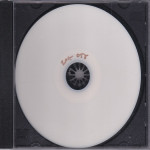
I always considered Chain D.L.K. the site that champions independent artists making music in obscure, leftfield, gray area genres that get little to no publicity or coverage elsewhere. These folks almost always make little to no money and release their work primarily because they love what they do, hope others do too and dollars be damned. (It wouldn't hurt to send some $$ their way and buy their product if you really like what's being offered.) That being said, once again it's time for the annual Zaftig Research Holiday Sampler. So what is Zaftig Research you may ask? Here is a partial explanation from label head, Brett Lunceford.
"From 1996 on, Zaftig Research has mainly functioned as a record label for our small group of artists, releasing limited edition works on CDR. We specialize in noise, dark ambient, power electronics, and other genres that are difficult to classify. We are mostly known for Stolen Light, Goose, and the annual Christmas compilations. We have also released a series of split releases with some of the more interesting names in experimental music."
Here is the lineup on the 2025 compilation:
1. Deforma - Light Speed Sleigh Ride
2. Fail - Merry Xmas, Enjoy Your Orange-Tinted Existential Chaos!
3. Goose - New Year's Eve
4. Narishkeyt - Tied Up Listening in a Corner While Everyone Has Fun
5. Nerthus + Praying For Oblivion - Asphalt Kathedrale
6. Orange - Christmas at Ground Zero
7. R4 - Urbi et Orbi (Pope'€™s Last Christmas Message)
8. Stolen Light - Santa Travelling at an Average Speed of 4,444,444.4m/s
9. Orange - Father Christmas
10.SUCCULENT SUCCUBUS - Hail Santa
11.This Is What I Hear When You Talk - The Listening of This Track Will Incur an 840% Tariff
12.Wilt - A Mournful Winter Solstice
Let's dive in to what we've got here. Deforma's "Light Speed Sleigh Ride" has all the rumbling power of freight train in an earthquake, relentless in its 4 minutes. Fail's "Merry Xmas, Enjoy Your Orange-Tinted Existential Chaos!" presents mangled, distorted electronic tones in various frequencies in a random display of power electronics. Lots of noise variety on this one, with an abrupt stop at the end. Goose's - "New Year's Eve" sounds like bombs or artillery fire in the distance, with a possible warning signal in the background. "Tied Up Listening in a Corner While Everyone Has Fun" by Narishkeyt sounds like the holiday party you never wanted to go to, or maybe a home invasion with a jumble of odd sonics and cut-up voices. The collaborative track by Nerthus + Praying For Oblivion, "Asphalt Kathedrale," is industrial noise and electronics designed to drive you out of your skull. There is definitely a loopish quality about this track, and the irregular beats did not go unnoticed. "Christmas at Ground Zero" by Orange gives an end of the world poetic recitation over a background of a nuclear holocaust. R4's " Urbi et Orbi (Pope'€™s Last Christmas Message)" deliver's Pop Leo XIV's 2025 Christmas message (in Italian) over a background of noise and power electronics. "Santa Travelling at an Average Speed of 4,444,444.4m/s" by Stolen Light is a relentless howling noise-fest from start to finish. Oh those poor reindeer! Orange is back again with "Father Christmas," the most traditionally music track so far. It sounds like "Silent Night" played on guitar, but with lots of effects and diversions, surrounded by plenty of noise. The original Christmas carol is barely recognizable, and by the end you will probably not remember what you've been listening to. SUCCULENT SUCCUBUS gives you "Hail Santa," which is primarily a repetitive industrial noise loop. Rearranging the letters of "Santa" will give you a more appropriate name for this track's hail. This Is What I Hear When You Talk's "The Listening of This Track Will Incur an 840% Tariff" was obviously inspired by Uncle Scam. It's more dark ambient than noise, but still with a strong noise undercurrent. It could have been similarly titled to Wilt's "A Mournful Winter Solstice" which was not on the CD Brett sent me for some odd reason, only 11 tracks out of 12.
Over all, I'm liking this 2025 Holiday Sampler better than some of Zaftig Research's previous years and I encourage you to go buy it if you're a noise enthusiast because that's the only way you'll get it. I think that it's only six bucks, a small price to pay in this age of gluttonous oligarchical consumerism.
"From 1996 on, Zaftig Research has mainly functioned as a record label for our small group of artists, releasing limited edition works on CDR. We specialize in noise, dark ambient, power electronics, and other genres that are difficult to classify. We are mostly known for Stolen Light, Goose, and the annual Christmas compilations. We have also released a series of split releases with some of the more interesting names in experimental music."
Here is the lineup on the 2025 compilation:
1. Deforma - Light Speed Sleigh Ride
2. Fail - Merry Xmas, Enjoy Your Orange-Tinted Existential Chaos!
3. Goose - New Year's Eve
4. Narishkeyt - Tied Up Listening in a Corner While Everyone Has Fun
5. Nerthus + Praying For Oblivion - Asphalt Kathedrale
6. Orange - Christmas at Ground Zero
7. R4 - Urbi et Orbi (Pope'€™s Last Christmas Message)
8. Stolen Light - Santa Travelling at an Average Speed of 4,444,444.4m/s
9. Orange - Father Christmas
10.SUCCULENT SUCCUBUS - Hail Santa
11.This Is What I Hear When You Talk - The Listening of This Track Will Incur an 840% Tariff
12.Wilt - A Mournful Winter Solstice
Let's dive in to what we've got here. Deforma's "Light Speed Sleigh Ride" has all the rumbling power of freight train in an earthquake, relentless in its 4 minutes. Fail's "Merry Xmas, Enjoy Your Orange-Tinted Existential Chaos!" presents mangled, distorted electronic tones in various frequencies in a random display of power electronics. Lots of noise variety on this one, with an abrupt stop at the end. Goose's - "New Year's Eve" sounds like bombs or artillery fire in the distance, with a possible warning signal in the background. "Tied Up Listening in a Corner While Everyone Has Fun" by Narishkeyt sounds like the holiday party you never wanted to go to, or maybe a home invasion with a jumble of odd sonics and cut-up voices. The collaborative track by Nerthus + Praying For Oblivion, "Asphalt Kathedrale," is industrial noise and electronics designed to drive you out of your skull. There is definitely a loopish quality about this track, and the irregular beats did not go unnoticed. "Christmas at Ground Zero" by Orange gives an end of the world poetic recitation over a background of a nuclear holocaust. R4's " Urbi et Orbi (Pope'€™s Last Christmas Message)" deliver's Pop Leo XIV's 2025 Christmas message (in Italian) over a background of noise and power electronics. "Santa Travelling at an Average Speed of 4,444,444.4m/s" by Stolen Light is a relentless howling noise-fest from start to finish. Oh those poor reindeer! Orange is back again with "Father Christmas," the most traditionally music track so far. It sounds like "Silent Night" played on guitar, but with lots of effects and diversions, surrounded by plenty of noise. The original Christmas carol is barely recognizable, and by the end you will probably not remember what you've been listening to. SUCCULENT SUCCUBUS gives you "Hail Santa," which is primarily a repetitive industrial noise loop. Rearranging the letters of "Santa" will give you a more appropriate name for this track's hail. This Is What I Hear When You Talk's "The Listening of This Track Will Incur an 840% Tariff" was obviously inspired by Uncle Scam. It's more dark ambient than noise, but still with a strong noise undercurrent. It could have been similarly titled to Wilt's "A Mournful Winter Solstice" which was not on the CD Brett sent me for some odd reason, only 11 tracks out of 12.
Over all, I'm liking this 2025 Holiday Sampler better than some of Zaftig Research's previous years and I encourage you to go buy it if you're a noise enthusiast because that's the only way you'll get it. I think that it's only six bucks, a small price to pay in this age of gluttonous oligarchical consumerism.
Kristoffer Oustad: Magnor
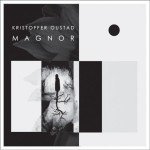
Artist: Kristoffer Oustad
Title: Magnor
Format: CD + Download
Label: Zoharum (http://zoharum.com/) (@)
Rated:

Title: Magnor
Format: CD + Download
Label: Zoharum (http://zoharum.com/) (@)
Rated:
Some albums feel like they were made to be understood. "Magnor" feels like it was made to be entered, preferably alone, preferably without checking your phone every thirty seconds. Kristoffer Oustad’s return after a decade is not a comeback record in the usual sense - no résumé padding, no trend-chasing, no polite nods to what ambient or industrial are supposed to sound like in 2025. This is slow-burn music, stubbornly uninterested in your impatience.
Rooted in classic dark ambient and industrial lineages, "Magnor" doesn’t cosplay its influences. You can hear the DNA - weighty drones, ritualistic pacing, tectonic low-end pressure - but the record feels less like a genre exercise and more like a private cartography. Oustad treats sound as a physical substance: something that gathers, compresses, and shifts its mass over time. Nothing here is rushed, and nothing is decorative.
The decision to perform rather than program the material is crucial. These analog and modular synthesizer passages breathe in uneven cycles; they swell, falter, recalibrate. There’s a human tension beneath the machinery, a sense of hands on knobs rather than presets on autopilot. Minimal post-production doesn’t mean austerity - it means commitment. What you hear is what was wrestled into shape, not polished into compliance.
From the opening "White Sacred Arrow", the album establishes its grammar: long arcs, controlled density, and a near-liturgical sense of direction. This is cinematic music, but not in the “soundtrack to a movie you haven’t seen” sense. It’s more architectural - spaces unfolding, corridors extending, light sources appearing at inconvenient distances. "The Beacon" lives up to its name, offering a rare moment of orientation without slipping into comfort. You’re guided, but not reassured.
Tracks like "A Consequence Of Entropy" and "Bring Back The Wolves" play with tension in different ways. The former slowly corrodes itself from within, while the latter introduces a faint narrative pulse - still restrained, still severe, but edged with something almost mythic. If there’s humor here, it’s the dry irony of titling a track "Bring Back The Wolves" and then refusing to give you anything resembling catharsis. Wolves don’t howl on cue.
"The Gravity Of Color" and "Magnetic Blood" lean into texture and weight, where timbre becomes emotional content. These pieces don’t explain themselves; they accumulate meaning through duration. The closer "Detachment", featuring Jonathan Grieve of Contrastate, introduces vocals not as a focal point but as another layer of erosion - voice as residue rather than statement. It fits the album’s logic perfectly: presence without dominance.
The title "Magnor" - simultaneously place, direction, and condition - feels accurate. This is music about orientation rather than destination. Themes of spiritual belonging surface not through uplift or revelation, but through endurance and attention. You don’t get "Magnor" quickly. It doesn’t reward multitasking. It rewards staying put.
In a landscape where dark electronic music often confuses heaviness with volume or depth with murk, "Magnor" stands out for its restraint and structural intelligence. It’s challenging, yes, but never hostile. Think of it less as an album and more as a slow-moving compass: it won’t tell you where to go, but if you follow it long enough, you might realize you’ve been standing somewhere meaningful all along.
Rooted in classic dark ambient and industrial lineages, "Magnor" doesn’t cosplay its influences. You can hear the DNA - weighty drones, ritualistic pacing, tectonic low-end pressure - but the record feels less like a genre exercise and more like a private cartography. Oustad treats sound as a physical substance: something that gathers, compresses, and shifts its mass over time. Nothing here is rushed, and nothing is decorative.
The decision to perform rather than program the material is crucial. These analog and modular synthesizer passages breathe in uneven cycles; they swell, falter, recalibrate. There’s a human tension beneath the machinery, a sense of hands on knobs rather than presets on autopilot. Minimal post-production doesn’t mean austerity - it means commitment. What you hear is what was wrestled into shape, not polished into compliance.
From the opening "White Sacred Arrow", the album establishes its grammar: long arcs, controlled density, and a near-liturgical sense of direction. This is cinematic music, but not in the “soundtrack to a movie you haven’t seen” sense. It’s more architectural - spaces unfolding, corridors extending, light sources appearing at inconvenient distances. "The Beacon" lives up to its name, offering a rare moment of orientation without slipping into comfort. You’re guided, but not reassured.
Tracks like "A Consequence Of Entropy" and "Bring Back The Wolves" play with tension in different ways. The former slowly corrodes itself from within, while the latter introduces a faint narrative pulse - still restrained, still severe, but edged with something almost mythic. If there’s humor here, it’s the dry irony of titling a track "Bring Back The Wolves" and then refusing to give you anything resembling catharsis. Wolves don’t howl on cue.
"The Gravity Of Color" and "Magnetic Blood" lean into texture and weight, where timbre becomes emotional content. These pieces don’t explain themselves; they accumulate meaning through duration. The closer "Detachment", featuring Jonathan Grieve of Contrastate, introduces vocals not as a focal point but as another layer of erosion - voice as residue rather than statement. It fits the album’s logic perfectly: presence without dominance.
The title "Magnor" - simultaneously place, direction, and condition - feels accurate. This is music about orientation rather than destination. Themes of spiritual belonging surface not through uplift or revelation, but through endurance and attention. You don’t get "Magnor" quickly. It doesn’t reward multitasking. It rewards staying put.
In a landscape where dark electronic music often confuses heaviness with volume or depth with murk, "Magnor" stands out for its restraint and structural intelligence. It’s challenging, yes, but never hostile. Think of it less as an album and more as a slow-moving compass: it won’t tell you where to go, but if you follow it long enough, you might realize you’ve been standing somewhere meaningful all along.
Pauline Hogstrand: Chants
There is a particular kind of album that doesn’t announce itself. It doesn’t knock, doesn’t clear its throat, doesn’t ask whether now is a good time. "Chants" simply arrives, sits down quietly, and starts breathing in the room. If you’re paying attention, it changes the air pressure.
Pauline Hogstrand has always worked in that zone where sound feels less like a statement and more like a condition - something you enter rather than consume. With "Chants", her third solo release, she turns back toward the ensemble format, but not in any nostalgic or corrective sense. This is not a “return” album; it’s more like a widening. Strings, percussion, and electronics are treated as porous bodies, listening to each other as much as sounding themselves.
Written during the final months of pregnancy and completed around the birth of her twins, "Chants" carries a biographical weight that never hardens into narrative. There are no lullabies, no sentimental arcs, no musical baby pictures. Instead, there’s a sustained attentiveness - a heightened sensitivity to balance, fragility, and emergence. You can hear it in the opening movement, "Gold White / The Bell Tower / Circle Forms", which begins with a single open string and proceeds as if every sound is checking whether it’s welcome before fully arriving. Synths hover like condensation. Strings glide, stretch, hesitate. Gravity becomes optional.
Hogstrand’s background in classical music is present, but lightly worn. Her writing avoids both academic density and minimalist dogma. Time stretches, but it doesn’t stall. Repetition appears, but never as a trick. The long opening triptych unfolds with a slow, almost geological patience, yet there’s constant micro-motion beneath the surface - small shifts in bow pressure, timbre, harmonic color. It’s music that rewards close listening without punishing distraction. Drift is allowed.
Percussion enters later not as propulsion but as texture, orbiting a steady electronic tone. The effect is less rhythmic than spatial, like walking around a fixed object and noticing how its shadow changes. "Liminal", appropriately brief, strips things back to strings alone, where imitation and silence carry equal weight. Notes echo each other cautiously, as if unsure whether they’re leading or following. It’s fragile, but never precious.
The closing "For the Heart" is where the title earns its keep. Layers accumulate - strings, percussion, electronics - forming something that finally resembles a chant, though not in any folkloric or ritualistic cliché. It’s closer to a collective exhalation, a temporary alignment. The music edges toward disorder, flirts with it, then gently reassembles itself. No climax, no grand resolution. Just a sense that something has passed through and left things slightly more open than before.
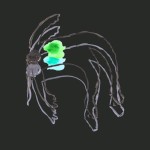
Recorded with the Crush String Collective - an ensemble Hogstrand co-founded and clearly trusts - the performances feel collaborative in the deepest sense. These are not players executing instructions; they’re participants shaping the space together. That ethos runs through the entire album, from composition to production to Hogstrand’s own visual artwork. Control is present, but it’s never domineering. The music listens back.
If there’s humor in "Chants", it’s the dry, Nordic kind: the quiet audacity of making an album this restrained in a world addicted to emphasis; the subtle rebellion of choosing receptivity over assertion. No slogans, no drama, no inflated claims. Just sound unfolding because it can.
"Chants" doesn’t try to move you. It doesn’t need to. It creates the conditions under which movement - emotional, physical, mental - might happen on its own. And in a culture of constant urgency, that kind of patience feels almost scandalous.
Pauline Hogstrand has always worked in that zone where sound feels less like a statement and more like a condition - something you enter rather than consume. With "Chants", her third solo release, she turns back toward the ensemble format, but not in any nostalgic or corrective sense. This is not a “return” album; it’s more like a widening. Strings, percussion, and electronics are treated as porous bodies, listening to each other as much as sounding themselves.
Written during the final months of pregnancy and completed around the birth of her twins, "Chants" carries a biographical weight that never hardens into narrative. There are no lullabies, no sentimental arcs, no musical baby pictures. Instead, there’s a sustained attentiveness - a heightened sensitivity to balance, fragility, and emergence. You can hear it in the opening movement, "Gold White / The Bell Tower / Circle Forms", which begins with a single open string and proceeds as if every sound is checking whether it’s welcome before fully arriving. Synths hover like condensation. Strings glide, stretch, hesitate. Gravity becomes optional.
Hogstrand’s background in classical music is present, but lightly worn. Her writing avoids both academic density and minimalist dogma. Time stretches, but it doesn’t stall. Repetition appears, but never as a trick. The long opening triptych unfolds with a slow, almost geological patience, yet there’s constant micro-motion beneath the surface - small shifts in bow pressure, timbre, harmonic color. It’s music that rewards close listening without punishing distraction. Drift is allowed.
Percussion enters later not as propulsion but as texture, orbiting a steady electronic tone. The effect is less rhythmic than spatial, like walking around a fixed object and noticing how its shadow changes. "Liminal", appropriately brief, strips things back to strings alone, where imitation and silence carry equal weight. Notes echo each other cautiously, as if unsure whether they’re leading or following. It’s fragile, but never precious.
The closing "For the Heart" is where the title earns its keep. Layers accumulate - strings, percussion, electronics - forming something that finally resembles a chant, though not in any folkloric or ritualistic cliché. It’s closer to a collective exhalation, a temporary alignment. The music edges toward disorder, flirts with it, then gently reassembles itself. No climax, no grand resolution. Just a sense that something has passed through and left things slightly more open than before.
Recorded with the Crush String Collective - an ensemble Hogstrand co-founded and clearly trusts - the performances feel collaborative in the deepest sense. These are not players executing instructions; they’re participants shaping the space together. That ethos runs through the entire album, from composition to production to Hogstrand’s own visual artwork. Control is present, but it’s never domineering. The music listens back.
If there’s humor in "Chants", it’s the dry, Nordic kind: the quiet audacity of making an album this restrained in a world addicted to emphasis; the subtle rebellion of choosing receptivity over assertion. No slogans, no drama, no inflated claims. Just sound unfolding because it can.
"Chants" doesn’t try to move you. It doesn’t need to. It creates the conditions under which movement - emotional, physical, mental - might happen on its own. And in a culture of constant urgency, that kind of patience feels almost scandalous.