
Thursday, August 27, 2026
Browse by Genre
Industrial Music / Industrial Metal / Aggro Industrial / Electro Metal
Industrial Noise / Power Noise / Harsh Noise
Synth Pop / Electro Pop / Synth-Electronica
Techno / Trance / Goa / Drum'n'Bass / Jungle / Tribal / Trip-Hop
Ambient / Electronica / Ethereal / Dub / Soundscapes / Abstract
Experimental / Avantgarde / Weird & Wired / Glitch / Noise / Field Recording
Dark / Gothic / Wave / New Wave / Dark Wave / Industrial Gothic
New Music / Downtown / Avantgarde Jazz / New Classical / World
Search Reviews
Music Reviews
Oren Ambarchi & Will Guthrie: Cold Shoulder
Artist: Oren Ambarchi & Will Guthrie (@)
Title: Cold Shoulder
Format: LP
Label: Futura Resistenza (@)
Rated:

Title: Cold Shoulder
Format: LP
Label: Futura Resistenza (@)
Rated:
There is a particular kind of confidence that only arrives after decades of curiosity, failure, experimentation, and a healthy refusal to behave like the music industry expects. "Cold Shoulder", the new collaboration between Oren Ambarchi and Will Guthrie, feels like the work of two musicians who have finally reached the point where they no longer need to prove anything. They simply listen, react, disappear into the sound, and allow the music to become something larger than either player. A rare luxury in a world where everyone seems compelled to announce their own genius every five minutes, preferably through a social media caption written in capital letters.
The two musicians have been travelling along parallel but wonderfully irregular paths for many years. Australian guitarist and composer Oren Ambarchi has built a singular career by transforming the guitar into something almost unrecognisable: not a traditional harmonic instrument, but a laboratory of vibrations, resonances, electrical ghosts and architectural spaces. His work has moved between experimental electronics, minimalism, improvisation and the physical weight of rock, collaborating with artists as diverse as Jim O’Rourke, Keith Rowe, Keiji Haino and members of Sunn O))).
Will Guthrie, meanwhile, has always approached percussion as a universe rather than a role. A drummer in the most expanded sense of the word, he has explored the relationship between rhythm, objects, electronics and physical resonance, moving from the radical electro-acoustic investigations of his earlier years to a renewed fascination with drums, gongs and gamelan-inspired structures. His Ensemble Nist-Nah project further demonstrates his interest in percussion as a meeting point between cultures, bodies and collective memory.
On "Cold Shoulder", recorded live in Berlin in late 2024, the history between the two artists becomes almost audible. This is not a meeting of strangers searching awkwardly for a common language. It is a conversation between old friends who already know when silence is more important than sound. The album consists of two lengthy pieces, each occupying one side of the vinyl, and this format feels almost inevitable: these are not compositions that demand attention through dramatic gestures, but slow-moving ecosystems where every small change becomes meaningful.
The opening moments reveal Ambarchi’s guitar transformed into a drifting, organ-like presence. His familiar use of Leslie effects creates a sensation of circular movement, as if the sound itself were slowly rotating in a vast empty room. Yet the apparent calm is deceptive. Beneath the surface, tiny shifts constantly reshape the landscape. A harmonic shadow appears, a tone stretches into infinity, a vibration begins to suggest melody before dissolving again. Ambarchi has always been fascinated by the border between recognisable music and pure physical sensation, and here he finds one of his most elegant balances between the two.
Guthrie’s contribution is equally fascinating because of what he chooses not to do. This is not percussion as punctuation, nor rhythm as an obvious driving force. His playing operates like weather: sometimes barely visible, sometimes suddenly revealing the enormous amount of movement hidden inside apparent stillness. Cymbals shimmer like distant metallic reflections, subtle pulses emerge and vanish, and the drums become less a rhythmic machine than a living surface responding to the vibrations around them.
The magic of "Cold Shoulder" lies precisely in this tension between stability and uncertainty. The music feels peaceful, but never passive. It floats, yet never loses direction. Like watching clouds slowly rearrange themselves, it creates the illusion of simplicity while hiding an extraordinary amount of control. Humans have spent centuries inventing increasingly complicated tools to make things easier, then created experimental music to remind themselves that complexity was there all along. A wonderfully inefficient species, really.
The album also represents something important in the wider story of improvisational music: maturity not as reduction, but as freedom. The younger versions of Ambarchi and Guthrie explored extremes, fragmentation, noise and abstraction. Those experiences remain present, but they no longer need to dominate the conversation. The violence has become texture; the chaos has learned patience.
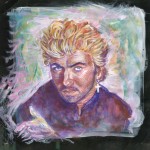
There is also a playful side to the release, symbolised by the wonderfully unexpected cover image featuring George Michael. It is a reminder that experimental music does not have to exist behind a wall of seriousness and academic gloom. Sometimes the most radical gesture is simply allowing beauty, humour and contradiction to coexist. The universe is strange enough already, so perhaps a drone record with a pop icon watching over it is actually the most logical artistic statement possible.
"Cold Shoulder" is therefore not a record about distance despite its title. It is about intimacy achieved through space, about two musicians comfortable enough with each other to leave room for uncertainty. It is music that does not chase the listener but quietly changes the atmosphere around them. A slow-burning conversation between electricity, skin, metal and memory.
After twenty years of collaboration, Ambarchi and Guthrie have produced something that feels neither like a retrospective nor a conclusion. It feels like a continuation, a reminder that experience does not necessarily make artists predictable. Sometimes it simply gives them the confidence to wander further.
And fortunately, they still know how to get wonderfully lost.
The two musicians have been travelling along parallel but wonderfully irregular paths for many years. Australian guitarist and composer Oren Ambarchi has built a singular career by transforming the guitar into something almost unrecognisable: not a traditional harmonic instrument, but a laboratory of vibrations, resonances, electrical ghosts and architectural spaces. His work has moved between experimental electronics, minimalism, improvisation and the physical weight of rock, collaborating with artists as diverse as Jim O’Rourke, Keith Rowe, Keiji Haino and members of Sunn O))).
Will Guthrie, meanwhile, has always approached percussion as a universe rather than a role. A drummer in the most expanded sense of the word, he has explored the relationship between rhythm, objects, electronics and physical resonance, moving from the radical electro-acoustic investigations of his earlier years to a renewed fascination with drums, gongs and gamelan-inspired structures. His Ensemble Nist-Nah project further demonstrates his interest in percussion as a meeting point between cultures, bodies and collective memory.
On "Cold Shoulder", recorded live in Berlin in late 2024, the history between the two artists becomes almost audible. This is not a meeting of strangers searching awkwardly for a common language. It is a conversation between old friends who already know when silence is more important than sound. The album consists of two lengthy pieces, each occupying one side of the vinyl, and this format feels almost inevitable: these are not compositions that demand attention through dramatic gestures, but slow-moving ecosystems where every small change becomes meaningful.
The opening moments reveal Ambarchi’s guitar transformed into a drifting, organ-like presence. His familiar use of Leslie effects creates a sensation of circular movement, as if the sound itself were slowly rotating in a vast empty room. Yet the apparent calm is deceptive. Beneath the surface, tiny shifts constantly reshape the landscape. A harmonic shadow appears, a tone stretches into infinity, a vibration begins to suggest melody before dissolving again. Ambarchi has always been fascinated by the border between recognisable music and pure physical sensation, and here he finds one of his most elegant balances between the two.
Guthrie’s contribution is equally fascinating because of what he chooses not to do. This is not percussion as punctuation, nor rhythm as an obvious driving force. His playing operates like weather: sometimes barely visible, sometimes suddenly revealing the enormous amount of movement hidden inside apparent stillness. Cymbals shimmer like distant metallic reflections, subtle pulses emerge and vanish, and the drums become less a rhythmic machine than a living surface responding to the vibrations around them.
The magic of "Cold Shoulder" lies precisely in this tension between stability and uncertainty. The music feels peaceful, but never passive. It floats, yet never loses direction. Like watching clouds slowly rearrange themselves, it creates the illusion of simplicity while hiding an extraordinary amount of control. Humans have spent centuries inventing increasingly complicated tools to make things easier, then created experimental music to remind themselves that complexity was there all along. A wonderfully inefficient species, really.
The album also represents something important in the wider story of improvisational music: maturity not as reduction, but as freedom. The younger versions of Ambarchi and Guthrie explored extremes, fragmentation, noise and abstraction. Those experiences remain present, but they no longer need to dominate the conversation. The violence has become texture; the chaos has learned patience.
There is also a playful side to the release, symbolised by the wonderfully unexpected cover image featuring George Michael. It is a reminder that experimental music does not have to exist behind a wall of seriousness and academic gloom. Sometimes the most radical gesture is simply allowing beauty, humour and contradiction to coexist. The universe is strange enough already, so perhaps a drone record with a pop icon watching over it is actually the most logical artistic statement possible.
"Cold Shoulder" is therefore not a record about distance despite its title. It is about intimacy achieved through space, about two musicians comfortable enough with each other to leave room for uncertainty. It is music that does not chase the listener but quietly changes the atmosphere around them. A slow-burning conversation between electricity, skin, metal and memory.
After twenty years of collaboration, Ambarchi and Guthrie have produced something that feels neither like a retrospective nor a conclusion. It feels like a continuation, a reminder that experience does not necessarily make artists predictable. Sometimes it simply gives them the confidence to wander further.
And fortunately, they still know how to get wonderfully lost.
Dionée: Mille-feuilles
There are records that politely ask for your attention. Others kick the door open with volume. Dionée's "Mille-feuilles" does neither. It simply occupies the room until you begin hearing differently. That may sound suspiciously mystical, but the trio's music has little interest in transcendence for its own sake. Instead, it patiently constructs a landscape where unlikely materials coexist with startling naturalness: chamber music elegance brushing against the grain of drone, post-rock weight appearing without guitars, electroacoustic abstraction refusing to become mere academic exercise. It is, as the press release jokingly suggests, somewhere between Black Sabbath and Morton Feldman. Ridiculous on paper. Surprisingly convincing in practice.
Dionée is the latest project led by Québec composer and bassist Éric Normand, a prolific figure in Canada's experimental music community whose career has moved effortlessly between free improvisation, composition, and large ensemble work. His collaborations with improvisers such as Xavier Charles, Franz Hautzinger, and Anne-F Jacques have established him as an artist who thrives on instability, constantly seeking new relationships between sound sources rather than fixed stylistic identities. With Clarisse Bériault and Robin Servant, however, the objective feels different. Rather than celebrating improvisational friction, the trio pursues cohesion without sacrificing unpredictability.
The instrumentation alone deserves a raised eyebrow. Oboe, diatonic accordion, electric bass, oscillators, effects, beatboxing and electronics should, by all reasonable expectations, compete for attention. Instead they dissolve into what frequently resembles a chamber orchestra viewed through frosted glass. Individual instruments lose their sharp outlines, merging into slow-moving masses where acoustic resonance and electronic coloration become almost impossible to separate. One spends less time identifying who plays what than wondering how such familiar sounds became so strangely anonymous.
Normand's compositional approach favours gradual transformation over dramatic contrast. The two extended pieces unfold like evolving ecosystems rather than conventional compositions with clearly marked destinations. Themes emerge almost accidentally before being swallowed by sustained drones, harmonic shadows or subtle rhythmic currents. There is movement everywhere, yet very little appears hurried. The music trusts the listener's patience, a quality becoming increasingly rare in an era where albums often seem terrified of silence.
Bériault's oboe plays an especially fascinating role. Traditionally associated with pastoral lyricism or orchestral melancholy, it becomes something far less predictable here. Sometimes it cuts through the dense textures with almost vocal fragility; elsewhere it functions as another layer within the harmonic fog, its identity deliberately obscured by electronics and processing. Servant's accordion undergoes a similar transformation. Any expectation of folk nostalgia is quickly dismantled as its reeds become sources of sustained harmonic pressure rather than melodic comfort.
The album's title, "Mille-feuilles", inevitably evokes layers, and layering is indeed central to the listening experience. Yet these are not neatly stacked architectural strata. They resemble geological deposits compressed over centuries, where traces of different musical histories remain visible without ever separating cleanly. Minimalism rubs shoulders with doom-like harmonic gravity, contemporary classical restraint brushes against noise aesthetics, and occasional melodic fragments appear like half-remembered conversations overheard through thick walls.
One of the album's quiet achievements lies in how it handles density. Many experimental records equate complexity with saturation, filling every available frequency until subtlety suffocates. Dionée exercises remarkable restraint. Even at its heaviest, the music breathes. Empty spaces are not absences but active participants, allowing resonance to linger long enough for the ear to discover secondary events hidden beneath the obvious ones. It rewards repeated listening not because it is deliberately obscure, but because its internal relationships remain fluid.
There is also an understated cinematic quality throughout, though thankfully one that avoids becoming "soundtrack music" in the fashionable sense. Rather than illustrating imaginary scenes, these compositions generate psychological environments. They suggest abandoned industrial halls, dense northern forests, forgotten religious architecture, or perhaps none of these at all. The images remain personal, shaped as much by the listener's memory as by the musicians' intentions.
The two lengthy tracks refuse convenient climaxes. Instead they accumulate emotional weight through persistence, allowing microscopic shifts in timbre or harmony to feel monumental. This approach demands concentration, but it also offers something increasingly uncommon: the satisfaction of inhabiting a musical space instead of merely consuming it.
If there is humour here, it comes from the trio's quiet defiance of categorisation. Calling this chamber music feels incomplete. Calling it drone undersells its melodic intelligence. Labeling it post-rock ignores its compositional sophistication. Experimental music has always enjoyed inventing increasingly specialised boxes; "Mille-feuilles" politely stacks those boxes into a bonfire and continues playing.
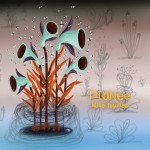
Beautifully recorded and enhanced by Marnix Everaert's striking visual presentation, the album confirms that adventurous music need not choose between intellectual curiosity and emotional resonance. Dionée builds bridges where others erect boundaries, demonstrating that the distance between Feldman's stillness and Sabbath's physicality may not be as vast as genre maps would have us believe. Sometimes all it takes is three musicians willing to ignore the signposts and trust that listeners are capable of getting pleasantly lost.
Dionée is the latest project led by Québec composer and bassist Éric Normand, a prolific figure in Canada's experimental music community whose career has moved effortlessly between free improvisation, composition, and large ensemble work. His collaborations with improvisers such as Xavier Charles, Franz Hautzinger, and Anne-F Jacques have established him as an artist who thrives on instability, constantly seeking new relationships between sound sources rather than fixed stylistic identities. With Clarisse Bériault and Robin Servant, however, the objective feels different. Rather than celebrating improvisational friction, the trio pursues cohesion without sacrificing unpredictability.
The instrumentation alone deserves a raised eyebrow. Oboe, diatonic accordion, electric bass, oscillators, effects, beatboxing and electronics should, by all reasonable expectations, compete for attention. Instead they dissolve into what frequently resembles a chamber orchestra viewed through frosted glass. Individual instruments lose their sharp outlines, merging into slow-moving masses where acoustic resonance and electronic coloration become almost impossible to separate. One spends less time identifying who plays what than wondering how such familiar sounds became so strangely anonymous.
Normand's compositional approach favours gradual transformation over dramatic contrast. The two extended pieces unfold like evolving ecosystems rather than conventional compositions with clearly marked destinations. Themes emerge almost accidentally before being swallowed by sustained drones, harmonic shadows or subtle rhythmic currents. There is movement everywhere, yet very little appears hurried. The music trusts the listener's patience, a quality becoming increasingly rare in an era where albums often seem terrified of silence.
Bériault's oboe plays an especially fascinating role. Traditionally associated with pastoral lyricism or orchestral melancholy, it becomes something far less predictable here. Sometimes it cuts through the dense textures with almost vocal fragility; elsewhere it functions as another layer within the harmonic fog, its identity deliberately obscured by electronics and processing. Servant's accordion undergoes a similar transformation. Any expectation of folk nostalgia is quickly dismantled as its reeds become sources of sustained harmonic pressure rather than melodic comfort.
The album's title, "Mille-feuilles", inevitably evokes layers, and layering is indeed central to the listening experience. Yet these are not neatly stacked architectural strata. They resemble geological deposits compressed over centuries, where traces of different musical histories remain visible without ever separating cleanly. Minimalism rubs shoulders with doom-like harmonic gravity, contemporary classical restraint brushes against noise aesthetics, and occasional melodic fragments appear like half-remembered conversations overheard through thick walls.
One of the album's quiet achievements lies in how it handles density. Many experimental records equate complexity with saturation, filling every available frequency until subtlety suffocates. Dionée exercises remarkable restraint. Even at its heaviest, the music breathes. Empty spaces are not absences but active participants, allowing resonance to linger long enough for the ear to discover secondary events hidden beneath the obvious ones. It rewards repeated listening not because it is deliberately obscure, but because its internal relationships remain fluid.
There is also an understated cinematic quality throughout, though thankfully one that avoids becoming "soundtrack music" in the fashionable sense. Rather than illustrating imaginary scenes, these compositions generate psychological environments. They suggest abandoned industrial halls, dense northern forests, forgotten religious architecture, or perhaps none of these at all. The images remain personal, shaped as much by the listener's memory as by the musicians' intentions.
The two lengthy tracks refuse convenient climaxes. Instead they accumulate emotional weight through persistence, allowing microscopic shifts in timbre or harmony to feel monumental. This approach demands concentration, but it also offers something increasingly uncommon: the satisfaction of inhabiting a musical space instead of merely consuming it.
If there is humour here, it comes from the trio's quiet defiance of categorisation. Calling this chamber music feels incomplete. Calling it drone undersells its melodic intelligence. Labeling it post-rock ignores its compositional sophistication. Experimental music has always enjoyed inventing increasingly specialised boxes; "Mille-feuilles" politely stacks those boxes into a bonfire and continues playing.
Beautifully recorded and enhanced by Marnix Everaert's striking visual presentation, the album confirms that adventurous music need not choose between intellectual curiosity and emotional resonance. Dionée builds bridges where others erect boundaries, demonstrating that the distance between Feldman's stillness and Sabbath's physicality may not be as vast as genre maps would have us believe. Sometimes all it takes is three musicians willing to ignore the signposts and trust that listeners are capable of getting pleasantly lost.
Kat Davids: winterswell EP

Artist: Kat Davids
Title: winterswell EP
Format: 12" + Download
Label: Intercept Records
Distributor: !K7 / Word&Sound
Rated:
Title: winterswell EP
Format: 12" + Download
Label: Intercept Records
Distributor: !K7 / Word&Sound
Rated:
Berlin's electronic scene has never suffered from a shortage of technically proficient producers. Every week seems to produce another impeccably engineered EP full of immaculate kick drums and carefully calibrated hi-hats, many of which disappear into the algorithmic mist before the weekend is over. What separates the memorable records from the merely functional ones is often something far less quantifiable: personality. On "winterswell", Kat Davids demonstrates that groove alone is never enough. A track also needs to breathe, hesitate, flirt with imperfection, and occasionally whisper instead of shout.
Davids has quietly established herself as a multifaceted presence within Berlin's contemporary electronic landscape. Beyond her work as a producer and DJ, her activities with the CURA Berlin collective, the FLINTA" initiative V.A. Femme, and her long-running "Spinning Grounds" radio show reveal an artist invested as much in cultivating community as in producing records. That collaborative spirit subtly informs "winterswell", an EP that feels less concerned with dominating a dancefloor than with inviting listeners into a carefully constructed sonic environment.
Built around analogue hardware, field recordings and understated vocal fragments, "winterswell" inhabits the fertile space where house, dub techno and ambient textures naturally overlap. Rather than treating rhythm as an end in itself, Davids uses it as an emotional framework. The beats move with confidence, yet they always leave enough room for atmosphere to seep through the cracks.
Opening track "Manavgat" unfolds patiently, resisting the temptation to announce itself through immediate impact. Layers of percussion emerge gradually, accompanied by hazy synths that evoke distant landscapes rather than enclosed clubs. There is a cinematic quality to its progression, as if movement itself becomes the narrative. The title inevitably recalls the Turkish town of the same name, but the piece functions less as geographical description than as an imagined journey, where memory and motion become inseparable.
If "Manavgat" gazes toward the horizon, "Baby I Know What You Want" turns inward. Here Davids introduces her own voice, not as a conventional pop focal point but as another textural element woven into the arrangement. The vocals drift through rolling percussion and an elastic bassline with remarkable restraint, creating intimacy without sacrificing momentum. It's a refreshing reminder that electronic music can communicate vulnerability without immediately reaching for melancholy clichés or oversized emotional gestures.
The production throughout is striking for its confidence in understatement. Tiny details reveal themselves over repeated listens: subtle environmental recordings, gentle shifts in delay, analogue imperfections that add warmth rather than distraction. Nothing feels ornamental. Every sonic decision appears to serve the larger emotional architecture.
The remixers understand this philosophy remarkably well. Mr. G's "I Hear Ya Underground Dub" transforms "Manavgat" into something earthier and more cavernous, emphasizing negative space as much as rhythm. His version strips the original back until individual elements seem suspended inside thick layers of echo, creating a hypnotic dub environment that never loses sight of the source material's contemplative core.
Meanwhile, Ben Kaczor's reinterpretation of "Baby I Know What You Want" leans into tension through weightier low frequencies and an increasingly insistent pulse. Rather than competing with Davids' original, it exposes different structural possibilities hidden within the composition, trading intimacy for hypnotic propulsion while preserving the track's quiet elegance.
One of the EP's greatest achievements is its resistance to obvious nostalgia. Many contemporary analogue productions wear their vintage influences so conspicuously that they risk becoming museum pieces. Davids borrows freely from the history of house, dub and techno, yet never sounds trapped by them. Her field recordings and tactile production create music that feels rooted in physical environments rather than retro aesthetics. These tracks seem lived-in instead of carefully curated.
There is also a subtle playfulness running beneath the record's surface. The percussion constantly shifts expectations without disrupting the flow, while melodic fragments appear briefly before dissolving again. It's the kind of musical confidence that doesn't require dramatic gestures. Like a good conversation, it trusts listeners to notice the interesting parts without constantly pointing at them.
For a debut vinyl EP, "winterswell" displays remarkable compositional maturity. Davids understands that electronic music often becomes most powerful when it leaves certain questions unanswered. The spaces between sounds carry as much emotional information as the sounds themselves, allowing listeners to project their own experiences into the music rather than simply consuming predefined moods.
Ultimately, "winterswell" succeeds because it refuses false binaries. It is intimate without becoming insular, club-oriented without chasing peak-time formulas, emotionally resonant without resorting to sentimentality. Kat Davids offers an elegant reminder that dance music need not choose between body and mind. Sometimes the most memorable journeys begin not with an explosion, but with a small rhythmic pulse that quietly convinces you to keep walking.
Davids has quietly established herself as a multifaceted presence within Berlin's contemporary electronic landscape. Beyond her work as a producer and DJ, her activities with the CURA Berlin collective, the FLINTA" initiative V.A. Femme, and her long-running "Spinning Grounds" radio show reveal an artist invested as much in cultivating community as in producing records. That collaborative spirit subtly informs "winterswell", an EP that feels less concerned with dominating a dancefloor than with inviting listeners into a carefully constructed sonic environment.
Built around analogue hardware, field recordings and understated vocal fragments, "winterswell" inhabits the fertile space where house, dub techno and ambient textures naturally overlap. Rather than treating rhythm as an end in itself, Davids uses it as an emotional framework. The beats move with confidence, yet they always leave enough room for atmosphere to seep through the cracks.
Opening track "Manavgat" unfolds patiently, resisting the temptation to announce itself through immediate impact. Layers of percussion emerge gradually, accompanied by hazy synths that evoke distant landscapes rather than enclosed clubs. There is a cinematic quality to its progression, as if movement itself becomes the narrative. The title inevitably recalls the Turkish town of the same name, but the piece functions less as geographical description than as an imagined journey, where memory and motion become inseparable.
If "Manavgat" gazes toward the horizon, "Baby I Know What You Want" turns inward. Here Davids introduces her own voice, not as a conventional pop focal point but as another textural element woven into the arrangement. The vocals drift through rolling percussion and an elastic bassline with remarkable restraint, creating intimacy without sacrificing momentum. It's a refreshing reminder that electronic music can communicate vulnerability without immediately reaching for melancholy clichés or oversized emotional gestures.
The production throughout is striking for its confidence in understatement. Tiny details reveal themselves over repeated listens: subtle environmental recordings, gentle shifts in delay, analogue imperfections that add warmth rather than distraction. Nothing feels ornamental. Every sonic decision appears to serve the larger emotional architecture.
The remixers understand this philosophy remarkably well. Mr. G's "I Hear Ya Underground Dub" transforms "Manavgat" into something earthier and more cavernous, emphasizing negative space as much as rhythm. His version strips the original back until individual elements seem suspended inside thick layers of echo, creating a hypnotic dub environment that never loses sight of the source material's contemplative core.
Meanwhile, Ben Kaczor's reinterpretation of "Baby I Know What You Want" leans into tension through weightier low frequencies and an increasingly insistent pulse. Rather than competing with Davids' original, it exposes different structural possibilities hidden within the composition, trading intimacy for hypnotic propulsion while preserving the track's quiet elegance.
One of the EP's greatest achievements is its resistance to obvious nostalgia. Many contemporary analogue productions wear their vintage influences so conspicuously that they risk becoming museum pieces. Davids borrows freely from the history of house, dub and techno, yet never sounds trapped by them. Her field recordings and tactile production create music that feels rooted in physical environments rather than retro aesthetics. These tracks seem lived-in instead of carefully curated.
There is also a subtle playfulness running beneath the record's surface. The percussion constantly shifts expectations without disrupting the flow, while melodic fragments appear briefly before dissolving again. It's the kind of musical confidence that doesn't require dramatic gestures. Like a good conversation, it trusts listeners to notice the interesting parts without constantly pointing at them.
For a debut vinyl EP, "winterswell" displays remarkable compositional maturity. Davids understands that electronic music often becomes most powerful when it leaves certain questions unanswered. The spaces between sounds carry as much emotional information as the sounds themselves, allowing listeners to project their own experiences into the music rather than simply consuming predefined moods.
Ultimately, "winterswell" succeeds because it refuses false binaries. It is intimate without becoming insular, club-oriented without chasing peak-time formulas, emotionally resonant without resorting to sentimentality. Kat Davids offers an elegant reminder that dance music need not choose between body and mind. Sometimes the most memorable journeys begin not with an explosion, but with a small rhythmic pulse that quietly convinces you to keep walking.
Negative Agent: Terminal Days


Industrial music has always had an awkward relationship with the future. It spent decades warning us about surveillance, corporate power, dehumanization and technological dependency, only to discover that reality was taking notes. "Terminal Days", the debut album from New York's Negative Agent, arrives in a political and cultural climate where dystopian fiction increasingly resembles yesterday's news feed. Rather than offering detached science fiction, Brian Stillman channels that uncomfortable overlap into an album that refuses neutrality. It is loud, confrontational, often sarcastic, and entirely unconcerned with appearing diplomatic.
Stillman is hardly a newcomer to the industrial underground. Having been immersed in New York's goth and industrial scene since the early 1990s and co-running the long-lived Contempt club night for over a decade, he understands that industrial music was never merely about distorted drum machines or intimidating aesthetics. At its strongest, it has always weaponized rhythm against complacency, from the mechanized assaults of Ministry and Front Line Assembly to the metallic futurism of Fear Factory and the post-punk fury of Killing Joke. "Terminal Days" consciously places itself within that lineage while updating its targets for the algorithmic age.
The album opens with "Mind Wipe", immediately establishing its central anxiety: the gradual replacement of human agency by data extraction, artificial intelligence, corporate manipulation and endless digital mediation. The lyrics could easily collapse under the weight of their own outrage, yet Stillman avoids turning the song into a lecture by wrapping every accusation inside muscular riffs, tightly programmed electronics and memorable hooks. The anger is genuine, but so is the craftsmanship.
That balance continues throughout the record. "Pain Control" shifts its attention toward systemic inequality and political corruption, combining relentless guitars with pounding electronic percussion that recalls the dancefloor instincts of classic electro-industrial. One of the album's strengths is its refusal to separate protest from pleasure. These songs are built to move bodies as much as consciences. Humans have always coped with catastrophe by dancing. Sometimes history resembles an apocalypse with surprisingly good bass response.
The title track, "Terminal Days", arguably represents the album's conceptual centre. Here the recurring themes of technological alienation, algorithmic control and cultural erosion merge into imagery that feels simultaneously cyberpunk and painfully contemporary. Rather than relying on futuristic fantasy, the song describes a world where creativity itself risks becoming another commodity to be mined, optimized and monetized. The production reinforces this tension beautifully, layering grinding guitars with nervous synthesizers and glitch-like textures that never overwhelm the songs themselves.
Perhaps the album's most provocative moment arrives with "Fascist Beatdown". Its deliberately blunt title leaves little room for interpretative gymnastics, and its tongue-in-cheek swagger injects a welcome dose of black humour into otherwise bleak subject matter. Industrial has often flirted with authoritarian imagery in deliberately ambiguous ways, sometimes to uncomfortable effect. Negative Agent rejects ambiguity entirely, opting instead for open confrontation wrapped inside a chorus designed for sweaty clubs rather than academic debates.
Elsewhere, "Boot Licker" examines the psychology of complicity rather than overt oppression, suggesting that authoritarian systems survive not only through power but through ordinary acts of surrender. Meanwhile "Dead in Berlin" broadens the album's narrative scope, drawing on Cold War iconography and espionage cinema to create one of the record's most atmospheric pieces. Echoes of David Bowie and Brian Eno hover over its rain-soaked streets without becoming empty nostalgia, transforming Berlin into both a physical city and a metaphor for fractured identities.
Musically, "Terminal Days" rarely tries to reinvent industrial metal. Instead, it refines familiar vocabulary with conviction and attention to dynamics. Thick guitar walls collide with precise electronic programming, while guest appearances from Steve Wiener and Greg Schwan add subtle variation without distracting from Stillman's singular vision. The closing Voidscan remix of "Fascist Beatdown" naturally shifts the emphasis toward club functionality, reminding listeners that resistance occasionally wears combat boots and occasionally dancing shoes.
What ultimately separates "Terminal Days" from many overtly political records is its awareness that outrage alone rarely produces memorable music. Stillman understands pacing, melody and texture. Even when the lyrics deliver uncompromising criticism of surveillance capitalism, authoritarian politics or technological evangelism, the compositions remain engaging as songs rather than functioning solely as ideological pamphlets.
Whether one shares every political conclusion is almost beside the point. The album succeeds because it captures an emotional landscape familiar to many contemporary listeners: exhaustion, disbelief, anger, dark humour and the stubborn refusal to surrender completely. Its vision of America may be bleak, but beneath the distortion lies an insistence that speaking out still matters, even when the machines seem to be winning.
"Terminal Days" is not interested in comforting anyone. It is interested in shaking shoulders, rattling speakers and reminding listeners that industrial music was never supposed to provide safe spaces. It was built to make comfortable people uncomfortable, and uncomfortable people feel a little less alone. On that front, Negative Agent's debut lands with impressive force.
Stillman is hardly a newcomer to the industrial underground. Having been immersed in New York's goth and industrial scene since the early 1990s and co-running the long-lived Contempt club night for over a decade, he understands that industrial music was never merely about distorted drum machines or intimidating aesthetics. At its strongest, it has always weaponized rhythm against complacency, from the mechanized assaults of Ministry and Front Line Assembly to the metallic futurism of Fear Factory and the post-punk fury of Killing Joke. "Terminal Days" consciously places itself within that lineage while updating its targets for the algorithmic age.
The album opens with "Mind Wipe", immediately establishing its central anxiety: the gradual replacement of human agency by data extraction, artificial intelligence, corporate manipulation and endless digital mediation. The lyrics could easily collapse under the weight of their own outrage, yet Stillman avoids turning the song into a lecture by wrapping every accusation inside muscular riffs, tightly programmed electronics and memorable hooks. The anger is genuine, but so is the craftsmanship.
That balance continues throughout the record. "Pain Control" shifts its attention toward systemic inequality and political corruption, combining relentless guitars with pounding electronic percussion that recalls the dancefloor instincts of classic electro-industrial. One of the album's strengths is its refusal to separate protest from pleasure. These songs are built to move bodies as much as consciences. Humans have always coped with catastrophe by dancing. Sometimes history resembles an apocalypse with surprisingly good bass response.
The title track, "Terminal Days", arguably represents the album's conceptual centre. Here the recurring themes of technological alienation, algorithmic control and cultural erosion merge into imagery that feels simultaneously cyberpunk and painfully contemporary. Rather than relying on futuristic fantasy, the song describes a world where creativity itself risks becoming another commodity to be mined, optimized and monetized. The production reinforces this tension beautifully, layering grinding guitars with nervous synthesizers and glitch-like textures that never overwhelm the songs themselves.
Perhaps the album's most provocative moment arrives with "Fascist Beatdown". Its deliberately blunt title leaves little room for interpretative gymnastics, and its tongue-in-cheek swagger injects a welcome dose of black humour into otherwise bleak subject matter. Industrial has often flirted with authoritarian imagery in deliberately ambiguous ways, sometimes to uncomfortable effect. Negative Agent rejects ambiguity entirely, opting instead for open confrontation wrapped inside a chorus designed for sweaty clubs rather than academic debates.
Elsewhere, "Boot Licker" examines the psychology of complicity rather than overt oppression, suggesting that authoritarian systems survive not only through power but through ordinary acts of surrender. Meanwhile "Dead in Berlin" broadens the album's narrative scope, drawing on Cold War iconography and espionage cinema to create one of the record's most atmospheric pieces. Echoes of David Bowie and Brian Eno hover over its rain-soaked streets without becoming empty nostalgia, transforming Berlin into both a physical city and a metaphor for fractured identities.
Musically, "Terminal Days" rarely tries to reinvent industrial metal. Instead, it refines familiar vocabulary with conviction and attention to dynamics. Thick guitar walls collide with precise electronic programming, while guest appearances from Steve Wiener and Greg Schwan add subtle variation without distracting from Stillman's singular vision. The closing Voidscan remix of "Fascist Beatdown" naturally shifts the emphasis toward club functionality, reminding listeners that resistance occasionally wears combat boots and occasionally dancing shoes.
What ultimately separates "Terminal Days" from many overtly political records is its awareness that outrage alone rarely produces memorable music. Stillman understands pacing, melody and texture. Even when the lyrics deliver uncompromising criticism of surveillance capitalism, authoritarian politics or technological evangelism, the compositions remain engaging as songs rather than functioning solely as ideological pamphlets.
Whether one shares every political conclusion is almost beside the point. The album succeeds because it captures an emotional landscape familiar to many contemporary listeners: exhaustion, disbelief, anger, dark humour and the stubborn refusal to surrender completely. Its vision of America may be bleak, but beneath the distortion lies an insistence that speaking out still matters, even when the machines seem to be winning.
"Terminal Days" is not interested in comforting anyone. It is interested in shaking shoulders, rattling speakers and reminding listeners that industrial music was never supposed to provide safe spaces. It was built to make comfortable people uncomfortable, and uncomfortable people feel a little less alone. On that front, Negative Agent's debut lands with impressive force.
AMAS & Frithjof-Martin Grabner: SRDGN X LPZG
Artist: AMAS & Frithjof-Martin Grabner (@)
Title: SRDGN X LPZG
Format: LP
Label: AMAS_STUDIO (@)
Rated:
Title: SRDGN X LPZG
Format: LP
Label: AMAS_STUDIO (@)
Rated:
Johann Sebastian Bach has been remixed, sampled, orchestrated, jazzified, electronicized and otherwise recruited into more musical causes than he could probably have imagined. At this point, announcing yet another "reinterpretation" of the Leipzig master risks sounding like the cultural equivalent of repainting the Mona Lisa with glow-in-the-dark nail polish. Fortunately, "SRDGN X LPZG" takes a far more interesting route. Rather than dressing Bach in contemporary clothes, AMAS strip his music down to its architectural skeleton, searching for the repetitive logic and mathematical elegance that have quietly linked Baroque composition to minimalism for decades.
The duo's concept is deceptively simple yet remarkably ambitious. During an extended creative process divided between the rugged landscapes of southern Sardinia and the disciplined atmosphere of Leipzig, AMAS extracted rhythmic and harmonic DNA from fourteen Bach compositions, reducing them into minimalist electronic frameworks enriched by field recordings. Instead of preserving familiar melodies, they preserve relationships: patterns, tensions, proportions. The result feels less like arranging Bach than reverse-engineering his thought process.
The second half of the equation arrives through Frithjof-Martin Grabner, one of Germany's most respected double bass players, whose career spans classical performance, chamber music and countless contemporary collaborations. His improvisations never function as decorative soloing. Instead, they become another environmental element, sometimes earthy and tactile, sometimes so heavily processed that the bass dissolves into ambiguous textures hovering between acoustic resonance and synthetic illusion. There are moments where identifying the instrument becomes almost impossible, and that uncertainty is precisely where much of the album's fascination resides.
From the opening pulse of "ANKUNFT", the record establishes an atmosphere of patient movement. Tracks such as "WEITE" and "NACHT" expand with understated confidence, allowing tiny shifts in harmony and timbre to accumulate emotional weight rather than announcing themselves dramatically. Elsewhere, "RAUSCH" and "CHAOS" introduce denser rhythmic currents without abandoning the contemplative core, while "KLARHEIT" and the closing "ABSCHIED" suggest a fragile reconciliation between precision and intuition.
Listeners familiar with dub techno will immediately recognize the spacious production aesthetic: deep reverberations, restrained low-end movement, and an almost geological sense of time. Yet unlike many productions built around hypnotic repetition, "SRDGN X LPZG" never feels mechanically loop-based. Every cycle breathes. Every recurrence carries microscopic alterations, recalling both Steve Reich's phase experiments and the organic patience of contemporary electroacoustic composition.
The Sardinian field recordings deserve particular mention. Rather than functioning as picturesque postcards from the Mediterranean, they integrate seamlessly into the musical language, blurring distinctions between environment and composition. Wind, distant ambience and subtle environmental textures become structural voices rather than ornamental background. Geography itself participates in the music, quietly reminding us that places have rhythms just as people do.
One of the album's most rewarding qualities is its refusal to indulge in obvious virtuosity. Despite Grabner's formidable technique and AMAS' sophisticated production methods, the project consistently privileges atmosphere over demonstration. The reference to Miles Davis' "Ascenseur pour l'échafaud" sessions is not accidental: intuition repeatedly wins over calculation, even though immense calculation clearly underpins the entire construction. Like a beautifully engineered bridge, the album works best when listeners stop admiring the engineering and simply cross it.
There is also something quietly humorous about the whole enterprise. Bach, often imprisoned behind marble busts and academic reverence, finds himself wandering through dub echoes, environmental recordings and hypnotic loops without losing an ounce of dignity. If anything, "SRDGN X LPZG" suggests that the old Kantor may have always contained these possibilities. After all, counterpoint is already a form of controlled repetition; minimalism merely stretches the thread until its hidden geometry becomes visible.
AMAS demonstrate remarkable restraint throughout the seventy-plus minutes, resisting the temptation to overwhelm listeners with conceptual explanations. The music trusts repetition to reveal meaning gradually, much as landscapes disclose themselves differently depending on how long one remains within them. Sardinia's expansive horizons and Leipzig's intellectual heritage become less opposing poles than complementary states of listening.
Ultimately, "SRDGN X LPZG" succeeds because it approaches history neither as sacred relic nor disposable raw material. It treats Bach as a living system whose internal mechanics continue generating unexpected futures. In an era where many cross-genre experiments seem content to place unlikely ingredients into the same bowl and call it innovation, AMAS instead search for common roots buried beneath centuries of musical evolution. The result is neither homage nor deconstruction, but an elegant conversation across time, where Baroque order, ambient drift and dub-techno repetition quietly discover they have been speaking related dialects all along.
The duo's concept is deceptively simple yet remarkably ambitious. During an extended creative process divided between the rugged landscapes of southern Sardinia and the disciplined atmosphere of Leipzig, AMAS extracted rhythmic and harmonic DNA from fourteen Bach compositions, reducing them into minimalist electronic frameworks enriched by field recordings. Instead of preserving familiar melodies, they preserve relationships: patterns, tensions, proportions. The result feels less like arranging Bach than reverse-engineering his thought process.
The second half of the equation arrives through Frithjof-Martin Grabner, one of Germany's most respected double bass players, whose career spans classical performance, chamber music and countless contemporary collaborations. His improvisations never function as decorative soloing. Instead, they become another environmental element, sometimes earthy and tactile, sometimes so heavily processed that the bass dissolves into ambiguous textures hovering between acoustic resonance and synthetic illusion. There are moments where identifying the instrument becomes almost impossible, and that uncertainty is precisely where much of the album's fascination resides.
From the opening pulse of "ANKUNFT", the record establishes an atmosphere of patient movement. Tracks such as "WEITE" and "NACHT" expand with understated confidence, allowing tiny shifts in harmony and timbre to accumulate emotional weight rather than announcing themselves dramatically. Elsewhere, "RAUSCH" and "CHAOS" introduce denser rhythmic currents without abandoning the contemplative core, while "KLARHEIT" and the closing "ABSCHIED" suggest a fragile reconciliation between precision and intuition.
Listeners familiar with dub techno will immediately recognize the spacious production aesthetic: deep reverberations, restrained low-end movement, and an almost geological sense of time. Yet unlike many productions built around hypnotic repetition, "SRDGN X LPZG" never feels mechanically loop-based. Every cycle breathes. Every recurrence carries microscopic alterations, recalling both Steve Reich's phase experiments and the organic patience of contemporary electroacoustic composition.
The Sardinian field recordings deserve particular mention. Rather than functioning as picturesque postcards from the Mediterranean, they integrate seamlessly into the musical language, blurring distinctions between environment and composition. Wind, distant ambience and subtle environmental textures become structural voices rather than ornamental background. Geography itself participates in the music, quietly reminding us that places have rhythms just as people do.
One of the album's most rewarding qualities is its refusal to indulge in obvious virtuosity. Despite Grabner's formidable technique and AMAS' sophisticated production methods, the project consistently privileges atmosphere over demonstration. The reference to Miles Davis' "Ascenseur pour l'échafaud" sessions is not accidental: intuition repeatedly wins over calculation, even though immense calculation clearly underpins the entire construction. Like a beautifully engineered bridge, the album works best when listeners stop admiring the engineering and simply cross it.
There is also something quietly humorous about the whole enterprise. Bach, often imprisoned behind marble busts and academic reverence, finds himself wandering through dub echoes, environmental recordings and hypnotic loops without losing an ounce of dignity. If anything, "SRDGN X LPZG" suggests that the old Kantor may have always contained these possibilities. After all, counterpoint is already a form of controlled repetition; minimalism merely stretches the thread until its hidden geometry becomes visible.
AMAS demonstrate remarkable restraint throughout the seventy-plus minutes, resisting the temptation to overwhelm listeners with conceptual explanations. The music trusts repetition to reveal meaning gradually, much as landscapes disclose themselves differently depending on how long one remains within them. Sardinia's expansive horizons and Leipzig's intellectual heritage become less opposing poles than complementary states of listening.
Ultimately, "SRDGN X LPZG" succeeds because it approaches history neither as sacred relic nor disposable raw material. It treats Bach as a living system whose internal mechanics continue generating unexpected futures. In an era where many cross-genre experiments seem content to place unlikely ingredients into the same bowl and call it innovation, AMAS instead search for common roots buried beneath centuries of musical evolution. The result is neither homage nor deconstruction, but an elegant conversation across time, where Baroque order, ambient drift and dub-techno repetition quietly discover they have been speaking related dialects all along.