
Browse by Genre
Industrial Music / Industrial Metal / Aggro Industrial / Electro Metal
Industrial Noise / Power Noise / Harsh Noise
Synth Pop / Electro Pop / Synth-Electronica
Techno / Trance / Goa / Drum'n'Bass / Jungle / Tribal / Trip-Hop
Ambient / Electronica / Ethereal / Dub / Soundscapes / Abstract
Experimental / Avantgarde / Weird & Wired / Glitch / Noise / Field Recording
Dark / Gothic / Wave / New Wave / Dark Wave / Industrial Gothic
New Music / Downtown / Avantgarde Jazz / New Classical / World
Search Reviews
Music Reviews
Åubin: Cargo

There’s something oddly reassuring about trains. Not the delays, obviously, or the existential dread of platform announcements, but the rhythm: that stubborn, repetitive insistence that something is moving forward, whether you understand the destination or not. Lubin builds "Cargo" entirely inside that logic, and then quietly dismantles it.
This third album is less about trains as objects and more about trains as systems of thought. Over nearly a year of field recordings and compositional work, Lubin reduces railway sound to its skeletal essence: pulses, friction, metallic breath. What remains is not documentary in the traditional sense, but something closer to an internalized infrastructure. The railway stops being a place and becomes a condition.
The track titles - "201 E", "ST 44", "TEM 2" - read like technical labels, almost bureaucratic in their precision. And yet the music they contain is anything but rigid. Beneath the mechanical naming lies a fluid, unstable sound world where glitchy electronics dissolve into field recordings and back again. It’s as if the machines themselves were trying to remember how they sound.
Opening pieces establish the central grammar: repetition as propulsion, texture as narrative. The rhythmic patterns mimic the cadence of wheels on tracks, but never settle into something comfortably loopable. There’s always a slight misalignment, a micro-hesitation that keeps the listener alert. You’re not riding the train. You’re listening from inside its nervous system.
What’s interesting is how "Cargo" avoids the obvious romanticism of travel. No sweeping vistas, no sentimental departures. Movement here is stripped of spectacle. It becomes cyclical, almost claustrophobic. The sense of journey is present, but without arrival. A loop rather than a line.
At times, the album drifts into something resembling a dream of industry: blurred edges, softened impacts, a kind of low-resolution memory of machinery. The glitch elements don’t disrupt so much as corrode, gently destabilizing the rhythmic grid. It’s minimalism, but with a faint anxiety running underneath, like a system that knows it might fail but keeps running anyway.
There’s a quiet intelligence in how Lubin handles time. Tracks stretch without feeling long, compress without feeling abrupt. The longest piece, "Newag 15D", unfolds like a slow recalibration of perception. By the end, rhythm no longer feels like something external. It has migrated inward, syncing with the body in a way that is slightly unsettling if you think about it too much.
If there’s humor here, it’s buried deep. The idea of turning freight trains into introspective, almost meditative compositions carries a certain dry absurdity. Industrial logistics reimagined as emotional cartography. Somewhere, a cargo manifest is being read as poetry.
What "Cargo" ultimately suggests is that infrastructure is never just functional. It accumulates memory, symbolism, even a kind of unconscious meaning. By focusing so closely on the sonic residue of railways, Lubin exposes the thin line between movement and stasis, between system and experience.
It’s not a journey in the traditional sense. More like being gently locked inside a moving mechanism and realizing, after a while, that you’ve started to breathe with it.
This third album is less about trains as objects and more about trains as systems of thought. Over nearly a year of field recordings and compositional work, Lubin reduces railway sound to its skeletal essence: pulses, friction, metallic breath. What remains is not documentary in the traditional sense, but something closer to an internalized infrastructure. The railway stops being a place and becomes a condition.
The track titles - "201 E", "ST 44", "TEM 2" - read like technical labels, almost bureaucratic in their precision. And yet the music they contain is anything but rigid. Beneath the mechanical naming lies a fluid, unstable sound world where glitchy electronics dissolve into field recordings and back again. It’s as if the machines themselves were trying to remember how they sound.
Opening pieces establish the central grammar: repetition as propulsion, texture as narrative. The rhythmic patterns mimic the cadence of wheels on tracks, but never settle into something comfortably loopable. There’s always a slight misalignment, a micro-hesitation that keeps the listener alert. You’re not riding the train. You’re listening from inside its nervous system.
What’s interesting is how "Cargo" avoids the obvious romanticism of travel. No sweeping vistas, no sentimental departures. Movement here is stripped of spectacle. It becomes cyclical, almost claustrophobic. The sense of journey is present, but without arrival. A loop rather than a line.
At times, the album drifts into something resembling a dream of industry: blurred edges, softened impacts, a kind of low-resolution memory of machinery. The glitch elements don’t disrupt so much as corrode, gently destabilizing the rhythmic grid. It’s minimalism, but with a faint anxiety running underneath, like a system that knows it might fail but keeps running anyway.
There’s a quiet intelligence in how Lubin handles time. Tracks stretch without feeling long, compress without feeling abrupt. The longest piece, "Newag 15D", unfolds like a slow recalibration of perception. By the end, rhythm no longer feels like something external. It has migrated inward, syncing with the body in a way that is slightly unsettling if you think about it too much.
If there’s humor here, it’s buried deep. The idea of turning freight trains into introspective, almost meditative compositions carries a certain dry absurdity. Industrial logistics reimagined as emotional cartography. Somewhere, a cargo manifest is being read as poetry.
What "Cargo" ultimately suggests is that infrastructure is never just functional. It accumulates memory, symbolism, even a kind of unconscious meaning. By focusing so closely on the sonic residue of railways, Lubin exposes the thin line between movement and stasis, between system and experience.
It’s not a journey in the traditional sense. More like being gently locked inside a moving mechanism and realizing, after a while, that you’ve started to breathe with it.
Georgeanne Kalweit: Tiny Space

There’s always something faintly suspicious about albums born from personal upheaval. Not because the emotions aren’t real, but because they so often arrive overcooked, dressed up like tragedy in a school play. "Tiny Space" by Georgeanne Kalweit avoids that particular embarrassment by doing something rarer: it keeps the wounds visible, but refuses to turn them into spectacle.
Kalweit, who has spent decades orbiting the Italian independent scene after leaving Minneapolis for good, is not exactly new to reinvention. From her years with Delta V to the more fragmented identities of her later projects, she has always seemed slightly out of phase with whatever scene she inhabits. "Tiny Space", her first album under her own name, feels less like a debut and more like a quiet act of reclamation. No aliases, no conceptual shields. Just the uncomfortable business of being herself.
The record emerges from the usual suspects: relocation, divorce, the low hum of post-pandemic disorientation. A lesser artist might have filed this under “healing journey” and called it a day. Instead, Kalweit builds something tighter, almost architectural. Each track is a room, not particularly large, but carefully arranged. You don’t wander; you inhabit.
Sonically, the album sits in a well-populated intersection: art pop, electronic textures, alt-rock residue. You can hear distant echoes of PJ Harvey and The Velvet Underground, not as references to be admired but as ghosts that occasionally pass through the walls. The production, shaped with Giovanni Ferrario, is restrained but deliberate. Synths glow rather than shout, guitars oscillate between tenderness and abrasion, and the rhythm section keeps things grounded without ever becoming predictable. It’s polished, yes, but not sterilized.
The title track, "Tiny Space", sets the tone with deceptive simplicity. What could have been a generic meditation on loss instead feels like a controlled descent into a private chamber where language becomes more precise the closer it gets to breaking. "Egoverse" follows by expanding that interior into something more unstable, a kind of psychological echo chamber where self-doubt and ambition keep interrupting each other like badly behaved guests.
There’s a certain dark humor running underneath the album, though it rarely announces itself. "Call an Ambulance" flirts with melodrama in title alone, then undercuts it with a compositional restraint that suggests the real emergency is quieter, slower, less cinematic. "Ten Pins" turns relational collapse into a mechanical sequence of impacts, as if emotional damage could be scored like a game. It can’t, but the attempt is oddly convincing.
"Fumbling Through February" deserves a brief pause, if only because it captures that specific, miserable inertia of late winter with uncomfortable accuracy. No grand gestures, just the dull persistence of days that refuse to resolve. And yet, beneath it, a shift. The album is full of these almost-invisible transitions, where something begins to change before you can name it.
What makes "Tiny Space" work is its refusal to resolve neatly. Even tracks that gesture toward clarity, like "Crystal Clear", remain slightly clouded, as if the idea of resolution itself were suspect. The closing "Bullet Holes" strips things down to a more skeletal form, leaving behind a landscape that feels less healed than simply…rearranged.
Kalweit’s voice is central to all of this. It doesn’t dominate so much as guide, moving through the arrangements with a kind of measured insistence. There’s control, but also a willingness to let fragility remain audible. Not performative fragility, the kind that begs for attention, but the quieter version that just exists, inconvenient and unresolved.
In the end, "Tiny Space" is less about transformation than about recalibration. It doesn’t promise that things will improve, or even that they should. It simply maps the territory after something has broken and asks you to sit there for a while.
Not exactly comforting. But then again, neither is honesty.
Kalweit, who has spent decades orbiting the Italian independent scene after leaving Minneapolis for good, is not exactly new to reinvention. From her years with Delta V to the more fragmented identities of her later projects, she has always seemed slightly out of phase with whatever scene she inhabits. "Tiny Space", her first album under her own name, feels less like a debut and more like a quiet act of reclamation. No aliases, no conceptual shields. Just the uncomfortable business of being herself.
The record emerges from the usual suspects: relocation, divorce, the low hum of post-pandemic disorientation. A lesser artist might have filed this under “healing journey” and called it a day. Instead, Kalweit builds something tighter, almost architectural. Each track is a room, not particularly large, but carefully arranged. You don’t wander; you inhabit.
Sonically, the album sits in a well-populated intersection: art pop, electronic textures, alt-rock residue. You can hear distant echoes of PJ Harvey and The Velvet Underground, not as references to be admired but as ghosts that occasionally pass through the walls. The production, shaped with Giovanni Ferrario, is restrained but deliberate. Synths glow rather than shout, guitars oscillate between tenderness and abrasion, and the rhythm section keeps things grounded without ever becoming predictable. It’s polished, yes, but not sterilized.
The title track, "Tiny Space", sets the tone with deceptive simplicity. What could have been a generic meditation on loss instead feels like a controlled descent into a private chamber where language becomes more precise the closer it gets to breaking. "Egoverse" follows by expanding that interior into something more unstable, a kind of psychological echo chamber where self-doubt and ambition keep interrupting each other like badly behaved guests.
There’s a certain dark humor running underneath the album, though it rarely announces itself. "Call an Ambulance" flirts with melodrama in title alone, then undercuts it with a compositional restraint that suggests the real emergency is quieter, slower, less cinematic. "Ten Pins" turns relational collapse into a mechanical sequence of impacts, as if emotional damage could be scored like a game. It can’t, but the attempt is oddly convincing.
"Fumbling Through February" deserves a brief pause, if only because it captures that specific, miserable inertia of late winter with uncomfortable accuracy. No grand gestures, just the dull persistence of days that refuse to resolve. And yet, beneath it, a shift. The album is full of these almost-invisible transitions, where something begins to change before you can name it.
What makes "Tiny Space" work is its refusal to resolve neatly. Even tracks that gesture toward clarity, like "Crystal Clear", remain slightly clouded, as if the idea of resolution itself were suspect. The closing "Bullet Holes" strips things down to a more skeletal form, leaving behind a landscape that feels less healed than simply…rearranged.
Kalweit’s voice is central to all of this. It doesn’t dominate so much as guide, moving through the arrangements with a kind of measured insistence. There’s control, but also a willingness to let fragility remain audible. Not performative fragility, the kind that begs for attention, but the quieter version that just exists, inconvenient and unresolved.
In the end, "Tiny Space" is less about transformation than about recalibration. It doesn’t promise that things will improve, or even that they should. It simply maps the territory after something has broken and asks you to sit there for a while.
Not exactly comforting. But then again, neither is honesty.
Craig Padilla & Marvin Allen: Unfolding Skies

Artist: Craig Padilla & Marvin Allen (@)
Title: Unfolding Skies
Format: CD + Download
Label: Spotted Peccary Music (@)
Rated:

Title: Unfolding Skies
Format: CD + Download
Label: Spotted Peccary Music (@)
Rated:
'Unfolding Skies' is the fourth collaboration between Craig Padilla (keyboard, synths, electronic, programming) and Marvin Allen (guitars) with a much more intense electronic post-rock sound than their previous efforts. Could this even be categorized as "ambient"? Well, sort of, but not fully. Most might agree that Ambient music is a genre of music that emphasizes tone and atmosphere over traditional musical structure or rhythm. That's the big question on 'Unfolding Skies.' There is a good deal of somewhat traditional musical structure and rhythm on it that has absolutely nothing to do with the Eno-esque wallpaper sound, minimal, repetitive structures that form the basis of ambient music. This is much more like conceptual progressive semi-electronic albums put out by Mike Oldfield, Enigma, and Steve Wilson. In fact, if you married latter-day Tangerine Dream with Pink Floyd (or at least borrowed Dave Gilmour) you might get something close to this. (Marvin Allen has the guitar chops Edgar Froese always dreamed of having.)
Comparisons to prog-rock are inevitable but it's more the Floydian style of bluesy, flowing cosmic grooves rather than the Yes/Genesis/Gentle Giant/King Crimson adventurous time changes that often show up in their songs. Although there are 7 individual pieces on 'Unfolding Skies,' in no way could they be categorized as "songs". There are no lyrics, no verse/chorus/verse structures, and sometimes, no discernible melodic theme. Does that make it ambient, or do we just call it cosmic space music? In a sense, it really doesn't matter. What really matters is how it sounds. Yeah, 'Unfolding Skies' is an album you can kick back with, light up a joint, turn on the color organ (or whatever ambient lighting you prefer) and space out to. A good deal of the music was improvised, especially on Mr. Allen's part, but that's what makes it interesting, eschewing static constructs and floating up into the stratosphere. In point of fact, that's what will probably draw listeners back again and again to the album. It is not structureless though, as numerous parts are definitely, but subtly structured. If there is one complaint to be leveled about 'Unfolding Skies,' it is a lack of memorable musical themes. One or two might have been nice. (Even Tangerine Dream's most rock-like album, 'Force Majeure' had some.) This is an album that is meant to be experienced as a whole, not selected tracks. People will be talking about this one for a long, long time.
Comparisons to prog-rock are inevitable but it's more the Floydian style of bluesy, flowing cosmic grooves rather than the Yes/Genesis/Gentle Giant/King Crimson adventurous time changes that often show up in their songs. Although there are 7 individual pieces on 'Unfolding Skies,' in no way could they be categorized as "songs". There are no lyrics, no verse/chorus/verse structures, and sometimes, no discernible melodic theme. Does that make it ambient, or do we just call it cosmic space music? In a sense, it really doesn't matter. What really matters is how it sounds. Yeah, 'Unfolding Skies' is an album you can kick back with, light up a joint, turn on the color organ (or whatever ambient lighting you prefer) and space out to. A good deal of the music was improvised, especially on Mr. Allen's part, but that's what makes it interesting, eschewing static constructs and floating up into the stratosphere. In point of fact, that's what will probably draw listeners back again and again to the album. It is not structureless though, as numerous parts are definitely, but subtly structured. If there is one complaint to be leveled about 'Unfolding Skies,' it is a lack of memorable musical themes. One or two might have been nice. (Even Tangerine Dream's most rock-like album, 'Force Majeure' had some.) This is an album that is meant to be experienced as a whole, not selected tracks. People will be talking about this one for a long, long time.
Machinefabriek: Spelonk
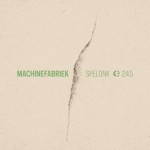
There is a particular kind of honesty in artists who admit they occasionally need to escape their own commissions. Not dramatically, not with some tortured manifesto, just quietly stepping aside to make something that answers to no one. With "Spelonk", Rutger Zuydervelt, better known as Machinefabriek, does exactly that. No brief, no external narrative, no polite obligation to synchronize with images or choreography. Just sound, left alone to see what it becomes.
Released on Crónica, the album consists of three long pieces, austerely titled "I, II, III". Which is either refreshingly minimal or mildly passive-aggressive, depending on your tolerance for conceptual restraint. Either way, it sets the tone: this is not a record interested in guiding you. It barely acknowledges your presence.
Zuydervelt’s process here is deceptively simple. “Hardware jams”, he calls them. Oscillators, pedals, small electronic devices, hands moving, decisions made in real time. But the real work happens afterward, in layering and recombination, where fragments of improvisation are folded into each other until something coherent, or at least compellingly unstable, emerges. The emphasis on listening as a phase of composition is crucial. These are not performances captured; they are environments discovered.
The title "Spelonk" translates roughly to “cave”, and the metaphor holds. Not in the cliché sense of darkness and echo, but as a space that reshapes perception. Inside a cave, distance behaves strangely, sound reflects unpredictably, and your sense of orientation quietly dissolves. That is more or less what these pieces do.
“Spelonk I” opens the record with a relatively contained exploration. Textures flicker in and out, like light filtering through an unseen opening. There is movement, but it feels cautious, exploratory. The piece seems to be testing the acoustics of its own world, sending out signals and waiting for their return.
Then comes “Spelonk II”, which expands everything. Duration stretches, layers accumulate, and the sound field thickens into something closer to a living organism than a composition. Low frequencies pulse beneath granular surfaces, while higher elements drift like debris in slow motion. It’s immersive without being overtly dramatic, which is harder to achieve than it sounds. Many artists equate length with significance. Zuydervelt simply lets time pass and trusts that something will reveal itself within it.
By “Spelonk III”, the album reaches a kind of equilibrium. Not resolution, exactly, but a steady state where the elements coexist without needing to assert dominance. The piece breathes. It contracts and expands subtly, maintaining a tension that never quite resolves into narrative. If the previous track was exploration, this feels like habitation.
Zuydervelt has been refining this kind of practice for years, moving fluidly between commissioned work and more personal releases. His discography under the Machinefabriek name is vast, often orbiting themes of memory, texture, and spatial perception. What distinguishes "Spelonk" within that body of work is its immediacy. There is less mediation here, less conceptual framing. The sounds feel closer to their source, even when they become abstract.
That said, “immediacy” does not mean simplicity. The album’s strength lies in its balance between control and unpredictability. Each layer is carefully placed, yet the overall effect retains a sense of discovery. You can hear the process thinking, adjusting, reacting.
There is also a quiet refusal embedded in the record. In an era where music is often optimized for context - film, playlists, background consumption - "Spelonk" resists utility. It does not accompany anything. It does not explain itself. It exists, patiently, asking only for attention.
Which is, admittedly, a demanding request.
But if you grant it, the reward is a set of spaces that feel strangely alive: alien, as Zuydervelt suggests, but not hostile. Just unfamiliar enough to remind you that listening, when taken seriously, is still a form of exploration.
Released on Crónica, the album consists of three long pieces, austerely titled "I, II, III". Which is either refreshingly minimal or mildly passive-aggressive, depending on your tolerance for conceptual restraint. Either way, it sets the tone: this is not a record interested in guiding you. It barely acknowledges your presence.
Zuydervelt’s process here is deceptively simple. “Hardware jams”, he calls them. Oscillators, pedals, small electronic devices, hands moving, decisions made in real time. But the real work happens afterward, in layering and recombination, where fragments of improvisation are folded into each other until something coherent, or at least compellingly unstable, emerges. The emphasis on listening as a phase of composition is crucial. These are not performances captured; they are environments discovered.
The title "Spelonk" translates roughly to “cave”, and the metaphor holds. Not in the cliché sense of darkness and echo, but as a space that reshapes perception. Inside a cave, distance behaves strangely, sound reflects unpredictably, and your sense of orientation quietly dissolves. That is more or less what these pieces do.
“Spelonk I” opens the record with a relatively contained exploration. Textures flicker in and out, like light filtering through an unseen opening. There is movement, but it feels cautious, exploratory. The piece seems to be testing the acoustics of its own world, sending out signals and waiting for their return.
Then comes “Spelonk II”, which expands everything. Duration stretches, layers accumulate, and the sound field thickens into something closer to a living organism than a composition. Low frequencies pulse beneath granular surfaces, while higher elements drift like debris in slow motion. It’s immersive without being overtly dramatic, which is harder to achieve than it sounds. Many artists equate length with significance. Zuydervelt simply lets time pass and trusts that something will reveal itself within it.
By “Spelonk III”, the album reaches a kind of equilibrium. Not resolution, exactly, but a steady state where the elements coexist without needing to assert dominance. The piece breathes. It contracts and expands subtly, maintaining a tension that never quite resolves into narrative. If the previous track was exploration, this feels like habitation.
Zuydervelt has been refining this kind of practice for years, moving fluidly between commissioned work and more personal releases. His discography under the Machinefabriek name is vast, often orbiting themes of memory, texture, and spatial perception. What distinguishes "Spelonk" within that body of work is its immediacy. There is less mediation here, less conceptual framing. The sounds feel closer to their source, even when they become abstract.
That said, “immediacy” does not mean simplicity. The album’s strength lies in its balance between control and unpredictability. Each layer is carefully placed, yet the overall effect retains a sense of discovery. You can hear the process thinking, adjusting, reacting.
There is also a quiet refusal embedded in the record. In an era where music is often optimized for context - film, playlists, background consumption - "Spelonk" resists utility. It does not accompany anything. It does not explain itself. It exists, patiently, asking only for attention.
Which is, admittedly, a demanding request.
But if you grant it, the reward is a set of spaces that feel strangely alive: alien, as Zuydervelt suggests, but not hostile. Just unfamiliar enough to remind you that listening, when taken seriously, is still a form of exploration.
Greg Stasiw: Guesswork
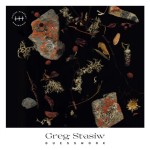
Artist: Greg Stasiw (@)
Title: Guesswork
Format: 12" + Download
Label: Hidden Harmony Recordings (@)
Rated:

Title: Guesswork
Format: 12" + Download
Label: Hidden Harmony Recordings (@)
Rated:
Some artists spend years refining a signature style. Others wander, collect fragments, hesitate, double back, and eventually assemble something that feels less like a statement and more like a map of indecision. Predictably, that second approach tends to be far more interesting.
With "Guesswork", Greg Stasiw turns uncertainty into method. The title is not ironic, nor self-deprecating in the usual performative way. It’s a working principle. The album, released on Hidden Harmony Recordings, gathers around four years of sonic experiments into a sequence that feels at once carefully arranged and quietly provisional, as if each track were still considering whether it wants to exist.
Stasiw’s background reads like a polite refusal to specialize: anthropology, animation, illustration, a life spent moving between cities from New York to Tokyo to Bratislava. His musical formation is equally scattered, beginning with ambient tapes and Windows 98 experiments before drifting through piano lessons, choirs, taiko, metal, and eventually software-based composition. The result is not eclecticism for its own sake, but a kind of porous sensibility. Sounds are not fixed objects here; they are events, spatial suggestions, small provocations.
"Guesswork" originated from an unrealized collaboration with visual artist Philippe Shewchenko, whose imagery nonetheless left a residue strong enough to shape the album’s direction. You can hear that visual impulse throughout: these tracks behave less like songs and more like environments waiting to be entered.
The opening piece, “Signature”, sets the tone with low, patient drones that feel like coordinates rather than declarations. From there, the album drifts into “Field”, where light, buoyant textures suggest a kind of pastoral scene relocated to an unfamiliar planet. It’s calm, but not entirely safe. Something in the timbre keeps the listener slightly off-balance, as if the air itself had been subtly altered.
Throughout the record, Stasiw demonstrates a precise control over sonic space. Notes are placed with restraint, often suspended in near-silence, allowing the listener’s perception to do part of the compositional work. This is not minimalism in the austere, doctrinal sense, but a more intuitive form of reduction. The music removes what it doesn’t urgently need, then waits to see what remains.
“Plant” introduces a fragile piano figure that feels almost too delicate to touch, while “Humidity” expands into a denser ecosystem of percussive echoes and field-like recordings, hinting at unseen lifeforms. There is a recurring sense that each track is a microclimate, governed by its own internal logic.
The shorter interludes - “Distance”, “Arizona”, “Audience” - function like transitional corridors between these environments. Brief, slightly enigmatic, they prevent the album from settling into predictability. Just when you think you’ve understood the terrain, the ground shifts again.
What’s striking is the album’s balance between clarity and ambiguity. The sound design is immaculate: tones are clean, textures finely etched, spatial depth carefully calibrated. And yet the emotional content remains elusive. There is calm here, certainly, but also a faint melancholy, a sense of searching without the promise of resolution.
Stasiw cites influences that might raise an eyebrow if handled less carefully: the environmental serenity of Hiroshi Yoshimura, the weightless lyricism of Harold Budd, the experimental visual sensibility of Norman McLaren, the cosmic drift of Pauline Anna Strom. Fortunately, "Guesswork" avoids the trap of imitation. These references are absorbed rather than displayed, contributing to a soundworld that feels coherent without being easily classifiable.
The longer pieces, such as “Prow” and “Adobe”, allow this approach to fully unfold. Layers accumulate slowly, not in dramatic crescendos but in subtle shifts of density and color. Time stretches. Attention narrows. You begin to notice small details you would normally ignore, which is probably the point.
If there is a quiet irony at the heart of "Guesswork", it lies in how deliberate it all sounds. This is not the work of someone stumbling blindly through possibilities. It is the work of someone who understands that uncertainty, when handled with care, can become a compositional tool. Trial and error, yes. But curated, shaped, and ultimately trusted.
In a musical landscape that often demands clear identities and immediate impact, Stasiw offers something less definitive and more patient: a series of sonic spaces where confusion and clarity coexist without needing to resolve their differences.
Not a bad outcome for guesswork.
With "Guesswork", Greg Stasiw turns uncertainty into method. The title is not ironic, nor self-deprecating in the usual performative way. It’s a working principle. The album, released on Hidden Harmony Recordings, gathers around four years of sonic experiments into a sequence that feels at once carefully arranged and quietly provisional, as if each track were still considering whether it wants to exist.
Stasiw’s background reads like a polite refusal to specialize: anthropology, animation, illustration, a life spent moving between cities from New York to Tokyo to Bratislava. His musical formation is equally scattered, beginning with ambient tapes and Windows 98 experiments before drifting through piano lessons, choirs, taiko, metal, and eventually software-based composition. The result is not eclecticism for its own sake, but a kind of porous sensibility. Sounds are not fixed objects here; they are events, spatial suggestions, small provocations.
"Guesswork" originated from an unrealized collaboration with visual artist Philippe Shewchenko, whose imagery nonetheless left a residue strong enough to shape the album’s direction. You can hear that visual impulse throughout: these tracks behave less like songs and more like environments waiting to be entered.
The opening piece, “Signature”, sets the tone with low, patient drones that feel like coordinates rather than declarations. From there, the album drifts into “Field”, where light, buoyant textures suggest a kind of pastoral scene relocated to an unfamiliar planet. It’s calm, but not entirely safe. Something in the timbre keeps the listener slightly off-balance, as if the air itself had been subtly altered.
Throughout the record, Stasiw demonstrates a precise control over sonic space. Notes are placed with restraint, often suspended in near-silence, allowing the listener’s perception to do part of the compositional work. This is not minimalism in the austere, doctrinal sense, but a more intuitive form of reduction. The music removes what it doesn’t urgently need, then waits to see what remains.
“Plant” introduces a fragile piano figure that feels almost too delicate to touch, while “Humidity” expands into a denser ecosystem of percussive echoes and field-like recordings, hinting at unseen lifeforms. There is a recurring sense that each track is a microclimate, governed by its own internal logic.
The shorter interludes - “Distance”, “Arizona”, “Audience” - function like transitional corridors between these environments. Brief, slightly enigmatic, they prevent the album from settling into predictability. Just when you think you’ve understood the terrain, the ground shifts again.
What’s striking is the album’s balance between clarity and ambiguity. The sound design is immaculate: tones are clean, textures finely etched, spatial depth carefully calibrated. And yet the emotional content remains elusive. There is calm here, certainly, but also a faint melancholy, a sense of searching without the promise of resolution.
Stasiw cites influences that might raise an eyebrow if handled less carefully: the environmental serenity of Hiroshi Yoshimura, the weightless lyricism of Harold Budd, the experimental visual sensibility of Norman McLaren, the cosmic drift of Pauline Anna Strom. Fortunately, "Guesswork" avoids the trap of imitation. These references are absorbed rather than displayed, contributing to a soundworld that feels coherent without being easily classifiable.
The longer pieces, such as “Prow” and “Adobe”, allow this approach to fully unfold. Layers accumulate slowly, not in dramatic crescendos but in subtle shifts of density and color. Time stretches. Attention narrows. You begin to notice small details you would normally ignore, which is probably the point.
If there is a quiet irony at the heart of "Guesswork", it lies in how deliberate it all sounds. This is not the work of someone stumbling blindly through possibilities. It is the work of someone who understands that uncertainty, when handled with care, can become a compositional tool. Trial and error, yes. But curated, shaped, and ultimately trusted.
In a musical landscape that often demands clear identities and immediate impact, Stasiw offers something less definitive and more patient: a series of sonic spaces where confusion and clarity coexist without needing to resolve their differences.
Not a bad outcome for guesswork.