
Browse by Genre
Industrial Music / Industrial Metal / Aggro Industrial / Electro Metal
Industrial Noise / Power Noise / Harsh Noise
Synth Pop / Electro Pop / Synth-Electronica
Techno / Trance / Goa / Drum'n'Bass / Jungle / Tribal / Trip-Hop
Ambient / Electronica / Ethereal / Dub / Soundscapes / Abstract
Experimental / Avantgarde / Weird & Wired / Glitch / Noise / Field Recording
Dark / Gothic / Wave / New Wave / Dark Wave / Industrial Gothic
New Music / Downtown / Avantgarde Jazz / New Classical / World
Search Reviews
Music Reviews
Vittorio Montalti & Blow Up Percussion: The Smell of Blue Electricity

Artist: Vittorio Montalti & Blow Up Percussion (@)
Title: The Smell of Blue Electricity
Format: CD
Label: col legno
Rated:


Title: The Smell of Blue Electricity
Format: CD
Label: col legno
Rated:
As the name "The Smell of Blue Electricity" suggests, Vittorio Montalti’s latest venture with Blow Up Percussion is anything but conventional. But let's be honest, were we really expecting anything less from a composer whose artistic curiosities dwell in the liminal space where acoustic instruments flirt with the beguiling hum of electronics? This record, released on CD by col legno, is a daring exploration of sound that defies easy categorization, marrying the physicality of percussion with the intangible allure of electronic manipulation.
Montalti, a product of Milan’s conservatory halls and IRCAM’s cutting-edge laboratories, clearly revels in dismantling the traditional roles of composer and performer. Here, the lines blur to such an extent that by the time you’ve settled into the first track, "1A+1B", you’re already questioning whether you’re listening to music as it’s typically defined, or rather, experiencing an intricate dance of sonic forces, each teasing and testing the boundaries of the other.
The album’s structure, with its tracks numbered like a cryptic scientific experiment, hints at Montalti’s methodical yet playful approach. The division into sequences and the fragmentation of sound elements offer a listening experience akin to navigating a maze, where each twist and turn unveils a new perspective, a fresh surprise. This is not music for the faint of heart or for those who seek comfort in familiar cadences. Instead, it’s a challenging but ultimately rewarding journey that invites you to shed your preconceptions about what music can or should be.
Blow Up Percussion, the ensemble that collaborates with Montalti on this project, is no stranger to the avant-garde. Their focus on contemporary compositions and their willingness to delve into the realms of musical theater and experimental sound projects makes them the perfect partners in crime for Montalti’s boundary-pushing vision. The ensemble’s performance here is nothing short of masterful, bringing a tactile, almost visceral quality to the music that’s both exhilarating and, at times, unnervingly intense.
Then there’s the electronic component, crafted with the expertise of Tempo Reale, the Florence-based center founded by none other than Luciano Berio. The electronics in "The Smell of Blue Electricity" are not mere embellishments; they’re integral to the work’s identity, expanding the timbral possibilities of the percussion instruments in ways that are both subtle and striking. The electronic sounds are woven so seamlessly into the fabric of the music that it becomes impossible to distinguish where one ends and the other begins, creating a unified sonic landscape that’s as evocative as it is abstract.
Tracks like "2A" and "4C+4D" epitomize this synthesis, with layers of electronic tones and textures adding depth and dimension to the percussive motifs. The result is music that feels both organic and otherworldly, as though the instruments themselves are being animated by some unseen force, guided by Montalti’s meticulous yet mercurial hand.
Despite its intellectual rigor and avant-garde leanings, "The Smell of Blue Electricity" never feels cold or detached. There’s a warmth here, a sense of playfulness even, that pervades the album, particularly in tracks like "3D+3E" where the electronics buzz and hum like a mischievous spirit, coaxing the percussion into ever more daring territory. It’s as though Montalti is reminding us that while his music may be serious, it’s also meant to be enjoyed, savored, and even marveled at.
"The Smell of Blue Electricity" is a work that challenges our perceptions of what music can be while offering a deeply immersive and, yes, electrifying listening experience. It’s not for everyone, but for those willing to engage with it on its own terms, it’s a journey well worth taking.
Montalti, a product of Milan’s conservatory halls and IRCAM’s cutting-edge laboratories, clearly revels in dismantling the traditional roles of composer and performer. Here, the lines blur to such an extent that by the time you’ve settled into the first track, "1A+1B", you’re already questioning whether you’re listening to music as it’s typically defined, or rather, experiencing an intricate dance of sonic forces, each teasing and testing the boundaries of the other.
The album’s structure, with its tracks numbered like a cryptic scientific experiment, hints at Montalti’s methodical yet playful approach. The division into sequences and the fragmentation of sound elements offer a listening experience akin to navigating a maze, where each twist and turn unveils a new perspective, a fresh surprise. This is not music for the faint of heart or for those who seek comfort in familiar cadences. Instead, it’s a challenging but ultimately rewarding journey that invites you to shed your preconceptions about what music can or should be.
Blow Up Percussion, the ensemble that collaborates with Montalti on this project, is no stranger to the avant-garde. Their focus on contemporary compositions and their willingness to delve into the realms of musical theater and experimental sound projects makes them the perfect partners in crime for Montalti’s boundary-pushing vision. The ensemble’s performance here is nothing short of masterful, bringing a tactile, almost visceral quality to the music that’s both exhilarating and, at times, unnervingly intense.
Then there’s the electronic component, crafted with the expertise of Tempo Reale, the Florence-based center founded by none other than Luciano Berio. The electronics in "The Smell of Blue Electricity" are not mere embellishments; they’re integral to the work’s identity, expanding the timbral possibilities of the percussion instruments in ways that are both subtle and striking. The electronic sounds are woven so seamlessly into the fabric of the music that it becomes impossible to distinguish where one ends and the other begins, creating a unified sonic landscape that’s as evocative as it is abstract.
Tracks like "2A" and "4C+4D" epitomize this synthesis, with layers of electronic tones and textures adding depth and dimension to the percussive motifs. The result is music that feels both organic and otherworldly, as though the instruments themselves are being animated by some unseen force, guided by Montalti’s meticulous yet mercurial hand.
Despite its intellectual rigor and avant-garde leanings, "The Smell of Blue Electricity" never feels cold or detached. There’s a warmth here, a sense of playfulness even, that pervades the album, particularly in tracks like "3D+3E" where the electronics buzz and hum like a mischievous spirit, coaxing the percussion into ever more daring territory. It’s as though Montalti is reminding us that while his music may be serious, it’s also meant to be enjoyed, savored, and even marveled at.
"The Smell of Blue Electricity" is a work that challenges our perceptions of what music can be while offering a deeply immersive and, yes, electrifying listening experience. It’s not for everyone, but for those willing to engage with it on its own terms, it’s a journey well worth taking.
Celer: It Would Be Giving Up

Artist: Celer (http://www.celer.jp/)
Title: It Would Be Giving Up
Format: CD x 4 (quadruple CD boxset)
Label: Two Acorns (http://www.twoacorns.jp/)
Rated:
Title: It Would Be Giving Up
Format: CD x 4 (quadruple CD boxset)
Label: Two Acorns (http://www.twoacorns.jp/)
Rated:
There’s something undeniably poignant about the title "It Would Be Giving Up", especially when you consider that it’s attached to a 4CD ambient opus by Celer. One might assume, quite cynically, that the title alone gives you all you need to know: four discs of ambient drone, perfect for the moments when one might feel that giving up is, in fact, an option. But as with most of Celer’s work, what lies beneath the surface is far more nuanced, like a persistent whisper rather than a shout, gently beckoning you into a world where time loses its edge and emotions are blurred into a continuous hum.
Originally released digitally in 2020, "It Would Be Giving Up" now arrives in physical form, remastered and dressed in a custom-designed clamshell box, complete with a 20-page booklet. Celer (the moniker of American ambient artist Will Long) has a reputation for creating expansive, meditative soundscapes that manage to evoke both the intimate and the infinite. This release, spread across four discs, pushes these tendencies even further, with tape loops and analog instruments forming the core of its ethereal sound.
Disc one, "True Maps Of An Unreal Place", unfolds with a 21-minute piece that feels like a slow-motion sunrise. It’s a piece that doesn’t demand your attention so much as it gently tugs at it, pulling you into its serene, almost melancholic orbit. As with much of Celer’s work, the beauty lies in its subtlety. It’s not trying to impress; it’s simply existing, in all its understated glory.
The second disc, "To Stay Up Above", continues this trajectory but leans into a slightly darker, more introspective mood. The analog textures are more pronounced here, with a faint sense of unease simmering just beneath the surface. It’s the kind of track that might soundtrack a contemplative late-night drive through a deserted city — hauntingly beautiful, with a lingering sense of something unresolved.
"Imagined Settlement", the third and longest disc, spans a staggering 44 minutes, and here Celer’s mastery of repetition and gradual evolution truly shines. The piece starts with a gentle drone, building ever so slowly, almost imperceptibly, into a vast, enveloping soundscape. There are no dramatic shifts, no sudden changes in tone. Instead, you’re invited to lose yourself in the slow, steady pulse of the music, much like watching the tide come in, wave after wave, until time itself seems to dissolve.
Finally, the fourth disc, "An Evening, Elsewhere", closes the set with another extended piece, clocking in at 46 minutes. There’s a feeling of quiet resolution here, a sense that whatever emotional journey the previous three discs have taken you on, this is where it all comes to rest. The analog instruments hum softly, like a distant memory fading into the ether, leaving you with a sense of peace, or perhaps a gentle resignation.
"It Would Be Giving Up" isn’t an album that you listen to so much as one that you inhabit. It’s not designed to be dissected or analyzed in the traditional sense; its power lies in its ability to create a space where thoughts and emotions can drift, untethered by the demands of the outside world. If you’re looking for hooks, melodies, or anything resembling traditional structure, you’re in the wrong place. But if you’re willing to surrender to its slow, enveloping embrace, you’ll find a quiet, profound beauty in its depths.
Celer’s work has often been compared to other ambient luminaries like William Basinski or Stars of the Lid, and indeed, "It Would Be Giving Up" shares a kinship with their most introspective works. Yet there’s something uniquely Celer here, an almost ascetic purity to the sound that refuses to be pinned down by genre or expectation. It’s music that exists in its own space, on its own terms—patient, unhurried, and deeply, deeply affecting.
So yes, perhaps "It Would Be Giving Up" is an apt title after all. But instead of giving up, it’s more like giving in—to the sound, to the moment, to the idea that sometimes, just sometimes, letting go is the only way to truly hold on.
Originally released digitally in 2020, "It Would Be Giving Up" now arrives in physical form, remastered and dressed in a custom-designed clamshell box, complete with a 20-page booklet. Celer (the moniker of American ambient artist Will Long) has a reputation for creating expansive, meditative soundscapes that manage to evoke both the intimate and the infinite. This release, spread across four discs, pushes these tendencies even further, with tape loops and analog instruments forming the core of its ethereal sound.
Disc one, "True Maps Of An Unreal Place", unfolds with a 21-minute piece that feels like a slow-motion sunrise. It’s a piece that doesn’t demand your attention so much as it gently tugs at it, pulling you into its serene, almost melancholic orbit. As with much of Celer’s work, the beauty lies in its subtlety. It’s not trying to impress; it’s simply existing, in all its understated glory.
The second disc, "To Stay Up Above", continues this trajectory but leans into a slightly darker, more introspective mood. The analog textures are more pronounced here, with a faint sense of unease simmering just beneath the surface. It’s the kind of track that might soundtrack a contemplative late-night drive through a deserted city — hauntingly beautiful, with a lingering sense of something unresolved.
"Imagined Settlement", the third and longest disc, spans a staggering 44 minutes, and here Celer’s mastery of repetition and gradual evolution truly shines. The piece starts with a gentle drone, building ever so slowly, almost imperceptibly, into a vast, enveloping soundscape. There are no dramatic shifts, no sudden changes in tone. Instead, you’re invited to lose yourself in the slow, steady pulse of the music, much like watching the tide come in, wave after wave, until time itself seems to dissolve.
Finally, the fourth disc, "An Evening, Elsewhere", closes the set with another extended piece, clocking in at 46 minutes. There’s a feeling of quiet resolution here, a sense that whatever emotional journey the previous three discs have taken you on, this is where it all comes to rest. The analog instruments hum softly, like a distant memory fading into the ether, leaving you with a sense of peace, or perhaps a gentle resignation.
"It Would Be Giving Up" isn’t an album that you listen to so much as one that you inhabit. It’s not designed to be dissected or analyzed in the traditional sense; its power lies in its ability to create a space where thoughts and emotions can drift, untethered by the demands of the outside world. If you’re looking for hooks, melodies, or anything resembling traditional structure, you’re in the wrong place. But if you’re willing to surrender to its slow, enveloping embrace, you’ll find a quiet, profound beauty in its depths.
Celer’s work has often been compared to other ambient luminaries like William Basinski or Stars of the Lid, and indeed, "It Would Be Giving Up" shares a kinship with their most introspective works. Yet there’s something uniquely Celer here, an almost ascetic purity to the sound that refuses to be pinned down by genre or expectation. It’s music that exists in its own space, on its own terms—patient, unhurried, and deeply, deeply affecting.
So yes, perhaps "It Would Be Giving Up" is an apt title after all. But instead of giving up, it’s more like giving in—to the sound, to the moment, to the idea that sometimes, just sometimes, letting go is the only way to truly hold on.
Philippe Petit: A Divine Comedy
Artist: Philippe Petit (@)
Title: A Divine Comedy
Format: CD x 2 (double CD)
Label: Cr?nica (@)
Rated:
Title: A Divine Comedy
Format: CD x 2 (double CD)
Label: Cr?nica (@)
Rated:
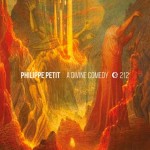
Ah, "A Divine Comedy"! A title as grandiose as the task at hand, and yet Philippe Petit, the ever-ambitious sonic alchemist, dives headlong into the inferno with a flair for the dramatic that would make even Dante blush. This double album is not merely a nod to Alighieri's epic poem; it’s a full-on, spiraling descent into a hellscape of sound where the rules of classical narrative are gleefully cast aside in favor of something far more abstract—and far more unsettling.
The first disc, aptly titled "Inferno", opens with "Halas Jacta Est", a track that sets the stage for the chaos to come. Petit's use of modular synthesis and acousmatic spatialization creates an atmosphere thick with tension, as though you’ve just stumbled into the ninth circle of Hell and are beginning to question all your life choices. There’s a sense of foreboding, a sonic warning that what follows will not be a leisurely stroll through the underworld, but rather a plunge into its most nightmarish depths.
Tracks like "Within the Corridors of Hell..." and "Lucifer, Fallen Angel" do not disappoint. The former is a claustrophobic journey through echoing, dissonant corridors where each sound feels like a spectral whisper in your ear, while the latter plays out like a symphony conducted by the devil himself—chaotic, malevolent, and disturbingly beautiful. Petit's manipulation of sound is masterful here; it’s as though he’s using his modular synths to paint a picture in shades of black, each note a brushstroke in the murky abyss.
Yet, as with Dante’s journey, there is a light at the end of the tunnel—if you can survive long enough to reach it. The second disc, beginning with "Purgatorio, Canto I", offers a semblance of relief. The music here is less oppressive, though no less complex. Petit shifts his palette, introducing lighter tones that suggest a tentative ascent toward redemption. The mood is reflective, almost meditative, but always with that underlying sense of unease, as if reminding us that Purgatory is not a vacation—it’s a state of transition, fraught with its own trials and tribulations.
"Paradiso, Canto I" and "Paradiso, Canto II" close out the album on a somewhat hopeful note, but don’t expect a Hollywood ending. Petit's interpretation of Paradise is less about celestial choirs and more about the fragile, fleeting beauty of transcendence. The final notes of "Paradiso, Canto II" hang in the air like a question mark, unresolved, leaving the listener to ponder the journey they’ve just experienced.
For those familiar with Petit's vast body of work, "A Divine Comedy" is both a continuation and a departure. His love for modular synthesis and electroacoustic manipulation is on full display, yet there’s a conceptual weight here that sets this album apart. It’s clear that Petit isn’t just playing with sound — he’s wrestling with the very fabric of narrative and emotion, distorting them until they barely resemble their original forms. It’s Expressionism in its purest sense, where reality is twisted to provoke a visceral response.
But be warned: this is not an album for the faint of heart. Petit's "A Divine Comedy" demands patience, attention, and perhaps a touch of masochism. It’s a dense, challenging work that offers no easy answers, no comforting melodies to hum along to. Yet, for those willing to descend into its depths, the rewards are immense. It’s a journey that mirrors Dante’s own—harrowing, transformative, and ultimately, unforgettable.
So, if you’re ready to trade your earthly comforts for a trip through the sonic underworld, "A Divine Comedy" awaits. Just remember, as you press play: "Lasciate ogne speranza, voi ch’intrate". Abandon all hope, ye who enter here. And enjoy the ride.
The first disc, aptly titled "Inferno", opens with "Halas Jacta Est", a track that sets the stage for the chaos to come. Petit's use of modular synthesis and acousmatic spatialization creates an atmosphere thick with tension, as though you’ve just stumbled into the ninth circle of Hell and are beginning to question all your life choices. There’s a sense of foreboding, a sonic warning that what follows will not be a leisurely stroll through the underworld, but rather a plunge into its most nightmarish depths.
Tracks like "Within the Corridors of Hell..." and "Lucifer, Fallen Angel" do not disappoint. The former is a claustrophobic journey through echoing, dissonant corridors where each sound feels like a spectral whisper in your ear, while the latter plays out like a symphony conducted by the devil himself—chaotic, malevolent, and disturbingly beautiful. Petit's manipulation of sound is masterful here; it’s as though he’s using his modular synths to paint a picture in shades of black, each note a brushstroke in the murky abyss.
Yet, as with Dante’s journey, there is a light at the end of the tunnel—if you can survive long enough to reach it. The second disc, beginning with "Purgatorio, Canto I", offers a semblance of relief. The music here is less oppressive, though no less complex. Petit shifts his palette, introducing lighter tones that suggest a tentative ascent toward redemption. The mood is reflective, almost meditative, but always with that underlying sense of unease, as if reminding us that Purgatory is not a vacation—it’s a state of transition, fraught with its own trials and tribulations.
"Paradiso, Canto I" and "Paradiso, Canto II" close out the album on a somewhat hopeful note, but don’t expect a Hollywood ending. Petit's interpretation of Paradise is less about celestial choirs and more about the fragile, fleeting beauty of transcendence. The final notes of "Paradiso, Canto II" hang in the air like a question mark, unresolved, leaving the listener to ponder the journey they’ve just experienced.
For those familiar with Petit's vast body of work, "A Divine Comedy" is both a continuation and a departure. His love for modular synthesis and electroacoustic manipulation is on full display, yet there’s a conceptual weight here that sets this album apart. It’s clear that Petit isn’t just playing with sound — he’s wrestling with the very fabric of narrative and emotion, distorting them until they barely resemble their original forms. It’s Expressionism in its purest sense, where reality is twisted to provoke a visceral response.
But be warned: this is not an album for the faint of heart. Petit's "A Divine Comedy" demands patience, attention, and perhaps a touch of masochism. It’s a dense, challenging work that offers no easy answers, no comforting melodies to hum along to. Yet, for those willing to descend into its depths, the rewards are immense. It’s a journey that mirrors Dante’s own—harrowing, transformative, and ultimately, unforgettable.
So, if you’re ready to trade your earthly comforts for a trip through the sonic underworld, "A Divine Comedy" awaits. Just remember, as you press play: "Lasciate ogne speranza, voi ch’intrate". Abandon all hope, ye who enter here. And enjoy the ride.
Teresa Cos: Karnofsky\'s Score
In the ever-expanding universe of experimental music, where sound often feels more like a theoretical exercise than an emotional journey, Teresa Cos’ "Karnofsky’s Score" manages to hover somewhere between the clinical and the poetic, the quantified and the ineffable. Here is an album that seems as comfortable being dissected under the cold glare of a microscope as it is in the dark recesses of your late-night thoughts. Cos, with a steady hand and a knowing smile, invites us to navigate the liminal space between life and its inevitable cessation, using the Karnofsky Performance Scale as her unsettling guide.
Let’s get the obvious out of the way: "Karnofsky’s Score" is not for the casual listener. If you’re looking for something to hum along to while you wash the dishes, this isn’t it. But if you’re willing to let your mind wander through corridors where the walls echo with the distant hum of medical machinery and the soft strum of existential dread, then you’re in for something special.
Opening with "100-70", Cos plunges us directly into a world where numbers dictate fate. The guitar, recorded with the intimacy of a whispered secret, loops and evolves, morphing into a haunting dialogue between two speakers trapped on opposite sides of the same void. It’s a conversation as much with oneself as with the ghostly presence of Dr. David A. Karnofsky, whose legacy Cos resurrects with an eerie tenderness.
David’s Theme is where Cos really begins to flex her compositional muscles. The track feels less like a tribute and more like a séance, summoning the spirit of the oncologist who, like his patients, was ultimately at the mercy of the very scale he devised. Cos’s guitar here is spectral, weaving in and out of a soundscape that is as much about what you don’t hear as what you do. The silence between the notes is pregnant with meaning, each pause a reminder of the ticking clock that governs our mortal coil.
As the album progresses through "70-50" and "50-30", the descent becomes palpable. The tracks shorten, the mood tightens, and the sense of impending collapse looms large. Cos’s use of delay and pitch-shifting pedals is particularly effective here, stretching and compressing time in a way that mirrors the experience of those at the mercy of Karnofsky’s Scale. By the time we reach "30-0", the atmosphere has become almost unbearably taut, like a string about to snap. It’s the aural equivalent of watching a terminal diagnosis being delivered in slow motion.
But it’s in the final track, "Intervallo", where Cos lets us up for air. At six minutes and thirty-three seconds, it’s the album’s longest piece and also its most enigmatic. The harmonica, a latecomer to the album’s instrumentation, adds a layer of unexpected warmth, a fleeting glimpse of something like hope, or at least, acceptance. It’s a fitting conclusion to an album that, while unflinchingly stark, never succumbs to despair.
In "Karnofsky’s Score", Teresa Cos has crafted a work that is as challenging as it is rewarding. It’s an album that dares to stare into the abyss, but does so with a grace and sensitivity that is rare in today’s experimental music scene. It’s music for those who aren’t afraid to confront the uncomfortable truths of existence, for those who understand that sometimes the most profound beauty lies in the spaces between sound and silence, life and death.
So, if you find yourself, like so many of us, adrift in the chaos of modern life, perhaps it’s time to step back, dim the lights, and let "Karnofsky’s Score" guide you through the darkened corridors of your own mortality. Just be sure to keep a close eye on the scale.
Let’s get the obvious out of the way: "Karnofsky’s Score" is not for the casual listener. If you’re looking for something to hum along to while you wash the dishes, this isn’t it. But if you’re willing to let your mind wander through corridors where the walls echo with the distant hum of medical machinery and the soft strum of existential dread, then you’re in for something special.
Opening with "100-70", Cos plunges us directly into a world where numbers dictate fate. The guitar, recorded with the intimacy of a whispered secret, loops and evolves, morphing into a haunting dialogue between two speakers trapped on opposite sides of the same void. It’s a conversation as much with oneself as with the ghostly presence of Dr. David A. Karnofsky, whose legacy Cos resurrects with an eerie tenderness.
David’s Theme is where Cos really begins to flex her compositional muscles. The track feels less like a tribute and more like a séance, summoning the spirit of the oncologist who, like his patients, was ultimately at the mercy of the very scale he devised. Cos’s guitar here is spectral, weaving in and out of a soundscape that is as much about what you don’t hear as what you do. The silence between the notes is pregnant with meaning, each pause a reminder of the ticking clock that governs our mortal coil.
As the album progresses through "70-50" and "50-30", the descent becomes palpable. The tracks shorten, the mood tightens, and the sense of impending collapse looms large. Cos’s use of delay and pitch-shifting pedals is particularly effective here, stretching and compressing time in a way that mirrors the experience of those at the mercy of Karnofsky’s Scale. By the time we reach "30-0", the atmosphere has become almost unbearably taut, like a string about to snap. It’s the aural equivalent of watching a terminal diagnosis being delivered in slow motion.
But it’s in the final track, "Intervallo", where Cos lets us up for air. At six minutes and thirty-three seconds, it’s the album’s longest piece and also its most enigmatic. The harmonica, a latecomer to the album’s instrumentation, adds a layer of unexpected warmth, a fleeting glimpse of something like hope, or at least, acceptance. It’s a fitting conclusion to an album that, while unflinchingly stark, never succumbs to despair.
In "Karnofsky’s Score", Teresa Cos has crafted a work that is as challenging as it is rewarding. It’s an album that dares to stare into the abyss, but does so with a grace and sensitivity that is rare in today’s experimental music scene. It’s music for those who aren’t afraid to confront the uncomfortable truths of existence, for those who understand that sometimes the most profound beauty lies in the spaces between sound and silence, life and death.
So, if you find yourself, like so many of us, adrift in the chaos of modern life, perhaps it’s time to step back, dim the lights, and let "Karnofsky’s Score" guide you through the darkened corridors of your own mortality. Just be sure to keep a close eye on the scale.
Ben Glas: Fugal States
When one hears the phrase "Fugal States", the immediate instinct might be to expect a modern homage to Bach — a rigorous, mathematically precise exploration of counterpoint and theme. But this is Ben Glas we’re talking about, a composer whose idea of a fugue seems more akin to a sonic paradox than a Baroque exercise. Glas takes the rigid structure of the fugue, tosses it into a black hole of drone and ambient music, and watches as it stretches, compresses, and eventually mutates into something entirely different, something that teeters on the edge of the abstract and the profoundly physical.
The album opens with “Fugal State I”, and right from the start, you’re gently informed that this isn’t going to be a typical listening experience. The piece unfolds slowly, a low hum permeating the air like a deep breath you didn’t know you were holding. It’s as if the music is not in a rush to reveal itself; instead, it asks you to slow down and tune in. Here, the fugue is more of a distant memory — a fleeting echo that has been absorbed by the drone, leaving behind only a trace of its former self.
As we progress through the series, “Fugal State II” and “Fugal State III” introduce a sense of rhythm and structure, but just barely. These pieces feel like they’re trying to hold onto a shape, a form, yet Glas keeps pulling them apart, stretching them across registers in a way that is at once disorienting and deeply calming. The fugue becomes less of a compositional technique and more of a philosophical concept—a way of thinking about time and space that is fluid, malleable, and constantly in flux.
Glas is almost cheeky in his approach, as if he’s fully aware that the title "Fugal States" sets up an expectation that he has no intention of fulfilling in any traditional sense. The fugal elements are there, but they’re buried, hidden within layers of sound that move in and out of focus like distant galaxies. In “Fugal State IV” and “Fugal State V”, the interplay of tones and drones creates a texture that feels both expansive and intimate, as if you’re hearing the universe breathe.
By the time we reach “Fugal State VII”, the longest track at 11 minutes, the album has fully settled into its own peculiar rhythm. Here, the fugal structure is a distant dream, replaced by something more elemental — a soundscape that seems to pulse and grow of its own accord. It’s in this track that the album’s concept comes into full view: this is not music that demands your attention; it invites you to drift in and out, to let your mind wander and return whenever it pleases.
Glas himself suggests that you play this music to your furniture, and while that may seem like an odd recommendation, it’s actually quite fitting. "Fugal States" is an album that thrives in the background, where it can subtly influence your environment, coloring the air with its ethereal tones. But don’t mistake this for mere ambient wallpaper—there’s a depth here that rewards close listening, a complexity that reveals itself in layers the more time you spend with it.
And this is where Glas’ genius lies: in creating music that is simultaneously profound and playful, meditative and mischievous. "Fugal States" is an album that challenges you to think about music in new ways, to consider the possibilities of form and structure when they’re not bound by tradition. It’s an invitation to explore the spaces between sound and silence, between the familiar and the unknown.
In the end, "Fugal States" is less about the fugue and more about the state of being it induces — a state that’s both contemplative and slightly surreal, like waking up from a dream that you can’t quite remember. It’s music that doesn’t just exist in time, but manipulates it, bending and twisting it until you’re no longer sure where you are or how you got there. And yet, somehow, it all feels exactly right.
So if you’re looking for an album that challenges, surprises, and ultimately rewards, "Fugal States" might just be what you didn’t know you needed. It’s a fugal journey that’s as much about the mind as it is about the music—an exploration of sound that’s as endless and open as the space it occupies. And in the end, isn’t that the kind of experience we’re all looking for?
The album opens with “Fugal State I”, and right from the start, you’re gently informed that this isn’t going to be a typical listening experience. The piece unfolds slowly, a low hum permeating the air like a deep breath you didn’t know you were holding. It’s as if the music is not in a rush to reveal itself; instead, it asks you to slow down and tune in. Here, the fugue is more of a distant memory — a fleeting echo that has been absorbed by the drone, leaving behind only a trace of its former self.
As we progress through the series, “Fugal State II” and “Fugal State III” introduce a sense of rhythm and structure, but just barely. These pieces feel like they’re trying to hold onto a shape, a form, yet Glas keeps pulling them apart, stretching them across registers in a way that is at once disorienting and deeply calming. The fugue becomes less of a compositional technique and more of a philosophical concept—a way of thinking about time and space that is fluid, malleable, and constantly in flux.
Glas is almost cheeky in his approach, as if he’s fully aware that the title "Fugal States" sets up an expectation that he has no intention of fulfilling in any traditional sense. The fugal elements are there, but they’re buried, hidden within layers of sound that move in and out of focus like distant galaxies. In “Fugal State IV” and “Fugal State V”, the interplay of tones and drones creates a texture that feels both expansive and intimate, as if you’re hearing the universe breathe.
By the time we reach “Fugal State VII”, the longest track at 11 minutes, the album has fully settled into its own peculiar rhythm. Here, the fugal structure is a distant dream, replaced by something more elemental — a soundscape that seems to pulse and grow of its own accord. It’s in this track that the album’s concept comes into full view: this is not music that demands your attention; it invites you to drift in and out, to let your mind wander and return whenever it pleases.
Glas himself suggests that you play this music to your furniture, and while that may seem like an odd recommendation, it’s actually quite fitting. "Fugal States" is an album that thrives in the background, where it can subtly influence your environment, coloring the air with its ethereal tones. But don’t mistake this for mere ambient wallpaper—there’s a depth here that rewards close listening, a complexity that reveals itself in layers the more time you spend with it.
And this is where Glas’ genius lies: in creating music that is simultaneously profound and playful, meditative and mischievous. "Fugal States" is an album that challenges you to think about music in new ways, to consider the possibilities of form and structure when they’re not bound by tradition. It’s an invitation to explore the spaces between sound and silence, between the familiar and the unknown.
In the end, "Fugal States" is less about the fugue and more about the state of being it induces — a state that’s both contemplative and slightly surreal, like waking up from a dream that you can’t quite remember. It’s music that doesn’t just exist in time, but manipulates it, bending and twisting it until you’re no longer sure where you are or how you got there. And yet, somehow, it all feels exactly right.
So if you’re looking for an album that challenges, surprises, and ultimately rewards, "Fugal States" might just be what you didn’t know you needed. It’s a fugal journey that’s as much about the mind as it is about the music—an exploration of sound that’s as endless and open as the space it occupies. And in the end, isn’t that the kind of experience we’re all looking for?