
Browse by Genre
Industrial Music / Industrial Metal / Aggro Industrial / Electro Metal
Industrial Noise / Power Noise / Harsh Noise
Synth Pop / Electro Pop / Synth-Electronica
Techno / Trance / Goa / Drum'n'Bass / Jungle / Tribal / Trip-Hop
Ambient / Electronica / Ethereal / Dub / Soundscapes / Abstract
Experimental / Avantgarde / Weird & Wired / Glitch / Noise / Field Recording
Dark / Gothic / Wave / New Wave / Dark Wave / Industrial Gothic
New Music / Downtown / Avantgarde Jazz / New Classical / World
Search Reviews
Music Reviews
VV.AA.: Happy Holidays: 2025 Zaftig Research Holiday Sampler
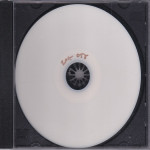
I always considered Chain D.L.K. the site that champions independent artists making music in obscure, leftfield, gray area genres that get little to no publicity or coverage elsewhere. These folks almost always make little to no money and release their work primarily because they love what they do, hope others do too and dollars be damned. (It wouldn't hurt to send some $$ their way and buy their product if you really like what's being offered.) That being said, once again it's time for the annual Zaftig Research Holiday Sampler. So what is Zaftig Research you may ask? Here is a partial explanation from label head, Brett Lunceford.
"From 1996 on, Zaftig Research has mainly functioned as a record label for our small group of artists, releasing limited edition works on CDR. We specialize in noise, dark ambient, power electronics, and other genres that are difficult to classify. We are mostly known for Stolen Light, Goose, and the annual Christmas compilations. We have also released a series of split releases with some of the more interesting names in experimental music."
Here is the lineup on the 2025 compilation:
1. Deforma - Light Speed Sleigh Ride
2. Fail - Merry Xmas, Enjoy Your Orange-Tinted Existential Chaos!
3. Goose - New Year's Eve
4. Narishkeyt - Tied Up Listening in a Corner While Everyone Has Fun
5. Nerthus + Praying For Oblivion - Asphalt Kathedrale
6. Orange - Christmas at Ground Zero
7. R4 - Urbi et Orbi (Pope'€™s Last Christmas Message)
8. Stolen Light - Santa Travelling at an Average Speed of 4,444,444.4m/s
9. Orange - Father Christmas
10.SUCCULENT SUCCUBUS - Hail Santa
11.This Is What I Hear When You Talk - The Listening of This Track Will Incur an 840% Tariff
12.Wilt - A Mournful Winter Solstice
Let's dive in to what we've got here. Deforma's "Light Speed Sleigh Ride" has all the rumbling power of freight train in an earthquake, relentless in its 4 minutes. Fail's "Merry Xmas, Enjoy Your Orange-Tinted Existential Chaos!" presents mangled, distorted electronic tones in various frequencies in a random display of power electronics. Lots of noise variety on this one, with an abrupt stop at the end. Goose's - "New Year's Eve" sounds like bombs or artillery fire in the distance, with a possible warning signal in the background. "Tied Up Listening in a Corner While Everyone Has Fun" by Narishkeyt sounds like the holiday party you never wanted to go to, or maybe a home invasion with a jumble of odd sonics and cut-up voices. The collaborative track by Nerthus + Praying For Oblivion, "Asphalt Kathedrale," is industrial noise and electronics designed to drive you out of your skull. There is definitely a loopish quality about this track, and the irregular beats did not go unnoticed. "Christmas at Ground Zero" by Orange gives an end of the world poetic recitation over a background of a nuclear holocaust. R4's " Urbi et Orbi (Pope'€™s Last Christmas Message)" deliver's Pop Leo XIV's 2025 Christmas message (in Italian) over a background of noise and power electronics. "Santa Travelling at an Average Speed of 4,444,444.4m/s" by Stolen Light is a relentless howling noise-fest from start to finish. Oh those poor reindeer! Orange is back again with "Father Christmas," the most traditionally music track so far. It sounds like "Silent Night" played on guitar, but with lots of effects and diversions, surrounded by plenty of noise. The original Christmas carol is barely recognizable, and by the end you will probably not remember what you've been listening to. SUCCULENT SUCCUBUS gives you "Hail Santa," which is primarily a repetitive industrial noise loop. Rearranging the letters of "Santa" will give you a more appropriate name for this track's hail. This Is What I Hear When You Talk's "The Listening of This Track Will Incur an 840% Tariff" was obviously inspired by Uncle Scam. It's more dark ambient than noise, but still with a strong noise undercurrent. It could have been similarly titled to Wilt's "A Mournful Winter Solstice" which was not on the CD Brett sent me for some odd reason, only 11 tracks out of 12.
Over all, I'm liking this 2025 Holiday Sampler better than some of Zaftig Research's previous years and I encourage you to go buy it if you're a noise enthusiast because that's the only way you'll get it. I think that it's only six bucks, a small price to pay in this age of gluttonous oligarchical consumerism.
"From 1996 on, Zaftig Research has mainly functioned as a record label for our small group of artists, releasing limited edition works on CDR. We specialize in noise, dark ambient, power electronics, and other genres that are difficult to classify. We are mostly known for Stolen Light, Goose, and the annual Christmas compilations. We have also released a series of split releases with some of the more interesting names in experimental music."
Here is the lineup on the 2025 compilation:
1. Deforma - Light Speed Sleigh Ride
2. Fail - Merry Xmas, Enjoy Your Orange-Tinted Existential Chaos!
3. Goose - New Year's Eve
4. Narishkeyt - Tied Up Listening in a Corner While Everyone Has Fun
5. Nerthus + Praying For Oblivion - Asphalt Kathedrale
6. Orange - Christmas at Ground Zero
7. R4 - Urbi et Orbi (Pope'€™s Last Christmas Message)
8. Stolen Light - Santa Travelling at an Average Speed of 4,444,444.4m/s
9. Orange - Father Christmas
10.SUCCULENT SUCCUBUS - Hail Santa
11.This Is What I Hear When You Talk - The Listening of This Track Will Incur an 840% Tariff
12.Wilt - A Mournful Winter Solstice
Let's dive in to what we've got here. Deforma's "Light Speed Sleigh Ride" has all the rumbling power of freight train in an earthquake, relentless in its 4 minutes. Fail's "Merry Xmas, Enjoy Your Orange-Tinted Existential Chaos!" presents mangled, distorted electronic tones in various frequencies in a random display of power electronics. Lots of noise variety on this one, with an abrupt stop at the end. Goose's - "New Year's Eve" sounds like bombs or artillery fire in the distance, with a possible warning signal in the background. "Tied Up Listening in a Corner While Everyone Has Fun" by Narishkeyt sounds like the holiday party you never wanted to go to, or maybe a home invasion with a jumble of odd sonics and cut-up voices. The collaborative track by Nerthus + Praying For Oblivion, "Asphalt Kathedrale," is industrial noise and electronics designed to drive you out of your skull. There is definitely a loopish quality about this track, and the irregular beats did not go unnoticed. "Christmas at Ground Zero" by Orange gives an end of the world poetic recitation over a background of a nuclear holocaust. R4's " Urbi et Orbi (Pope'€™s Last Christmas Message)" deliver's Pop Leo XIV's 2025 Christmas message (in Italian) over a background of noise and power electronics. "Santa Travelling at an Average Speed of 4,444,444.4m/s" by Stolen Light is a relentless howling noise-fest from start to finish. Oh those poor reindeer! Orange is back again with "Father Christmas," the most traditionally music track so far. It sounds like "Silent Night" played on guitar, but with lots of effects and diversions, surrounded by plenty of noise. The original Christmas carol is barely recognizable, and by the end you will probably not remember what you've been listening to. SUCCULENT SUCCUBUS gives you "Hail Santa," which is primarily a repetitive industrial noise loop. Rearranging the letters of "Santa" will give you a more appropriate name for this track's hail. This Is What I Hear When You Talk's "The Listening of This Track Will Incur an 840% Tariff" was obviously inspired by Uncle Scam. It's more dark ambient than noise, but still with a strong noise undercurrent. It could have been similarly titled to Wilt's "A Mournful Winter Solstice" which was not on the CD Brett sent me for some odd reason, only 11 tracks out of 12.
Over all, I'm liking this 2025 Holiday Sampler better than some of Zaftig Research's previous years and I encourage you to go buy it if you're a noise enthusiast because that's the only way you'll get it. I think that it's only six bucks, a small price to pay in this age of gluttonous oligarchical consumerism.
Malo Moray: Embrace
Artist: Malo Moray (@)
Title: Embrace
Format: CD & 12" + Download
Label: Possibly Sam Records (http://www.possiblysam.com/) (@)
Rated:

Title: Embrace
Format: CD & 12" + Download
Label: Possibly Sam Records (http://www.possiblysam.com/) (@)
Rated:
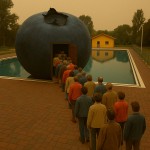
Malo Moray (aka Malo Moray & His Inflatable Knee) is a bassist, composer and performer from Leipzig, Germany and his latest release, 'Embrace,' was recorded live in front of a small audience of about two dozen people and recorded directly to vinyl completely in real-time, no overdubs. Using double bass, tapes, electronics and live processing, Malo explores a fragile and immersive sound world, somewhere between ambient, krautrock and jazz, inspired by Brian Eno. Laurie Anderson, David Sylvian, Swans and Soundwalk Collective. Malo says 'Embrace' is about presence- celebrating slowness and trust.
Malo's inspiration influences are certainly commendable, but don't expect the album to sound like any of them in particular. The album is only four tracks of varying lengths in about 41 minutes. First track, "Over The Mountain Range" begins with a background ambient drone (sustained synth chord) and incidental electronic crackle/static and then bass improvisation, later with bowed and processed bass background (possibly on tape), and after the bowed bass becomes the soloing instrument. With solo bowed stringed instruments there is often a degree of melancholy and that is not absent here. About 10:40 into the piece Malo begins his vocal recitation, a sort of speak-singing- not dissimilar to Laurie Anderson's style; a sort of anecdotal dream sequence that is visceral in an unexpected way. The story-like dialogue draws you in compelling your attention. It blends into track 2, "Himiko" with ethereal wordless vocals borne on an ambient cloud. More bowed bass follows. Track 3, "I Am Here Now" sounds like spring with ambient natural sounds (a stream, birds) and orchestral synth strings. A couple minutes into the piece Malo beings another vocal recitation There is applause at the end of this one, just to let you know that it's live and Malo addresses the audience in his native Deutsche, while all of his recitations have been in English. Final track, "Vanishing Act" conjures Leonard Cohen vocally, and the combination of bass and the ambient background is just gorgeous. I am truly impressed. More applause and a final brief address in German follows.
All things considered, this is a remarkable recording, a magical experience that transcends many of the live albums I've ever heard. While the deluxe limited editions are sold out, the Blueberry Translucent vinyl with 12-page booklet, OBI, poster and postcard (limited edition of 70) and Lemon Popsicle Translucent vinyl with 12-page booklet and OBI (limited edition of 200) and Blueberry Cake CD (limited edition of 100) are still available. You really need to hear this. Highly recommended!
Malo's inspiration influences are certainly commendable, but don't expect the album to sound like any of them in particular. The album is only four tracks of varying lengths in about 41 minutes. First track, "Over The Mountain Range" begins with a background ambient drone (sustained synth chord) and incidental electronic crackle/static and then bass improvisation, later with bowed and processed bass background (possibly on tape), and after the bowed bass becomes the soloing instrument. With solo bowed stringed instruments there is often a degree of melancholy and that is not absent here. About 10:40 into the piece Malo begins his vocal recitation, a sort of speak-singing- not dissimilar to Laurie Anderson's style; a sort of anecdotal dream sequence that is visceral in an unexpected way. The story-like dialogue draws you in compelling your attention. It blends into track 2, "Himiko" with ethereal wordless vocals borne on an ambient cloud. More bowed bass follows. Track 3, "I Am Here Now" sounds like spring with ambient natural sounds (a stream, birds) and orchestral synth strings. A couple minutes into the piece Malo beings another vocal recitation There is applause at the end of this one, just to let you know that it's live and Malo addresses the audience in his native Deutsche, while all of his recitations have been in English. Final track, "Vanishing Act" conjures Leonard Cohen vocally, and the combination of bass and the ambient background is just gorgeous. I am truly impressed. More applause and a final brief address in German follows.
All things considered, this is a remarkable recording, a magical experience that transcends many of the live albums I've ever heard. While the deluxe limited editions are sold out, the Blueberry Translucent vinyl with 12-page booklet, OBI, poster and postcard (limited edition of 70) and Lemon Popsicle Translucent vinyl with 12-page booklet and OBI (limited edition of 200) and Blueberry Cake CD (limited edition of 100) are still available. You really need to hear this. Highly recommended!
Modern Silent Cinema: Flesh Mother (Redux)
Artist: Modern Silent Cinema (@)
Title: Flesh Mother (Redux)
Format: CD & 12" + Download
Label: Bad Channel Records (@)
Rated:

Title: Flesh Mother (Redux)
Format: CD & 12" + Download
Label: Bad Channel Records (@)
Rated:
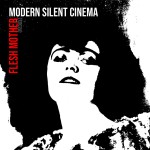
I just recently received this release from Cullen Gallagher (a transplant from Maine to Brooklyn, New York) who operates under the name of Modern Silent Cinema. MSC's releases go all the way back to 2004 with a varied approach to left field music, ranging from oddball soundtracks to primitive lo-fo avant garde piano and weird indie guitar/electronics albums. 'Flesh Mother' was originally recorded back in 2009 but now comes to light in commercial formats, remixed with a bonus track and remastered by Caleb Mulkerin (of Big Blood). The release date is scheduled for December 29, 2025, and this is one of the few times I've actually gotten a review finished before the release date. 'Flesh Mother (Redux)' is primarily a noise/black metal album with lots of distorted guitar grind and electronic grief. The opening track, "Velvet-Clawed Misfortune Approaches" begins with a wall of loud, heavy distortion with a vague notion of chord/note change. This lasts incessantly up to 3/4 of the way through the nearly 4 minute piece, the last quarter being a wind-down of sorts. Only true noisophiles may be brave enough to continue. The title track is next, a good deal more nuanced in its approach to noise with its distorted sonics and metallic rumblings as a strange rhythm emerges from the shadows. It sounds like what I would imagine to be a dreaming but restless malevolent dragon. "Twisted Passion (Made Her a Mistress of Sin)" has a vaguely shoegaze quality about it with some melodic concession but still primarily noise. "Acrohypothermy" fires guitar through all distortion pedals at once with some sort of swirling echo just to keep things moving. It's a phantasmagoria of noise indulgence until the end. Cullen break out the piano for '"Whittington's Wishes" as psychotic and distorted notes careen in a surreal echo chamber. Back to more heavy guitar-created noise on "Emlorin" but this time there is a melody woven into it like a demonic fanfare. More guitar harshness is the mainstay of "What You Have Left" that I'm sure is ear-splitting and teeth-jarring at a loud volume. "Assuage" takes a sustained, overdriven guitar note into a buzzy, seemingly endless drone with overtones that lasts for 6:25. (Talk about endurance tests...whew!) Finally we get the last track, "Fires That Destroy" which is unlike anything else on the album. Here you actually hear Cullen play his guitar without the heavy distortion (but still with some effects) in something that might resemble a song, or at least the makings of one. It is an odd chord progression with a fair amount of improvisation that might have been the result of on-the-spot creation. For me, what makes Modern Silent Cinema interesting is Cullen's output beyond this album. 'Flesh Mother's' appeal will largely be limited to black metal noise enthusiasts but those interested in a wider variety of avant garde sounds should check out MSC's other releases, and there are quite a few of them. You can purchase the CD of this album from MSC's Bandcamp site, but you'll have to go to the Bad Channel Records label site for the vinyl. By the way, that's the image of Polish silent film femme fatale Pola Negri on the cover.
SixTurnsNine: Soul Glitches

Artist: SixTurnsNine (@)
Title: Soul Glitches
Format: CD & 12" + Download
Label: self-released
Rated:
Title: Soul Glitches
Format: CD & 12" + Download
Label: self-released
Rated:
Over a month ago Lutz Bauer, the guy behind the electronics and programming of SixTurnsNine asked me if I'd be interested in reviewing the band's new album, 'Soul Glitches' and I said sure send me a copy of the CD. Well, the mail from Europe is really slow these days (for obvious geopolitical reasons) so I deceided that since it's kind of a slow time to just go on SixTurnsNine's Bandcamp site and check it out. The group is still a trio with Anja Valpiani (Vocals); Lutz Bauer (Electronics / Programming) and Philip Akoto (Bass Guitar). The album is nine tracks of downtempo gripping and stirring stories about dealing with such recurring, flashback-like “glitches” triggered by thoughts, feelings, or memories. The album reflects more mature songwriting (this being their third) and Anja's voice has never sounded better. She carries the lyrics with emotive expression and cool confidence. Comparisons with Portishead are inevitable but that band hasn't done anything new in a long while and their last album ('Third') was pretty mediocre and a lifetime ago in 2008. The music on 'Soul Glitches' is dark, bleak and riveted with industrial nuts and bolts, yet Anja's uber-melodic voice sounds like an angelic cry above the firmament. While the song structure isn't what I'd call complex, they do manage to pack a great amount of atmosphere into their minimal production. 'Soul Glitches' is somewhat heavier than their previous two albums, perhaps a sign of the times. Although they're all good I think the two most compelling tracks on the album are "Tripping Point" and "Distortion". This Düsseldorf band is touring now so if you happen to be in Germany, you should go see them. And if you're looking for 'Soul Glitches' on vinyl, you will have to go to the band's website (https://www.sixturnsnine.de/) because it's not available in that format on their Bandcamp site. Great stuff!
Rudy Adrian: Along the Coppermine Ridge
Artist: Rudy Adrian (@)
Title: Along the Coppermine Ridge
Format: CD + Download
Label: Spotted Peccary Music (@)
Rated:
Title: Along the Coppermine Ridge
Format: CD + Download
Label: Spotted Peccary Music (@)
Rated:
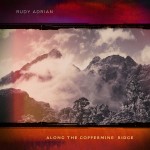
New Zealand soundscape artist Rudy Adrian is back with a new album for his 21st (not counting 'The Sleepy Hills 6 Extended,' sort of a continuation of 2024's 'Beyond The Sleepy Hills') over all and 11th on the Spotted Peccary label, attesting to his prolific output as an ambient artist. I didn't much think about this until now, but Adrian's albums are always easy to listen to but bloody hard to review. There is so much more "space" between the actual music (notes, chords, timbres) that often is the compositional main ingredient that cannot be easily defined and quantified. Both in the promo text from Adrian's Bandcamp site and Spotted Peccary, [the album]"... is like the essence of landscape photography in sonic form. Here, in vast texture and shimmering chimes, Adrian conjures dense forests and dramatic mountain crests, breeze-buffeted snowdrifts and swirling cloud formations of self-reflection." That reads a lot into the music from imagination, and not everyone is going to imagine the same scenario. Take the opener, "Castle Rocks," with its reverb-saturated ostinado piano chords that seem to float on formless ambient effects. From this one could imagine a forgotten gothic graveyard, or a heavenly cloud. It's all subjective. While "Ridgetop Clouds" does have an airy ambience about it, the trickling sound of water brings it back down to earth. Light, amorphic chordal pads with organic overtones and incidental synth sounds could either be construed as a spiritual experience, or a balloon ride over a vast landscape. Unless one is willing to describe all the sonic elements of each track in detail, all we have to convey is just our imagination, and describing each and every sonic event is just too much work for me. Like Adrian's other albums, you get a good number of tracks (11) in over an hour's worth (62 minutes) of peaceful, thoughtful ambient compositions that flow gently into one another with moments of light and dark, but nothing thematic you can easily define. Rudy is careful to present only the vaguest of melodic motifs (as in the guitar on "Where the Skylarks Sing,") avoiding any thematic development beyond a notion. Adrian's compositional subtlety is certainly not lost on me but there is not much really new here on 'Along the Coppermine Ridge.' If I had to put it into a seasonal perspective, I think I'd classify this work as a winter album, which seems to just fit the climate of right now.