
Browse by Genre
Industrial Music / Industrial Metal / Aggro Industrial / Electro Metal
Industrial Noise / Power Noise / Harsh Noise
Synth Pop / Electro Pop / Synth-Electronica
Techno / Trance / Goa / Drum'n'Bass / Jungle / Tribal / Trip-Hop
Ambient / Electronica / Ethereal / Dub / Soundscapes / Abstract
Experimental / Avantgarde / Weird & Wired / Glitch / Noise / Field Recording
Dark / Gothic / Wave / New Wave / Dark Wave / Industrial Gothic
New Music / Downtown / Avantgarde Jazz / New Classical / World
Search Reviews
Music Reviews
The Deep Bells: Liberté
Artist: The Deep Bells (@)
Title: Liberté
Format: CD + Download
Label: Sound In Silence Records (@)
Rated:


Title: Liberté
Format: CD + Download
Label: Sound In Silence Records (@)
Rated:
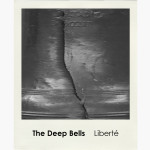
The Deep Bells is a collaboration between Yellow6 and The Corrupting Sea that has been 20 years in the making. Having met through The Corrupting Sea’s love of Yellow6’s music circa the early 2000’s, Jon Attwood (Yellow6) and Jason T. Lamoreaux (TCS) have become fast friends over the course of those years. 'Liberté' is their debut album. The core of the album’s ethos lies within the current geopolitical issues impacting much of the world. The cover image emphasizes the crack in the liberty bell found in Philadelphia in the United States. It references the massive divide among humans at any given moment through our history but especially in this current moment. The title, Liberté, is a reference to the French’s ability to revolt against those in power who would take advantage of and target citizens using the government as a cudgel.
I really do appreciate the fascism vs. freedom theme that Attwood and Lamoreaux espouse, but without the backstory text, you'd be hard pressed to find it in the music on 'Liberté' Just going by some of the titles on The Corrupting Sea's Bandcamp site, it seems as though Kentuckian Jason Lamoreaux is the more political of the two. It's the music, not the concept that speaks volumes to the listener, so let's delve into it.
The album is 8 tracks in 74 minutes, slightly lengthy for a Sound In Silence release. Beginning with "City," there is a repeating figure of a plucked sound over ambient processed guitar with an ambient wash in the background. The plucked sound is slightly out of tune but it disappears not far into the mix, while the rest remains. There is either a bit of slide guitar or the sound of a string being detuned adding a wooziness to the atmosphere. It goes on a bit too long, but that's okay. "Not All History Is Preserved" features tinkling bells and a shakuhachi-like flute over ambient guitar drone, and ominous minor guitar chords. The vibe I'm getting from this is an awakening of sorts, preceding a call to action. "Pooled" is the most song-like piece so far, with a slowly repeating melodic guitar theme over a background of ambient pads. There is a haziness about it giving it a trance-psychedelic quality. "Shelter" mixes piano and guitar chord progressions that may seem out of sync, but they're really not. With something this defined (less ambient) the repetition really stands out and as there is little that changes; it seems as though the composers just put it on autopilot.
"Shout Shout" is the longest track on the album (15:26) and also the coolest. The backwards guitar in the beginning heralds the entrance into the psychedelic realm, and while there is repetition, it seems as though the music folds in on itself like the layers of puff pastry dough in a croissant. It keeps morphing and morphing with heavier chords emerging through the ambient marshes. This is a mushroom trip likely to rearrange your psyche, building in intensity all the way through. But like all psychedelic trips, it gradually subsides, leaving you imprinted with a fading memory of its glorious haze. There is a different sort of atmosphere on "The Falls," reminiscent of something off of one of Eno's ambient albums (can't recall which, perhaps one with Harold Budd?) with interplay between piano and guitar. The changes are subtle on this one and unless you listen really carefully, you're not apt to notice them at all. "Time Ticks" is another lengthy piece (12:19) and what gives this piece its personality is the slow slide guitar over ambient piano and guitar. Repetitious but glorious, more trance-psychedelic, and the second best track on the album. I like how it falls apart towards the end but still keeps going, like color trails on the after-trip. They could have ended it here and had a fine album. They probably should have ended it before the final piece, "Times Of Change" (12:26) which offers some rather aimless improvisation, especially on the part of the piano. Otherwise, this is a very cool ambient album with a heaping does of psychedelia. Maybe that's the ticket, revive the late '60s, drop some psychotropics and head to the next protest march!
I really do appreciate the fascism vs. freedom theme that Attwood and Lamoreaux espouse, but without the backstory text, you'd be hard pressed to find it in the music on 'Liberté' Just going by some of the titles on The Corrupting Sea's Bandcamp site, it seems as though Kentuckian Jason Lamoreaux is the more political of the two. It's the music, not the concept that speaks volumes to the listener, so let's delve into it.
The album is 8 tracks in 74 minutes, slightly lengthy for a Sound In Silence release. Beginning with "City," there is a repeating figure of a plucked sound over ambient processed guitar with an ambient wash in the background. The plucked sound is slightly out of tune but it disappears not far into the mix, while the rest remains. There is either a bit of slide guitar or the sound of a string being detuned adding a wooziness to the atmosphere. It goes on a bit too long, but that's okay. "Not All History Is Preserved" features tinkling bells and a shakuhachi-like flute over ambient guitar drone, and ominous minor guitar chords. The vibe I'm getting from this is an awakening of sorts, preceding a call to action. "Pooled" is the most song-like piece so far, with a slowly repeating melodic guitar theme over a background of ambient pads. There is a haziness about it giving it a trance-psychedelic quality. "Shelter" mixes piano and guitar chord progressions that may seem out of sync, but they're really not. With something this defined (less ambient) the repetition really stands out and as there is little that changes; it seems as though the composers just put it on autopilot.
"Shout Shout" is the longest track on the album (15:26) and also the coolest. The backwards guitar in the beginning heralds the entrance into the psychedelic realm, and while there is repetition, it seems as though the music folds in on itself like the layers of puff pastry dough in a croissant. It keeps morphing and morphing with heavier chords emerging through the ambient marshes. This is a mushroom trip likely to rearrange your psyche, building in intensity all the way through. But like all psychedelic trips, it gradually subsides, leaving you imprinted with a fading memory of its glorious haze. There is a different sort of atmosphere on "The Falls," reminiscent of something off of one of Eno's ambient albums (can't recall which, perhaps one with Harold Budd?) with interplay between piano and guitar. The changes are subtle on this one and unless you listen really carefully, you're not apt to notice them at all. "Time Ticks" is another lengthy piece (12:19) and what gives this piece its personality is the slow slide guitar over ambient piano and guitar. Repetitious but glorious, more trance-psychedelic, and the second best track on the album. I like how it falls apart towards the end but still keeps going, like color trails on the after-trip. They could have ended it here and had a fine album. They probably should have ended it before the final piece, "Times Of Change" (12:26) which offers some rather aimless improvisation, especially on the part of the piano. Otherwise, this is a very cool ambient album with a heaping does of psychedelia. Maybe that's the ticket, revive the late '60s, drop some psychotropics and head to the next protest march!
Wil Bolton: Stari Grad

Artist: Wil Bolton
Title: Stari Grad
Format: CD + Download
Label: Sound In Silence Records (@)
Rated:
Title: Stari Grad
Format: CD + Download
Label: Sound In Silence Records (@)
Rated:
Haven't heard anything by UK ambient artist Will Bolton since his 'Surface Reflections' album in 2019. 'Stari Grad' features two long-form tracks recorded during Wil Bolton’s residency at Radio Belgrade’s Electronic Studio in June 2024. Named after the Serbian capital city’s old town area where the studio is located, it features environmental sounds recorded in nearby streets during the sweltering heat of early summer alongside thick, buzzing tones patched on the studio’s massive 1970s EMS Synthi 100 synthesizer. Additional reverb was added back at the artist’s studio in East London and the final mixes were carefully mastered by George Mastrokostas (Absent Without Leave) in Athens.
The first piece, "Skadarlija" (21:00) features harmonium-like sustained chordal drone with measured bass tones at intervals amidst birds and other quiet-side city ambience (footsteps on the pavement, a rumbling cart), and later, filtered synth drone. With that, you can kind of sense the heat rising off the sidewalk. Fans of minimal environmental ambient might like this one, as that is surely exactly what this is. "Venizeloslova" (also 21:00) is the second piece, with an ambiance more reflective of the seashore with the ebb and flow of noise with an overlay of of synth drones. This could also be highway traffic at a distance, perhaps in the rain, a wet roadway? I'd rather be at the seashore though, especially in the summer heat. Interestingly, there is a feeling of loneliness and isolation. Definitely of the Brian Eno school of minimal ambient music, meant to be passive and innocuous; wallpaper music for places without walls.
For more than twenty years Wil Bolton has been making predominantly sound-based artworks for both music releases and installations, often enhanced with video or photography. His work has been shown in many exhibitions and festivals and has also worked on projects with video artists, choreographers and dancers. He is co-owner of the electronic label Boltfish Recordings and has also released several albums and EPs under the moniker of Cheju. From time to time he has also collaborated with other sound-like musicians on projects like Ashlar, Le Moors, Anzio Green, The Ashes Of Piemonte, Wil & Tarl, Biotron Shelf and others. Under his own name he has offered many releases, which gained high worldwide praises, on labels such as Home Normal, Hibernate Recordings, Eilean Rec., Dronarivm, Dauw, Fluid Audio, Time Released Sound and many others.
The first piece, "Skadarlija" (21:00) features harmonium-like sustained chordal drone with measured bass tones at intervals amidst birds and other quiet-side city ambience (footsteps on the pavement, a rumbling cart), and later, filtered synth drone. With that, you can kind of sense the heat rising off the sidewalk. Fans of minimal environmental ambient might like this one, as that is surely exactly what this is. "Venizeloslova" (also 21:00) is the second piece, with an ambiance more reflective of the seashore with the ebb and flow of noise with an overlay of of synth drones. This could also be highway traffic at a distance, perhaps in the rain, a wet roadway? I'd rather be at the seashore though, especially in the summer heat. Interestingly, there is a feeling of loneliness and isolation. Definitely of the Brian Eno school of minimal ambient music, meant to be passive and innocuous; wallpaper music for places without walls.
For more than twenty years Wil Bolton has been making predominantly sound-based artworks for both music releases and installations, often enhanced with video or photography. His work has been shown in many exhibitions and festivals and has also worked on projects with video artists, choreographers and dancers. He is co-owner of the electronic label Boltfish Recordings and has also released several albums and EPs under the moniker of Cheju. From time to time he has also collaborated with other sound-like musicians on projects like Ashlar, Le Moors, Anzio Green, The Ashes Of Piemonte, Wil & Tarl, Biotron Shelf and others. Under his own name he has offered many releases, which gained high worldwide praises, on labels such as Home Normal, Hibernate Recordings, Eilean Rec., Dronarivm, Dauw, Fluid Audio, Time Released Sound and many others.
The Whimbrels: s/t

Artist: The Whimbrels (@)
Title: s/t
Format: CD & 12" + Download
Label: Dromedary Records (@)
Rated:
Title: s/t
Format: CD & 12" + Download
Label: Dromedary Records (@)
Rated:
A "whimbrel" is a robust, large shorebird in the sandpiper family with a very long, curved bill and relatively long neck and legs which has little to do conceptually with this band. The Whimbrels are a New York City based band with an NYC pedigree, 3 guitarists, 1 bassist and 1 drummer. The pedigree comes from involvement with other projects - longtime Swans member Norm Westberg, Arad Evans (Glenn Branca Ensemble)), and Luke Schwartz (Glenn Branca, Whaton Tiers Ensemble). The lesser-knowns are bassist Matt Hunter (New Radiant Storm King, Matt Hunter and the Dusty Fates, among others) and drummer Steve Dibenedetto (downtown artist better known for his paintings than being in name bands) round out the roster. So what kind of music do we have on 'The Whimbrels' self-titled debut album? Well, they call themselves a "power art rock" band, but musicians were never spot on at genre classifications; that seems to be the domain of music writers. Then again I suppose any genre mash-up could work on the extended plan, but I see this outfit as more No Wave with touches of experimental and noise, just trying to fit them into our genre parameters somewhere. Their inclusion for review here is partly due to the persistent efforts of their publicist, sending me real product, and the roots of their music careers. Would we deny Swans a review because they don't fit into a comfortable genre nook? Hell no. Never have, never will. But this is certainly not Swans-like by any stretch of the imagination.
An album of merely seven track in about 38 minutes, the album opens with strumming guitar riffs on "She is the Leader," before it settles into a rhythmic groove. Can't help but think of Joy Division on this one, until the storytelling vocals come in. (BTW, both Arad and Matt handle vocal duties.) The song is amiable and engaging, and has anticipated break with a bit of noisy experimentalism. What's not to like here? "Monarchs" suffers from understated vocals but I though the bass lines were pretty cool. About halfway through it changes pacer and turns into something else a bit slower, but I wasn't convinced. More abstract and disjunct is "Distant Land," a change of pace from jangly rhythms with spoke-sung vocals on the verse, and a little more melodic on the chorus. The Frippish sustained guitar lines helped this one, but one again, understated vocals lacking personality don't help. Now for a crazy post-punk rocker - "That's How It Was," reminds me of the many bands I saw at Max's Kansas City, CBGB's and elsewhere in the mid-to-late '70s. Vocals on this one are very upfront and it has an absolutely raw and alive sound. Keeping up the momentum with "Scream For Me" I hear everything from the Velvets to the Stooges but again the vocal is a bit anemic. The mysteriously spooky 'Eclipse Eye" works on all levels as the subdued vocals perfectly fit the tensely atmospheric music, and just might be the surprise standout of the album. It loses a bit atmospherically when the rhythm is bolstered, but returns to the fold before the end. So with the finale, "Four Moons of Galileo," we get a big hammer-'n-strum buildup from the wall of guitars before launching into something almost completely different, jammy and improvisational. Gears are shifted rhythmically again to other riffs, and the direction is...well, elsewhere? lost?
The album sounds self-produced and I think suffers for it. These guys had some good ideas, and probably had a good time doing it, but there is just not enough standout material to capture the ears of new listeners among the gazillion choice out there. Not bad, but could have been better.
An album of merely seven track in about 38 minutes, the album opens with strumming guitar riffs on "She is the Leader," before it settles into a rhythmic groove. Can't help but think of Joy Division on this one, until the storytelling vocals come in. (BTW, both Arad and Matt handle vocal duties.) The song is amiable and engaging, and has anticipated break with a bit of noisy experimentalism. What's not to like here? "Monarchs" suffers from understated vocals but I though the bass lines were pretty cool. About halfway through it changes pacer and turns into something else a bit slower, but I wasn't convinced. More abstract and disjunct is "Distant Land," a change of pace from jangly rhythms with spoke-sung vocals on the verse, and a little more melodic on the chorus. The Frippish sustained guitar lines helped this one, but one again, understated vocals lacking personality don't help. Now for a crazy post-punk rocker - "That's How It Was," reminds me of the many bands I saw at Max's Kansas City, CBGB's and elsewhere in the mid-to-late '70s. Vocals on this one are very upfront and it has an absolutely raw and alive sound. Keeping up the momentum with "Scream For Me" I hear everything from the Velvets to the Stooges but again the vocal is a bit anemic. The mysteriously spooky 'Eclipse Eye" works on all levels as the subdued vocals perfectly fit the tensely atmospheric music, and just might be the surprise standout of the album. It loses a bit atmospherically when the rhythm is bolstered, but returns to the fold before the end. So with the finale, "Four Moons of Galileo," we get a big hammer-'n-strum buildup from the wall of guitars before launching into something almost completely different, jammy and improvisational. Gears are shifted rhythmically again to other riffs, and the direction is...well, elsewhere? lost?
The album sounds self-produced and I think suffers for it. These guys had some good ideas, and probably had a good time doing it, but there is just not enough standout material to capture the ears of new listeners among the gazillion choice out there. Not bad, but could have been better.
Josef van Wissem & Jim Jarmusch: The Day The Angels Cried

Artist: Josef van Wissem & Jim Jarmusch (@)
Title: The Day The Angels Cried
Format: CD & 12" + Download
Label: Incunabulum Records (@)
Rated:
Title: The Day The Angels Cried
Format: CD & 12" + Download
Label: Incunabulum Records (@)
Rated:
Acclaimed director and musician Jim Jarmusch and experimental lute player and composer Jozef van Wissem met nearly 20 years ago, forming a close bond after they ran into each other on the streets of New York City. In 2011, they began performing and producing records together. The follow up to 'American Landscapes ' entitled 'The Day The Angels Cried' releases June 6 and coincides with a world tour. The duo weaves an intricate lute and guitar string tapestry of droning, minimal free-folk compositions destined to captivate listeners with their dark hypnosis. This time vocals and electronics are added as well. Van Wissem’s work comes from a tradition of avant-garde minimalism and lends itself well to the director’s stark cinematic works. Jarmusch has played guitar in bands on and off since the late ‘70s. Van Wissem’s compositional style involves hypnotic circular musical phrases that allow for a lot of contemplative space between the note
Well, that's the promo text, but here's the review. 'The Day The Angels Cried' is a brief album of 7 tracks, barely 35 minutes. Beginning with "Concerning Celestial Hierarchy," a stylized atmospheric lute instrumental, it sets up a Gothy neo-folk ambience. Next, the title track has heavily chambered speak-sung vocals plucked strings, kind of a Current 93/Death in June vibe. If there was such a thing as doom-liute playing, "The First Language" would be a prime example. Lower string chords and scrappy electronics gives this track a folk-industrial bent. Sounds like there's some Tibetan horns in there too, but likely a combo of other similar sounds. Mournful, for sure. "She Burns in Devotion, Her Virtue Sweet Like Honey" is the most melodic track so far; lute and ambient bass riff on a chord progression. Not bad, but it repeats too many times and doesn't evolve. Something different with "There Is No Answer" - experimental light noise ambient drone, then, later on, a lengthy (film) dialogue sample. The longest track (8:17), "To Those Who Mourn" is very slow psychedelia that might sound like the Grateful Dead at 16 rpm. Final track "Concerning The Law Of Angels" has processed vocals over guitar and lute, acoustic and electric, atmosphere over compositional concessions, abstract and amorphous in content. I'm sure there will be many who love this album for its dark, murky ambience, but I was hoping for a bit more substance. I think Jarmusch's name may be its strongest selling point considering his following. Limited to 1,000 vinyl, 500 CD.
Well, that's the promo text, but here's the review. 'The Day The Angels Cried' is a brief album of 7 tracks, barely 35 minutes. Beginning with "Concerning Celestial Hierarchy," a stylized atmospheric lute instrumental, it sets up a Gothy neo-folk ambience. Next, the title track has heavily chambered speak-sung vocals plucked strings, kind of a Current 93/Death in June vibe. If there was such a thing as doom-liute playing, "The First Language" would be a prime example. Lower string chords and scrappy electronics gives this track a folk-industrial bent. Sounds like there's some Tibetan horns in there too, but likely a combo of other similar sounds. Mournful, for sure. "She Burns in Devotion, Her Virtue Sweet Like Honey" is the most melodic track so far; lute and ambient bass riff on a chord progression. Not bad, but it repeats too many times and doesn't evolve. Something different with "There Is No Answer" - experimental light noise ambient drone, then, later on, a lengthy (film) dialogue sample. The longest track (8:17), "To Those Who Mourn" is very slow psychedelia that might sound like the Grateful Dead at 16 rpm. Final track "Concerning The Law Of Angels" has processed vocals over guitar and lute, acoustic and electric, atmosphere over compositional concessions, abstract and amorphous in content. I'm sure there will be many who love this album for its dark, murky ambience, but I was hoping for a bit more substance. I think Jarmusch's name may be its strongest selling point considering his following. Limited to 1,000 vinyl, 500 CD.
We Contain Multitudes: Minako
Artist: We Contain Multitudes (@)
Title: Minako
Format: 12" x 2 + Download
Label: Expert Work Records (@)
Rated:
Title: Minako
Format: 12" x 2 + Download
Label: Expert Work Records (@)
Rated:
I have to say, I was a bit skeptical when I received this album from a PR outfit that sends me a lot of promos to review, a fair number of which aren't a match for the genres that Chain D.L.K. covers. On the accompanying one-sheet (actually a 3-sheet) it cited the genres as math rock and psychedelic rock, and for fans of Pelicans, King Crimson and The Fucking Champs. The genres seemed like an interesting combo (perhaps creating something new and rivetingly experimental in the process) and of the FFO, Only King Crimson I know. The other two seem to be guitar-heavy, often sludgy instrumental outfits steeped in doom and stoner metal. Not a bad thing if you like that sort of stuff, but strictly speaking, we don't cover that here. KC, of course, is another story but we don't cover progressive rock either. Perhaps I should mention now that We Contain Multitudes has two members from Bitch Magnet - Jon Fine (Ex- Bitch Magnet, Vineland, Don Caballero), Orestes Morfin (Ex-Bitch Magnet, Bored Spies, God Rifle, Walt Mink) and Simon Kobayashi (Smallgang, Hurtling, Splintered Man). Those roots are likely telling, and how they guys got from BM to WCM remains to be heard.
First, 'Minako' is all instrumental, and a double album at that, but only 7 tracks. Beginning with the title track "Minako," there is a repeating effected guitar loop, drone guitar (Frppertronic-like) with slow-beat drumming and loping bass, a musical mandala with obvious psychedelic overtones. There is a simple, improvisational quality to this track that might appeal to stoners, Dead-Heads, and experimental rock enthusiasts alike. Be warned though, this goes on for over sixteen minutes and gets heavier as it progresses. "Can We Just Not?" is an oddly-timed number with a break or chorus of the type you'd usually only hear in prog rock. I don't know, but to me, this songs screams out for vocals that just aren't there. (Keyboard might have been nice too, but I guess that's altogether something different.) Acoustic guitar at the end was kind of nice. Nice fancy bass work in "D9" but once again this song needs more. Good guitar work but I'm losing a bit of interest.
Well, who can't grok a title like "We Are All Fucked," and this one's just crazy with its not easy to follow chord progressions and oblique timing, then neatly two minutes in it shifts gears entirely into a medium measured post-rock groove where it remains for the rest of the song. (I could hear Lou Reed or Ian Curtis singing over this one...rest their souls.) "Bathroom Drugs" begins with a repeating guitar riff you might associate with any hard rock band, but the counter guitar part just takes it to another level. (I think if Beck and Montrose were still around and tempted to do something new, it might sound like this.) The track has a very live sound, and likely goes over great live too.
Quite unexpected was "Jeitinho" with samba-style drumming, toned down guitar, and very active bass. When the drumming changes to a more conventional rock style I was beginning to tire, but just as I did, Jon threw in a cool guitar break and all was well again. A bit to repetitive but still enjoyable. Final track, "Atkins," is a 9 minute opus that begins by following the familiar repeating chord pattern progression, then then throws curve balls into other directions, yet manages to return to its base. Midway through we come to an overdriven guitar drone extended halt, the progression gets deconstructed and Fripp-style sustained guitar provides a lovely melody as the pace has slowed considerably. This goes on for a good while, finally winding down. I'd say that 'Minako' is a better album than I thought it might be before I heard it, but considering the talent and musicianship of these guys, I think it could have been better. Considering Jon live in New York City, Orestes live in Tuscon, AZ and Simon live in London, UK, the album is still quite a feat. Absolutely worth a listen, and I think the vinyl is going fast.
First, 'Minako' is all instrumental, and a double album at that, but only 7 tracks. Beginning with the title track "Minako," there is a repeating effected guitar loop, drone guitar (Frppertronic-like) with slow-beat drumming and loping bass, a musical mandala with obvious psychedelic overtones. There is a simple, improvisational quality to this track that might appeal to stoners, Dead-Heads, and experimental rock enthusiasts alike. Be warned though, this goes on for over sixteen minutes and gets heavier as it progresses. "Can We Just Not?" is an oddly-timed number with a break or chorus of the type you'd usually only hear in prog rock. I don't know, but to me, this songs screams out for vocals that just aren't there. (Keyboard might have been nice too, but I guess that's altogether something different.) Acoustic guitar at the end was kind of nice. Nice fancy bass work in "D9" but once again this song needs more. Good guitar work but I'm losing a bit of interest.
Well, who can't grok a title like "We Are All Fucked," and this one's just crazy with its not easy to follow chord progressions and oblique timing, then neatly two minutes in it shifts gears entirely into a medium measured post-rock groove where it remains for the rest of the song. (I could hear Lou Reed or Ian Curtis singing over this one...rest their souls.) "Bathroom Drugs" begins with a repeating guitar riff you might associate with any hard rock band, but the counter guitar part just takes it to another level. (I think if Beck and Montrose were still around and tempted to do something new, it might sound like this.) The track has a very live sound, and likely goes over great live too.
Quite unexpected was "Jeitinho" with samba-style drumming, toned down guitar, and very active bass. When the drumming changes to a more conventional rock style I was beginning to tire, but just as I did, Jon threw in a cool guitar break and all was well again. A bit to repetitive but still enjoyable. Final track, "Atkins," is a 9 minute opus that begins by following the familiar repeating chord pattern progression, then then throws curve balls into other directions, yet manages to return to its base. Midway through we come to an overdriven guitar drone extended halt, the progression gets deconstructed and Fripp-style sustained guitar provides a lovely melody as the pace has slowed considerably. This goes on for a good while, finally winding down. I'd say that 'Minako' is a better album than I thought it might be before I heard it, but considering the talent and musicianship of these guys, I think it could have been better. Considering Jon live in New York City, Orestes live in Tuscon, AZ and Simon live in London, UK, the album is still quite a feat. Absolutely worth a listen, and I think the vinyl is going fast.