
Tuesday, September 1, 2026
Browse by Genre
Industrial Music / Industrial Metal / Aggro Industrial / Electro Metal
Industrial Noise / Power Noise / Harsh Noise
Synth Pop / Electro Pop / Synth-Electronica
Techno / Trance / Goa / Drum'n'Bass / Jungle / Tribal / Trip-Hop
Ambient / Electronica / Ethereal / Dub / Soundscapes / Abstract
Experimental / Avantgarde / Weird & Wired / Glitch / Noise / Field Recording
Dark / Gothic / Wave / New Wave / Dark Wave / Industrial Gothic
New Music / Downtown / Avantgarde Jazz / New Classical / World
Search Reviews
Music Reviews
Steve Roden: six sound installations
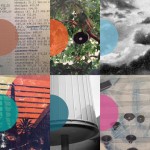
Artist: Steve Roden (@)
Title: six sound installations
Format: Download Only (MP3 + Lossless)
Label: Line (@)
Rated:

Title: six sound installations
Format: Download Only (MP3 + Lossless)
Label: Line (@)
Rated:
There are artists who build monuments, and there are artists who carve doors. Steve Roden spent his life cutting quiet openings into the fabric of perception, inviting listeners to step sideways into a universe where the faintest rustle carries the weight of a revelation. His passing in 2023 gave his work an unintentional frame, but "six sound installations" - assembled with care, love, and a sense of responsibility by those closest to him - does something better than framing: it reanimates the rooms he once taught to hum.
Across more than three and a half hours, the collection gathers six installation pieces (plus two excerpts), each born in a different space, each listening to the architecture as much as producing any sound of its own. Roden’s hallmark “lowercase” sensibility is here, yes, but it’s not the academic lowercase of manifesto. It’s the lowercase of someone who believed the tiny things around us are already singing if only we’d turn our heads slightly.
This collection is a catalogue of transformations: voices dissolving into grain, leaves becoming spectral choirs, constellations mutating into chordal sketches, an acorn turning into a time-traveling collaborator. Roden’s practice was built on these odd, luminous leaps - the kind a child might attempt with absolute seriousness. And in this case, the child grew into a composer, painter, archivist, accidental mystic, and amateur linguist who translated spaces the way others translate poems.
reading/without / reading/within (1999)
A Joycean fever dream in miniature. Roden takes James Joyce’s voice - already a labyrinth - and gently unthreads it until the words melt into textural vapour. The piece feels like listening through fog: you can sense the presence of meaning, but it refuses to sit still. It’s a quiet rebellion against the tyranny of “making sense”, and a nod to Roden’s early fascination with using texts as scores, puzzles, and provocations.
first bird form (2001)
Forty small speakers, dried leaves, and manipulated antique bird recordings: Roden turns a museum courtyard into an aviary haunted by its own memories. There’s a grace to the way these sounds perch and scatter, like shy visitors who never quite land. Impossibly delicate for a piece with such scale, it tracks the invisible threads between the organic and the synthetic without privileging either.
music for clouds (2002)
Perhaps Roden’s most straightforwardly beautiful work here. A platform beneath a skylight, two whispering speakers, and a score derived from the contours of drifting clouds. The result is a piece that seems to exhale: slow, aerial, contemplative. It’s hard not to imagine Roden smiling while translating cloud shapes into guitar tones, as though the sky itself had handed him a set of half-finished melodies.
usonian poem (2004)
Frank Lloyd Wright, an acorn dropped in Japan, and the peculiar logic that only Roden could follow. This is a work stitched together from architectural intuition, linguistic play, and the serendipity of an object falling exactly where it shouldn’t. The soundscape feels like a correspondence between distant places - a kind of sonic pen-pal relationship - and it carries that warm, slightly amused tone of someone who knows that not all connections should be rational.
night ring (2006)
An installation for a Turrell Skyspace, blooming between dusk and dawn. Here Roden plays with planetary tuning forks, violin, and field recordings, building a subtle gravitational system of tones that gently pull you into orbit. It’s a piece that seems to hover at the boundary between music and ritual. One imagines insomniacs sitting beneath the Skyspace, convinced the stars have begun to whisper.
when stars become words (2007)
A cosmic translation engine: star names become vowels, vowels become sculptures, constellations become scores, scores become plucked strings and drifting drones. Roden treats astronomy as if it were a form of handwriting, tracing the sky’s calligraphy with patient delight. It’s the album’s most luminous moment, full of quiet wonder and the kind of intuition that refuses to announce itself.
What "six sound installations" ultimately reveals is not just Roden’s craft, but his worldview. He moved through life as though the world were full of half-hidden messages waiting to be coaxed into audibility. His installations were never demonstrations; they were invitations to recalibrate your senses. To lean closer. To notice the small tremors that usually vanish beneath the day’s noise.
Listening to this collection feels like reopening the notebooks of an artist who believed that anything - a word, a twig, a street name, a planetary orbit - could be the seed of a composition if approached with curiosity rather than mastery. The remastering allows these works to breathe again, not as museum artifacts, but as living thought-forms.
There’s a touch of melancholy, of course. How could there not be? But Roden’s work has always tended toward the luminous. Even in its quietest corners, it insists that attention is a form of love.
And across these hours of sound, that love radiates gently, insistently, like a small lamp refusing to go out.
Across more than three and a half hours, the collection gathers six installation pieces (plus two excerpts), each born in a different space, each listening to the architecture as much as producing any sound of its own. Roden’s hallmark “lowercase” sensibility is here, yes, but it’s not the academic lowercase of manifesto. It’s the lowercase of someone who believed the tiny things around us are already singing if only we’d turn our heads slightly.
This collection is a catalogue of transformations: voices dissolving into grain, leaves becoming spectral choirs, constellations mutating into chordal sketches, an acorn turning into a time-traveling collaborator. Roden’s practice was built on these odd, luminous leaps - the kind a child might attempt with absolute seriousness. And in this case, the child grew into a composer, painter, archivist, accidental mystic, and amateur linguist who translated spaces the way others translate poems.
reading/without / reading/within (1999)
A Joycean fever dream in miniature. Roden takes James Joyce’s voice - already a labyrinth - and gently unthreads it until the words melt into textural vapour. The piece feels like listening through fog: you can sense the presence of meaning, but it refuses to sit still. It’s a quiet rebellion against the tyranny of “making sense”, and a nod to Roden’s early fascination with using texts as scores, puzzles, and provocations.
first bird form (2001)
Forty small speakers, dried leaves, and manipulated antique bird recordings: Roden turns a museum courtyard into an aviary haunted by its own memories. There’s a grace to the way these sounds perch and scatter, like shy visitors who never quite land. Impossibly delicate for a piece with such scale, it tracks the invisible threads between the organic and the synthetic without privileging either.
music for clouds (2002)
Perhaps Roden’s most straightforwardly beautiful work here. A platform beneath a skylight, two whispering speakers, and a score derived from the contours of drifting clouds. The result is a piece that seems to exhale: slow, aerial, contemplative. It’s hard not to imagine Roden smiling while translating cloud shapes into guitar tones, as though the sky itself had handed him a set of half-finished melodies.
usonian poem (2004)
Frank Lloyd Wright, an acorn dropped in Japan, and the peculiar logic that only Roden could follow. This is a work stitched together from architectural intuition, linguistic play, and the serendipity of an object falling exactly where it shouldn’t. The soundscape feels like a correspondence between distant places - a kind of sonic pen-pal relationship - and it carries that warm, slightly amused tone of someone who knows that not all connections should be rational.
night ring (2006)
An installation for a Turrell Skyspace, blooming between dusk and dawn. Here Roden plays with planetary tuning forks, violin, and field recordings, building a subtle gravitational system of tones that gently pull you into orbit. It’s a piece that seems to hover at the boundary between music and ritual. One imagines insomniacs sitting beneath the Skyspace, convinced the stars have begun to whisper.
when stars become words (2007)
A cosmic translation engine: star names become vowels, vowels become sculptures, constellations become scores, scores become plucked strings and drifting drones. Roden treats astronomy as if it were a form of handwriting, tracing the sky’s calligraphy with patient delight. It’s the album’s most luminous moment, full of quiet wonder and the kind of intuition that refuses to announce itself.
What "six sound installations" ultimately reveals is not just Roden’s craft, but his worldview. He moved through life as though the world were full of half-hidden messages waiting to be coaxed into audibility. His installations were never demonstrations; they were invitations to recalibrate your senses. To lean closer. To notice the small tremors that usually vanish beneath the day’s noise.
Listening to this collection feels like reopening the notebooks of an artist who believed that anything - a word, a twig, a street name, a planetary orbit - could be the seed of a composition if approached with curiosity rather than mastery. The remastering allows these works to breathe again, not as museum artifacts, but as living thought-forms.
There’s a touch of melancholy, of course. How could there not be? But Roden’s work has always tended toward the luminous. Even in its quietest corners, it insists that attention is a form of love.
And across these hours of sound, that love radiates gently, insistently, like a small lamp refusing to go out.
Elizabeth Davis: Flowers
There are songs that refuse to die. They get covered, translated, simplified, turned into background nostalgia for documentaries about a past everyone claims to understand. And then someone comes along, takes the original apart like a broken watch, and suddenly the mechanism starts ticking again, louder and slightly unsettling.
With "Flowers", Elizabeth Davis does exactly that to Pete Seeger’s “Where Have All the Flowers Gone”. Not a cover, not a tribute. More like a forensic investigation conducted with scissors, tape loops, and a mild distrust of linear history.
Released by South of North, the EP emerges from a residency at Sternhagen Gut, a rural retreat run by Gudrun Gut and Thomas Fehlmann. You might imagine quiet fields, long walks, maybe some polite reflection. Instead, Davis uses that isolation to dismantle a protest song loaded with decades of political and emotional residue. Apparently, the countryside is excellent for controlled sonic disassembly.
Davis’ background helps explain the method. Before operating under her own name and the alias Wilted Woman, she moved through free jazz, punk, and experimental electronics, developing a practice that balances algorithmic processes with tactile, almost fragile sound design. Her now-concluded radio show "Deep Puddle" already hinted at this tendency: narration, collage, fragmentation. "Flowers" feels like a natural extension, only more focused, more precise in its quiet disruptions.
Each of the six tracks starts from Seeger’s melody and lyrical structure, then proceeds to gently sabotage it.
“All in Uniform” opens with a sense of recognition that quickly dissolves. Familiar melodic contours flicker beneath layers of vocal loops and digital residue, like a memory trying to stabilize but failing. The original song’s anti-war sentiment is still there, but it no longer speaks in clear slogans. Instead, it murmurs, hesitates, fragments.
“Wo sind sie geblieben” shifts into a linguistic and cultural echo chamber. German phrases intersect with processed vocal textures, reminding you that translation is never neutral. Meaning slips. Words migrate. History refuses to sit still.
Across the EP, Davis employs cut-up techniques reminiscent of William S. Burroughs and Brion Gysin, slicing and reassembling lyrics into new constellations. But where those methods often lean toward chaos, Davis maintains a curious balance. There is structure here, even melody. Just enough to lure you in before the ground shifts slightly under your feet.
“Ever Learn” and “Young Ones” flirt with something almost like songcraft. Hooks appear, rhythms stabilize, and for a moment you think you’ve found a center. Then the textures begin to glitch, voices multiply, and the composition gently reminds you that repetition is not the same as understanding. History repeats, yes. But it also mutates.
On “Long Time Passes”, time itself becomes elastic. The pacing stretches, the sonic elements drift apart, and the familiar refrain dissolves into a kind of temporal fog. It’s less a reinterpretation than a meditation on duration: how long does it take for meaning to erode? Apparently not that long.
By the closing track, “Gone”, the source material feels both distant and eerily present. The melody has been thinned out, almost ghost-like, while the surrounding textures hum with quiet tension. It’s as if the song has been reduced to its emotional residue, stripped of narrative clarity but not of impact.
What makes "Flowers" compelling is not just its conceptual premise but its restraint. Davis resists the temptation to overwhelm. The sound design is detailed yet spacious, the compositions carefully paced. Even in its more abstract moments, the EP retains a sense of intimacy, as if these transformations were happening in a small room rather than an academic laboratory.
The influence of her conversations with Gudrun Gut is subtly audible here: a dialogue between experimentation and accessibility, between avant-garde instincts and the gravitational pull of melody. The result is a work that never fully settles into either territory, which is precisely why it remains engaging.
At its core, "Flowers" asks an uncomfortable question: what happens when a protest song becomes historical artifact? Do we preserve it, repeat it, or dismantle it to see if it still breathes?
Davis chooses dismantling. Carefully, almost tenderly.
And in the process, she reveals that beneath the familiar refrain lies something less stable, more fragile, and perhaps more honest than we remembered.
With "Flowers", Elizabeth Davis does exactly that to Pete Seeger’s “Where Have All the Flowers Gone”. Not a cover, not a tribute. More like a forensic investigation conducted with scissors, tape loops, and a mild distrust of linear history.
Released by South of North, the EP emerges from a residency at Sternhagen Gut, a rural retreat run by Gudrun Gut and Thomas Fehlmann. You might imagine quiet fields, long walks, maybe some polite reflection. Instead, Davis uses that isolation to dismantle a protest song loaded with decades of political and emotional residue. Apparently, the countryside is excellent for controlled sonic disassembly.
Davis’ background helps explain the method. Before operating under her own name and the alias Wilted Woman, she moved through free jazz, punk, and experimental electronics, developing a practice that balances algorithmic processes with tactile, almost fragile sound design. Her now-concluded radio show "Deep Puddle" already hinted at this tendency: narration, collage, fragmentation. "Flowers" feels like a natural extension, only more focused, more precise in its quiet disruptions.
Each of the six tracks starts from Seeger’s melody and lyrical structure, then proceeds to gently sabotage it.
“All in Uniform” opens with a sense of recognition that quickly dissolves. Familiar melodic contours flicker beneath layers of vocal loops and digital residue, like a memory trying to stabilize but failing. The original song’s anti-war sentiment is still there, but it no longer speaks in clear slogans. Instead, it murmurs, hesitates, fragments.
“Wo sind sie geblieben” shifts into a linguistic and cultural echo chamber. German phrases intersect with processed vocal textures, reminding you that translation is never neutral. Meaning slips. Words migrate. History refuses to sit still.
Across the EP, Davis employs cut-up techniques reminiscent of William S. Burroughs and Brion Gysin, slicing and reassembling lyrics into new constellations. But where those methods often lean toward chaos, Davis maintains a curious balance. There is structure here, even melody. Just enough to lure you in before the ground shifts slightly under your feet.
“Ever Learn” and “Young Ones” flirt with something almost like songcraft. Hooks appear, rhythms stabilize, and for a moment you think you’ve found a center. Then the textures begin to glitch, voices multiply, and the composition gently reminds you that repetition is not the same as understanding. History repeats, yes. But it also mutates.
On “Long Time Passes”, time itself becomes elastic. The pacing stretches, the sonic elements drift apart, and the familiar refrain dissolves into a kind of temporal fog. It’s less a reinterpretation than a meditation on duration: how long does it take for meaning to erode? Apparently not that long.
By the closing track, “Gone”, the source material feels both distant and eerily present. The melody has been thinned out, almost ghost-like, while the surrounding textures hum with quiet tension. It’s as if the song has been reduced to its emotional residue, stripped of narrative clarity but not of impact.
What makes "Flowers" compelling is not just its conceptual premise but its restraint. Davis resists the temptation to overwhelm. The sound design is detailed yet spacious, the compositions carefully paced. Even in its more abstract moments, the EP retains a sense of intimacy, as if these transformations were happening in a small room rather than an academic laboratory.
The influence of her conversations with Gudrun Gut is subtly audible here: a dialogue between experimentation and accessibility, between avant-garde instincts and the gravitational pull of melody. The result is a work that never fully settles into either territory, which is precisely why it remains engaging.
At its core, "Flowers" asks an uncomfortable question: what happens when a protest song becomes historical artifact? Do we preserve it, repeat it, or dismantle it to see if it still breathes?
Davis chooses dismantling. Carefully, almost tenderly.
And in the process, she reveals that beneath the familiar refrain lies something less stable, more fragile, and perhaps more honest than we remembered.
Propan & Stina Stjern: Shrew
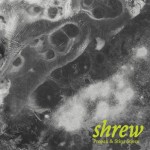
Artist: Propan & Stina Stjern (@)
Title: Shrew
Format: Tape + Download
Label: SusannaSonata (@)
Rated:

Title: Shrew
Format: Tape + Download
Label: SusannaSonata (@)
Rated:
It helps, occasionally, when an album decides to hand you its inner logic in plain text. Not to simplify things - don’t worry, that would be too easy - but to confirm that what you’re hearing is, in fact, as tactile, messy, and quietly unsettling as it feels.
"Shrew" by Propan and Stina Stjern already suggested a world of bodies, substances, and slow transformations. The lyrics make it explicit: this is not abstraction. This is labor. This is ritual. This is the long choreography of hands doing things that stain.
“We lift carry cucumbers on our backs… it seeps into us, we seep into it”.
That line alone dismantles any safe distance between subject and material. The boundary dissolves early: the workers become the work, the process becomes identity. What initially sounds like domestic routine - washing vegetables, kneading dough, pressing fruit - gradually mutates into something more ambiguous. The gestures accumulate weight. Repetition becomes incantation.
Musically, that’s exactly what happens. Voices layer, thicken, lose their individuality, much like the bodies described in the text. In “Fern”, the slow build mirrors the preparation phase: gathering, washing, kneading. But nothing is innocent here. Even the pastoral imagery carries a faint unease. Grapes crushed underfoot, butter melting into surfaces, fluids seeping everywhere. It’s sensual, but not comfortably so. There’s always a hint that something is being transformed beyond recognition.
Then comes the pivot. The chicken, suddenly present, headless, dripping. Plucked. Reassembled into “feather knickers”, which is either dark humor or something more ritualistic, depending on how charitable you’re feeling. The album doesn’t clarify. It just keeps going.
“Maret” expands the scene into a collective act. Cooking becomes communal, almost ceremonial. Ingredients are coated, chopped, mixed into something that resembles a feast but behaves like a rite. “We assemble this night”, they say, as if time itself were an ingredient to be handled. The table is set with obsessive care - flowers, candles, glasses in different shapes - yet the atmosphere is unstable. Celebration and tension coexist without resolving.
The music follows suit. The density increases, the layering becomes more insistent, but never chaotic. There’s control in the repetition, a discipline that keeps the ritual from dissolving into noise. It’s not about explosion. It’s about sustained pressure.
And then “Sybil”, where the aftermath unfolds. Eating, drinking, talking - then silence. The ritual completes its cycle not with a climax, but with cleaning. Washing, rinsing, brushing away crumbs “from the minds and from time itself”. It’s almost absurdly literal and strangely profound at the same time. As if the entire event - this feast of bodies, labor, and shared space - must be erased to exist properly.
“We own this time. all time”.
A bold claim, delivered without emphasis, which makes it land harder. Ownership here isn’t about control. It’s about inhabiting the moment so fully that it temporarily suspends everything else.
The music mirrors this dissolution. By the end, the layers feel less constructed and more residual, like traces left after something has already happened. The final gesture - burning leftovers, pulling the plug, leaving - feels less like closure and more like withdrawal. The space empties, but something lingers.
What the lyrics clarify is that "Shrew" isn’t just exploring voice as sound, but voice as collective body, as laboring force, as something deeply entangled with material processes. The “shrew”, in this context, isn’t a stereotype to be reclaimed politely. It’s a figure that absorbs, transforms, and ultimately outlasts the structures meant to contain it.
The mixing and mastering by Lasse Marhaug keeps everything grounded in a thick, immersive field without smoothing over its roughness. Nothing feels decorative. Even the more beautiful passages carry a residue of something slightly off, slightly too physical to be comfortably aesthetic
Released by SusannaSonata, the album maintains its refusal to be easily categorized. With the textual layer fully visible, it becomes even clearer that this is less a collection of pieces and more a sustained enactment: preparation, gathering, consumption, erasure.
A cycle. Messy, repetitive, oddly precise.
And, against all odds, completely controlled.
"Shrew" by Propan and Stina Stjern already suggested a world of bodies, substances, and slow transformations. The lyrics make it explicit: this is not abstraction. This is labor. This is ritual. This is the long choreography of hands doing things that stain.
“We lift carry cucumbers on our backs… it seeps into us, we seep into it”.
That line alone dismantles any safe distance between subject and material. The boundary dissolves early: the workers become the work, the process becomes identity. What initially sounds like domestic routine - washing vegetables, kneading dough, pressing fruit - gradually mutates into something more ambiguous. The gestures accumulate weight. Repetition becomes incantation.
Musically, that’s exactly what happens. Voices layer, thicken, lose their individuality, much like the bodies described in the text. In “Fern”, the slow build mirrors the preparation phase: gathering, washing, kneading. But nothing is innocent here. Even the pastoral imagery carries a faint unease. Grapes crushed underfoot, butter melting into surfaces, fluids seeping everywhere. It’s sensual, but not comfortably so. There’s always a hint that something is being transformed beyond recognition.
Then comes the pivot. The chicken, suddenly present, headless, dripping. Plucked. Reassembled into “feather knickers”, which is either dark humor or something more ritualistic, depending on how charitable you’re feeling. The album doesn’t clarify. It just keeps going.
“Maret” expands the scene into a collective act. Cooking becomes communal, almost ceremonial. Ingredients are coated, chopped, mixed into something that resembles a feast but behaves like a rite. “We assemble this night”, they say, as if time itself were an ingredient to be handled. The table is set with obsessive care - flowers, candles, glasses in different shapes - yet the atmosphere is unstable. Celebration and tension coexist without resolving.
The music follows suit. The density increases, the layering becomes more insistent, but never chaotic. There’s control in the repetition, a discipline that keeps the ritual from dissolving into noise. It’s not about explosion. It’s about sustained pressure.
And then “Sybil”, where the aftermath unfolds. Eating, drinking, talking - then silence. The ritual completes its cycle not with a climax, but with cleaning. Washing, rinsing, brushing away crumbs “from the minds and from time itself”. It’s almost absurdly literal and strangely profound at the same time. As if the entire event - this feast of bodies, labor, and shared space - must be erased to exist properly.
“We own this time. all time”.
A bold claim, delivered without emphasis, which makes it land harder. Ownership here isn’t about control. It’s about inhabiting the moment so fully that it temporarily suspends everything else.
The music mirrors this dissolution. By the end, the layers feel less constructed and more residual, like traces left after something has already happened. The final gesture - burning leftovers, pulling the plug, leaving - feels less like closure and more like withdrawal. The space empties, but something lingers.
What the lyrics clarify is that "Shrew" isn’t just exploring voice as sound, but voice as collective body, as laboring force, as something deeply entangled with material processes. The “shrew”, in this context, isn’t a stereotype to be reclaimed politely. It’s a figure that absorbs, transforms, and ultimately outlasts the structures meant to contain it.
The mixing and mastering by Lasse Marhaug keeps everything grounded in a thick, immersive field without smoothing over its roughness. Nothing feels decorative. Even the more beautiful passages carry a residue of something slightly off, slightly too physical to be comfortably aesthetic
Released by SusannaSonata, the album maintains its refusal to be easily categorized. With the textual layer fully visible, it becomes even clearer that this is less a collection of pieces and more a sustained enactment: preparation, gathering, consumption, erasure.
A cycle. Messy, repetitive, oddly precise.
And, against all odds, completely controlled.
Oiseaux-Tempête: Re-Works
Oiseaux-Tempête's 2013 debut album weaved through a number of different styles a humourless thread of disenchantment in the face of contemporary European political and economic problems. For angst and despair, po-faced post-rock or stoner rock with titles to match ('Opening Theme (Ablaze in the Distance)', 'Ouroboros'). For wistfulness or otherwise more contemplative moods, airy ambient arrangements and field recordings ('Sophia's Shadow', 'Outro (for the following)'). In-between these, some full-on swelling, droning grit for good measure ('L'île'). For all its sincerity, dramatic prowess and genuine musical strength and appeal, the problem with post-rock is its histrionic wilt, its gesturing seeming overstated after a certain amount of exposure. It has a tendency to sameness that quickly loses appeal, so when it only fringes compositions rather than absorbing them altogether, the results are usually considerably more interesting - 'Sophia's Shadow' and 'L'île' are good examples of this.
With the above in mind, this remix collection from Oiseaux-Tempête's post-rock polemic introduces an electronic edge to most of the pieces. The outcome is a less consistent but, to this listener, rather more gratifying listening experience.
Leopard of Honour's remix of 'Nuage Noir' opens the record. The sparse, predictable slow-core plodder becomes a Burial-esque electro shuffler, with looped motifs, rounded subterranean bass and woodblock strikes lingering beneath the main rhythms. It's very satisfying to hear the song's elements arranged this way and this well. It's worth noting that this is one of the more striking transformations; for the most part, the original pieces are given atmospheric filter treatment, usually with rhythms removed or obscured - or, in the case of the Scanner and Colin Johnco remixes, added. This relatively limited formulation is possibly out of respect to the spirit of the original album, centred as it is around protest and political discontent.
However, not straying too far from the source material has its troubles. Unfortunately, Dag Rosenqvist's reworking of on 'Opening Theme (Ablaze in the Distance)' feels more like a discarded alternate take than a remix, picking a single isosceles crescendo and losing some interesting dynamics as a result. Machinefabriek's reinterpretation of 'Kyrie Eleison', while a total conversion of sorts (rather tempting the term 'post(-processed)-rock'), nonetheless differs too subtly to feel like much more than an original outtake.
Among more appealing contributions, Wixtes' remix of 'Buy Gold (Beat Song)' discards the titular thudding beat, resulting in a grainy cloud of sombre guitar work gusting around sampled speech. Similarly, Saåad crop but engorge 'La Traversée' into a solid dark ambient/drone piece. Scanner introduces as a textural focus a varied, stuttering rhythm range to 'Calling John Carcone' and manages pretty well to retain beneath it the tempestuous post-rock anguish of the original. 'Nuage Noir' also features a second time, with Greek thereminist May Roosevelt at the helm. Besides cropping the length, she leaves the song largely intact, instead adding a rich, effective harmonised theremin accompaniment.
Like most compilations and particularly remix compilations, it's a mixed bag. But it is impressive how earnestly the present personnel endeavour to preserve the themes and tone of their source material. When it works, it does so very well.
With the above in mind, this remix collection from Oiseaux-Tempête's post-rock polemic introduces an electronic edge to most of the pieces. The outcome is a less consistent but, to this listener, rather more gratifying listening experience.
Leopard of Honour's remix of 'Nuage Noir' opens the record. The sparse, predictable slow-core plodder becomes a Burial-esque electro shuffler, with looped motifs, rounded subterranean bass and woodblock strikes lingering beneath the main rhythms. It's very satisfying to hear the song's elements arranged this way and this well. It's worth noting that this is one of the more striking transformations; for the most part, the original pieces are given atmospheric filter treatment, usually with rhythms removed or obscured - or, in the case of the Scanner and Colin Johnco remixes, added. This relatively limited formulation is possibly out of respect to the spirit of the original album, centred as it is around protest and political discontent.
However, not straying too far from the source material has its troubles. Unfortunately, Dag Rosenqvist's reworking of on 'Opening Theme (Ablaze in the Distance)' feels more like a discarded alternate take than a remix, picking a single isosceles crescendo and losing some interesting dynamics as a result. Machinefabriek's reinterpretation of 'Kyrie Eleison', while a total conversion of sorts (rather tempting the term 'post(-processed)-rock'), nonetheless differs too subtly to feel like much more than an original outtake.
Among more appealing contributions, Wixtes' remix of 'Buy Gold (Beat Song)' discards the titular thudding beat, resulting in a grainy cloud of sombre guitar work gusting around sampled speech. Similarly, Saåad crop but engorge 'La Traversée' into a solid dark ambient/drone piece. Scanner introduces as a textural focus a varied, stuttering rhythm range to 'Calling John Carcone' and manages pretty well to retain beneath it the tempestuous post-rock anguish of the original. 'Nuage Noir' also features a second time, with Greek thereminist May Roosevelt at the helm. Besides cropping the length, she leaves the song largely intact, instead adding a rich, effective harmonised theremin accompaniment.
Like most compilations and particularly remix compilations, it's a mixed bag. But it is impressive how earnestly the present personnel endeavour to preserve the themes and tone of their source material. When it works, it does so very well.
Andr? Vida: Breathless

André Vida’s "Breathless" is not a saxophone record in the usual sense but an excavation of what happens when you remove the very thing that normally animates the horn: breath. Vida, a Berlin-based saxophonist known for his collaborations with Anthony Braxton, Arto Lindsay, and visual artist Anri Sala, here sets himself a paradoxical task - playing without blowing - and discovers a whole new language hiding inside the instrument’s bones. What emerges are clicks, thuds, sticky releases of pads, the percussive punctuation of fingers, amplified and extended through distortion and subtle synthesis until they glow like phantom melodies.
This is music that hovers between archaeology and invention, where what is normally incidental becomes the main voice. It can feel ascetic, at times demanding patience, but in its best moments it makes you lean in and notice things usually drowned in the flood of sound. The tracklist itself feels like a catalogue of transformations: short, cryptic movements like “Danders” or “Sidgeye” contrast with the shimmering, more expansive “Frsssshht”, while the doubled presence of “Celeste” on both sides of the LP works like a palimpsest, a reminder that even repetition can reveal difference.
Vida’s strategy is risky - too much processing and the delicate mechanics vanish, too little and the experiment risks drying out - but for the most part he balances on that tightrope with poise. What "Breathless" ultimately communicates is not the absence of air but its transmutation: the breath lives in the resonance of keys, in the delayed echoes of release, in the electronic prolongation that lets these micro-gestures hang in the room like vapor. It is a strange and beautiful record, not designed for background listening but for a kind of heightened attention, as though your own ear were pressed inside the saxophone body alongside his.
Vida reminds us that music is not just what we produce deliberately but also what leaks out of our gestures, our gaps, our failures to conceal the mechanics of playing. "Breathless" is a work of intimate radicalism, funny in its perversity, touching in its vulnerability, and strangely uplifting in its insistence that even silence and friction can sing.
This is music that hovers between archaeology and invention, where what is normally incidental becomes the main voice. It can feel ascetic, at times demanding patience, but in its best moments it makes you lean in and notice things usually drowned in the flood of sound. The tracklist itself feels like a catalogue of transformations: short, cryptic movements like “Danders” or “Sidgeye” contrast with the shimmering, more expansive “Frsssshht”, while the doubled presence of “Celeste” on both sides of the LP works like a palimpsest, a reminder that even repetition can reveal difference.
Vida’s strategy is risky - too much processing and the delicate mechanics vanish, too little and the experiment risks drying out - but for the most part he balances on that tightrope with poise. What "Breathless" ultimately communicates is not the absence of air but its transmutation: the breath lives in the resonance of keys, in the delayed echoes of release, in the electronic prolongation that lets these micro-gestures hang in the room like vapor. It is a strange and beautiful record, not designed for background listening but for a kind of heightened attention, as though your own ear were pressed inside the saxophone body alongside his.
Vida reminds us that music is not just what we produce deliberately but also what leaks out of our gestures, our gaps, our failures to conceal the mechanics of playing. "Breathless" is a work of intimate radicalism, funny in its perversity, touching in its vulnerability, and strangely uplifting in its insistence that even silence and friction can sing.