
Monday, October 19, 2026
Browse by Genre
Industrial Music / Industrial Metal / Aggro Industrial / Electro Metal
Industrial Noise / Power Noise / Harsh Noise
Synth Pop / Electro Pop / Synth-Electronica
Techno / Trance / Goa / Drum'n'Bass / Jungle / Tribal / Trip-Hop
Ambient / Electronica / Ethereal / Dub / Soundscapes / Abstract
Experimental / Avantgarde / Weird & Wired / Glitch / Noise / Field Recording
Dark / Gothic / Wave / New Wave / Dark Wave / Industrial Gothic
New Music / Downtown / Avantgarde Jazz / New Classical / World
Search Reviews
Music Reviews
Ernest Holmes: Science of Mind
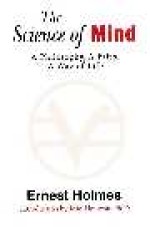
Author: Ernest Holmes
Title: Science of Mind
Format: Paperback
Publisher: Jeremy P. Tarcher
Rated:


Buy from or Buy from HERE
Title: Science of Mind
Format: Paperback
Publisher: Jeremy P. Tarcher
Rated:
Buy from
or Buy from HERE
This book and philosophy by Ernest Holmes was initially used to create a spiritual institute of learning. Eventually the Science of Mind churches have formed also based on the same teachings. This I will first say is NOT the same as Religious Science and is a relatively new school of thought which is still growing. The Churches, book, and philosophy behind them are basically Christian in origin except that you will find they remain focused on the more enlightened aspects of Christian teachings combined with the teachings of the Eastern philosophers as well. What results is a school of thought not much unlike that of modern neo-paganism except that it may be much easier to follow, accept, and easier to comprehend by Christians who are so easily turned off by the views of enlightened perspectives of pagans because of the terms associated with paganism.
I found a phrase in the book which to me sums up the overall teachings therein and it is something like this, "The Highest God and the innermost God are One God". Basically think of Christ as representing the divine light within our hearts that resides within each one of us. This is the same perspective as the Sun god celebrated at Yule time as well. This Christ consciousness is where we are all connected to The One God. Thus, the Science of Mind relatest to such things as healings, transformations, and other physical 'results' one wishes to obtain and how they can be achieved through thought. Holmes teaches that there is only one Mind, the Mind of God and that we are all part of that.
Generally speaking I found there is much enlightened perspective of thought in this book relating to such topics. However, Holmes tends to focus much on the 'method' of achieving desired 'results' in your life utilizing what he calls 'treatments' which are actually a form of prayer. While I believe the basic philosophy and perspective of this book there are a few points which I still find a bit shaky to me. Overall I think it is a book that every Christian would do well to read if for no other reason than to have a more enlightened perspective on where all the other religions of the world are coming from. Holmes ties them in beautifully with one school of single minded thought. I do believe that there is true merit in his works and that the Science of Mind church is likely to achieve much quicker and better results than any other Christian school of thought. For those not interested or still fearful of ritual workings or the 'left-hand' path the Science of Mind is very good alternative to standard organized religion of you are seeking an alternative.
There is quite a bit or repetition in the text and that is the 'only' thing that I really have difficulty with but I am one who is now use to reading philosophical, spiritual, and self-help styled texts. The repition is obviously intentional for those unfamiliar to finally reach that mental state of 'knowing' required to grasp the concepts within, for those unuse to reading such forms of written thought.
OXYD: Larva

There’s once again magic in the air! Whoever else than the both DISHARMONY-protagonists Lord Sauron and Ryby will be able to offer such another new epic sound experience pretty much in the already discovered line, but still quite diverse? I guess the main difference between DISHARMONY and this side-project can be explained, that OXYD is more Ambient-driven and a pure instrumental work. Some relations to the main project are of course recognizable, especially after the intense last DISHARMONY-album "Malignant Shields". DISHARMONY is colder-minded, rather KLINIKal when a play with terms is allowed. OXYD sounds more classically inspired and it allows different cultural influences to take place in some niches. It shouldn’t wonder you if you can hear some quite unusual and organic instruments like pipes or brasses as additional elements. "Traveller" is sort of this work by offering a DISHARMONY-like sequencer line while several multi-layered sounds at times with an oriental touch are joining the scenario. That’s fantastic cinematic music, timeless and addictive! Some voice-samples here and there get some inserts too ("Transformations", "From The Inside"), while I wouldn’t call them essential. "Transmission" surprises with a straight, FLA-like bass line performance which is quite unusual for this Slovakian duo and compared to all of the other featured tracks an exception. "Suspiria" with its broken rhythm patterns reminds then rather on DISHARMONY, until "Carbon" brings this album back on track. "The Frozen Moon", maybe asides "Traveller" the favorite on this album, can be named as being one of the most melodic pieces – again the multiple layered bass line and synth pad work is outstanding and light-years above the average Electro/Industrial band! It is an Aliens Production release, it is from Slovakia, it is the side-project of the DISHARMONY-musicians – aren’t this 3 reasons enough for you to buy it? A MUST-HAVE!
Sonae: Far away is right around the Corner

Artist: Sonae (@)
Title: Far away is right around the Corner
Format: 12"
Label: Monika Enterprise (@)
Rated:
Title: Far away is right around the Corner
Format: 12"
Label: Monika Enterprise (@)
Rated:
The first release for 2015 from Gudrun Gut's label Monika Enterprise uncovers the talent of Koln-based sound-artist Sonia Guttler aka Sonae, whose sonic embroidery on his debut album includes many field recordings from freesound.org that she wisely modified and integrated within nine interesting cameos that she made between 2012 and 2014 in between abstract and glitch isolationist ambient. Nothing was left to chance in her sound, whose strong connection with emotional processing and perception was already clear on "Entmutigt" (German for 'discouraged'), the free release she made for Spanish netlabel Modismo just before "Far away is right around the Corner": the opening track "Gewittspaziergang" (German for "storm-walking") seems to render the electrified air where electronic collisions and distant menacing deafening roar of a thunderstroms finds an echo in the mood of the sentient beings; the following title track sounds to be about the meeting of distance and proximity by means of amazing transformations of micromelodies that she supposedly made from the ring of a telephone from caller's side which got "imitated" by a sort of tinker bell, while "Wandering" sounds like an amalgamation of sonic clues of different kind of whereabouts, where nomadic sensations as well as a certain vague anxiety equalize distance and transporting vectors as if the idea of wandering could be a sort of existential dimension. The biomechanical blips of "Einfach SO" precedes the touching remix of Cio D'Or's "Distanz", the track that Cio Dorbandt made for a piece inspired by the dead victims on their way on overcrowded makeshift boats to Lampedusa, the austere and gradually burning piano chords of "Song of Hate and Anger" and the lovely "Hot Summerday", an interesting crossbreed between French piano impressionist, field recordings and nocturnal trip-hop detours. The aquatic daydreaming of "I Know a Fish" and the crepuscolar corpuscles of "Not The Moon/I Don't See Any Flowers There" and "Uberwindung" conclude this awesome workout. If you enjoyed it, Sonae says on her website you can send flowers to her!
Bertrand Gauguet: Encerclements

Artist: Bertrand Gauguet (http://www.bertrandgauguet.com/)
Title: Encerclements
Format: CD
Label: In Girum Records
Rated:
Title: Encerclements
Format: CD
Label: In Girum Records
Rated:
Bertrand Gauguet's "Encerclements" is a profound sonic meditation on the interplay of sound, space, and abstraction. Encircling the listener with a delicate, almost hypnotic web of frequencies, the album merges ambient minimalism with glitch and noise, creating a kind of auditory labyrinth. Each of the eight tracks, named simply as numbered "Cercle" (with the only exception of the last one, titled "En Route", where field recordings evoking memories from a bay or a kindergarden coalesce into a gurgling electonic storm, before landing over a peacefully tone-driven sonic bubble), spirals through ambient, minimalist electronica, sometimes dissolving into noise and glitch, as if testing the edges of coherence. Gauguet, a master of the alto saxophone and field recordings, extends his reach into pure frequencies, inviting listeners to explore the liminal space between sound and silence by crafting soundscapes that hover on the edge of audibility - haunting, elusive, and pretty immersive.
The album reflects his deep engagement with frequencies and multiphonic textures, a signature of Gauguet’s oeuvre, as seen in his collaborations with luminaries like Éliane Radigue and Tetuzi Akiyama. The minimalist repetitions of "Encerclements" seem almost like sonic mandalas, designed to pull the listener inward, toward contemplation. But the irony lies in the simplicity, for the deeper you listen, the more complex the layers become. Moreover, the title, "Encerclements" (Encirclements), may suggest confinement, but the album instead feels like an expansive journey, where each sound radiates outward, breaking barriers. Tracks like "Cercle 1" and "Cercle 5" meander with a subtle patience, allowing the music to breathe while nudging listeners toward introspection. If music could contemplate itself, this might be the result - a blend of the organic with the synthetic, the meditative with the disruptive.
Perhaps it’s fitting that Gauguet embraces such a stripped-down approach. The album doesn’t demand attention; it slowly captivates, much like a distant memory trying to find its way back into focus. "Encerclements" isn’t about spectacle; it’s about the quiet, almost invisible transformations that happen when you listen closely enough.
The album reflects his deep engagement with frequencies and multiphonic textures, a signature of Gauguet’s oeuvre, as seen in his collaborations with luminaries like Éliane Radigue and Tetuzi Akiyama. The minimalist repetitions of "Encerclements" seem almost like sonic mandalas, designed to pull the listener inward, toward contemplation. But the irony lies in the simplicity, for the deeper you listen, the more complex the layers become. Moreover, the title, "Encerclements" (Encirclements), may suggest confinement, but the album instead feels like an expansive journey, where each sound radiates outward, breaking barriers. Tracks like "Cercle 1" and "Cercle 5" meander with a subtle patience, allowing the music to breathe while nudging listeners toward introspection. If music could contemplate itself, this might be the result - a blend of the organic with the synthetic, the meditative with the disruptive.
Perhaps it’s fitting that Gauguet embraces such a stripped-down approach. The album doesn’t demand attention; it slowly captivates, much like a distant memory trying to find its way back into focus. "Encerclements" isn’t about spectacle; it’s about the quiet, almost invisible transformations that happen when you listen closely enough.
Yearns: Fata Morgana

Artist: Yearns
Title: Fata Morgana
Format: Download Only (MP3 + Lossless)
Label: A Guide To Saints (@)
Rated:
Title: Fata Morgana
Format: Download Only (MP3 + Lossless)
Label: A Guide To Saints (@)
Rated:
Yearns’ "Fata Morgana" drifts into the ear like a trick of light on a hot horizon - half real, half hallucinated, but fully absorbing. The duo of Andrew Foley and Joel Saunders built it not side by side but across suburban fences, tossing sound files back and forth like paper planes in the dark. What begins as a humble Casio keyboard phrase or a murky tape loop gets refracted into a drone, reshaped into a ghost of itself, then layered with hiss, degradation, and sleepy-eyed transformations. The result is music that often feels like it was discovered in tide pools at dawn, fragile and unrepeatable, carrying sand in its circuits.
The title is no accident. Like its namesake optical illusion, these pieces hover above perception, constantly blurring what you think you hear. A seagull hymn melts into soft electronic vapors, while basslines lurk like sea creatures below the surface. “Depth Sounder” feels like sonar pinging the subconscious; “Mariana Radar” scans a trench where melody and murmur swap disguises. By the time “Siphonophore” and “Kaupichthys Eels” arrive, the album has fully surrendered to a pelagic dream, equal parts field recording, ambient sculpture, and aquatic myth-making.
There’s something slyly funny in how domestic the process was. Joel mentions emailing Andrew tracks after putting his child to bed, only to wake and find them transfigured overnight into otherworldly textures he could hardly recognize. The suburban dad routine colliding with underwater science-fiction soundscapes is the kind of paradox that ambient music thrives on: transcendence squeezed between bedtime stories and inbox notifications.
Mastered by Lawrence English (who knows a thing or two about turning subtle frequencies into tectonic events), "Fata Morgana" is as much about perception as it is about sound. It resists the tidy category of “ambient”, because its textures are too tactile, too salty, too flickering with life. This is not background music - it’s foreground mirage, a reminder that illusions can be more nourishing than the supposed real.
The title is no accident. Like its namesake optical illusion, these pieces hover above perception, constantly blurring what you think you hear. A seagull hymn melts into soft electronic vapors, while basslines lurk like sea creatures below the surface. “Depth Sounder” feels like sonar pinging the subconscious; “Mariana Radar” scans a trench where melody and murmur swap disguises. By the time “Siphonophore” and “Kaupichthys Eels” arrive, the album has fully surrendered to a pelagic dream, equal parts field recording, ambient sculpture, and aquatic myth-making.
There’s something slyly funny in how domestic the process was. Joel mentions emailing Andrew tracks after putting his child to bed, only to wake and find them transfigured overnight into otherworldly textures he could hardly recognize. The suburban dad routine colliding with underwater science-fiction soundscapes is the kind of paradox that ambient music thrives on: transcendence squeezed between bedtime stories and inbox notifications.
Mastered by Lawrence English (who knows a thing or two about turning subtle frequencies into tectonic events), "Fata Morgana" is as much about perception as it is about sound. It resists the tidy category of “ambient”, because its textures are too tactile, too salty, too flickering with life. This is not background music - it’s foreground mirage, a reminder that illusions can be more nourishing than the supposed real.