
Wednesday, September 2, 2026
Browse by Genre
Industrial Music / Industrial Metal / Aggro Industrial / Electro Metal
Industrial Noise / Power Noise / Harsh Noise
Synth Pop / Electro Pop / Synth-Electronica
Techno / Trance / Goa / Drum'n'Bass / Jungle / Tribal / Trip-Hop
Ambient / Electronica / Ethereal / Dub / Soundscapes / Abstract
Experimental / Avantgarde / Weird & Wired / Glitch / Noise / Field Recording
Dark / Gothic / Wave / New Wave / Dark Wave / Industrial Gothic
New Music / Downtown / Avantgarde Jazz / New Classical / World
Search Reviews
Music Reviews
Fr?d?ric L'Ep?e: Contre Courant
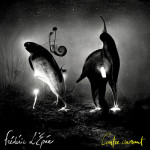
Artist: Fr?d?ric L'Ep?e (@)
Title: Contre Courant
Format: Download Only (MP3 + Lossless)
Label: Cuneiform (http://www.cuneiformrecords.com/) (@)
Rated:

Title: Contre Courant
Format: Download Only (MP3 + Lossless)
Label: Cuneiform (http://www.cuneiformrecords.com/) (@)
Rated:
Electric guitar music often suffers from a peculiar form of inflation. More pedals, more speed, more volume, more evidence that someone spent adolescence practicing scales instead of developing sustainable social skills. Frédéric L'Epée takes the opposite route on "Contre Courant", stripping the instrument of its habitual theatrics until what remains is touch, resonance, and the quiet confidence of someone uninterested in competing for attention.
Released by Cuneiform Records, the album feels less like a conventional guitar record than a patient argument for the electric guitar as a chamber instrument. L’Epée’s stated ambition - to create a solo electric repertoire analogous to classical recital traditions - could easily have resulted in something stiff or academic. Instead, "Contre Courant" breathes with remarkable intimacy. The pieces unfold like carefully observed thoughts rather than demonstrations of technique.
That restraint is crucial. L’Epée avoids the reflexive gestures associated with the instrument almost entirely: no grandstanding solos, no distortion-heavy catharsis, no endless declarations of emotional importance through volume. The guitar sounds mostly natural, almost exposed, and because of that every tonal shift matters. Harmonics shimmer briefly before dissolving, chords linger with delicate ambiguity, melodies emerge cautiously as if testing the air before continuing.
The title itself, French for “against the current”, proves apt. In a musical landscape increasingly addicted to immediacy and saturation, these compositions move slowly and with unusual patience. “Festina Lente” establishes the atmosphere immediately, balancing motion and stillness with a grace that recalls the paradox contained in its title: make haste slowly. The piece doesn’t progress toward climax so much as circulate through subtle transformations, rewarding attention rather than demanding it.
L’Epée’s affection for early twentieth-century French composers hovers throughout the record, particularly in “Sarabande”, “Trois Miniatures”, and the remarkable “Les Sonneurs”. You can sense traces of Claude Debussy, Maurice Ravel, and Erik Satie not through direct quotation, but through atmosphere: harmonic colors that seem to shift with the light, phrases that evaporate before fully resolving, emotional tones suspended somewhere between melancholy and tenderness. L’Epée appears less interested in imitation than in imagining an alternate musical history where these composers actually wrote for electric guitar. A strangely moving thought, honestly. History could have used more tasteful guitar music and fewer twelve-minute drum solos.
At times, the album edges toward minimalism, though never in a doctrinaire sense. “Pluie Inversée” and “Anchor” feel almost weightless, while “Méditation Polyrythmique” introduces rhythmic complexity without sacrificing clarity or warmth. Even the more substantial pieces, such as “Floating Forest” or “Le Ciel après nous”, avoid excess. The music continually resists overstatement, preferring implication to declaration.
This approach makes sense within the broader context of L’Epée’s career. Known for his work with Yang, where progressive rock structures intertwine with chamber-like precision, he has long occupied an unusual space between rock experimentation and contemporary composition. Here, however, the extroverted energy associated with ensemble work recedes, revealing what he describes as the “Yin” side of his musical personality: inward-looking, restrained, quietly luminous.
There’s something almost unfashionable about the album’s sincerity. "Contre Courant" does not hide behind irony, conceptual overload, or technological spectacle. It simply trusts sound itself to carry meaning. That trust can feel disarming in 2026, when so much music behaves as if terrified of silence or subtlety.
And perhaps that is the album’s greatest strength. It asks the listener not to consume, but to dwell. To pay attention to resonance, decay, hesitation. To remember that intimacy is not the absence of complexity, but another form of it entirely.
A radical proposition, apparently.
Released by Cuneiform Records, the album feels less like a conventional guitar record than a patient argument for the electric guitar as a chamber instrument. L’Epée’s stated ambition - to create a solo electric repertoire analogous to classical recital traditions - could easily have resulted in something stiff or academic. Instead, "Contre Courant" breathes with remarkable intimacy. The pieces unfold like carefully observed thoughts rather than demonstrations of technique.
That restraint is crucial. L’Epée avoids the reflexive gestures associated with the instrument almost entirely: no grandstanding solos, no distortion-heavy catharsis, no endless declarations of emotional importance through volume. The guitar sounds mostly natural, almost exposed, and because of that every tonal shift matters. Harmonics shimmer briefly before dissolving, chords linger with delicate ambiguity, melodies emerge cautiously as if testing the air before continuing.
The title itself, French for “against the current”, proves apt. In a musical landscape increasingly addicted to immediacy and saturation, these compositions move slowly and with unusual patience. “Festina Lente” establishes the atmosphere immediately, balancing motion and stillness with a grace that recalls the paradox contained in its title: make haste slowly. The piece doesn’t progress toward climax so much as circulate through subtle transformations, rewarding attention rather than demanding it.
L’Epée’s affection for early twentieth-century French composers hovers throughout the record, particularly in “Sarabande”, “Trois Miniatures”, and the remarkable “Les Sonneurs”. You can sense traces of Claude Debussy, Maurice Ravel, and Erik Satie not through direct quotation, but through atmosphere: harmonic colors that seem to shift with the light, phrases that evaporate before fully resolving, emotional tones suspended somewhere between melancholy and tenderness. L’Epée appears less interested in imitation than in imagining an alternate musical history where these composers actually wrote for electric guitar. A strangely moving thought, honestly. History could have used more tasteful guitar music and fewer twelve-minute drum solos.
At times, the album edges toward minimalism, though never in a doctrinaire sense. “Pluie Inversée” and “Anchor” feel almost weightless, while “Méditation Polyrythmique” introduces rhythmic complexity without sacrificing clarity or warmth. Even the more substantial pieces, such as “Floating Forest” or “Le Ciel après nous”, avoid excess. The music continually resists overstatement, preferring implication to declaration.
This approach makes sense within the broader context of L’Epée’s career. Known for his work with Yang, where progressive rock structures intertwine with chamber-like precision, he has long occupied an unusual space between rock experimentation and contemporary composition. Here, however, the extroverted energy associated with ensemble work recedes, revealing what he describes as the “Yin” side of his musical personality: inward-looking, restrained, quietly luminous.
There’s something almost unfashionable about the album’s sincerity. "Contre Courant" does not hide behind irony, conceptual overload, or technological spectacle. It simply trusts sound itself to carry meaning. That trust can feel disarming in 2026, when so much music behaves as if terrified of silence or subtlety.
And perhaps that is the album’s greatest strength. It asks the listener not to consume, but to dwell. To pay attention to resonance, decay, hesitation. To remember that intimacy is not the absence of complexity, but another form of it entirely.
A radical proposition, apparently.
微風ゾーン Bifuu_ZONE: The West

Artist: 微風ゾーン Bifuu_ZONE
Title: The West
Format: Tape + Download
Label: Constellation Tatsu (@)
Rated:

Title: The West
Format: Tape + Download
Label: Constellation Tatsu (@)
Rated:
There is a peculiar modern obsession with “liminal spaces” that often reduces them to internet horror aesthetics: abandoned malls, fluorescent corridors, empty swimming pools at night, humanity collectively deciding that slightly vacant architecture is somehow terrifying. Meanwhile actual liminality, the emotional and philosophical experience of transition, erosion, impermanence, and unresolved presence, is far subtler and far stranger. The West understands this distinction beautifully.
Released through Constellation Tatsu, the album by Bifuu_ZONE approaches spatial ambient music not as haunted spectacle but as quiet continuation. The project’s name itself, loosely translating to “a zone of gentle breeze”, already signals its intentions clearly. This is not music interested in overwhelming the listener with dystopian atmosphere or nostalgic collapse. Instead, "The West" inhabits spaces where time softens structures gradually, where memory settles into architecture like dust carried by weather.
Created by Tsudio Studio, whose broader work has traversed ambient, vaporwave-adjacent electronics, and spatial sound design through labels like Local Visions and ULTRA-VYBE, the album feels remarkably focused in its restraint. Each track is inspired by locations west of Osaka, yet the music avoids direct field-recording realism or documentary impulses. These are imagined acoustic environments, emotional architectures translated into tone and resonance.
The result unfolds less like a sequence of compositions than a slow walk through partially remembered buildings after rain.
“Cosmo Sound In” opens the record with diffuse pads and soft harmonic drift that immediately establish the album’s emotional climate. There is openness everywhere. The sounds seem less placed than suspended, gently hovering within vast interior spaces. The alto saxophone contributions by mori_de_kurasu become crucial here, introducing breath and fragile human presence into otherwise spacious electronic environments. The instrument never dominates. Instead, it appears almost like condensation briefly forming on glass before disappearing again.
One of the album’s greatest strengths lies in how attentively it treats silence and decay. Ambient music often collapses into passive wallpaper because it fears emptiness, endlessly filling space with texture until nothing meaningful remains. Bifuu_ZONE understands that stillness itself carries emotional information. Gaps matter. Resonance matters. The fading edge of a tone matters.
“RIC Midnight” exemplifies this beautifully. The track unfolds with a kind of nocturnal patience, its harmonic movement so gradual it almost escapes conscious detection. Yet beneath the calm surface, tiny shifts continuously alter the emotional temperature. Listening closely feels like observing light change across concrete over several hours. Human civilization spends billions constructing permanent monuments only for moss, rain, and time to quietly outperform every architect eventually.
The conceptual framework surrounding impermanence and “post-liminal space” could easily have become pretentious in lesser hands. Contemporary ambient culture occasionally mistakes vague philosophical vocabulary for actual depth. But "The West" earns its conceptual ambitions because the music genuinely embodies its ideas. The Japanese sensibility toward impermanence referenced in the release materials is not merely decorative framing; it permeates the album structurally. These tracks do not seek resolution or climax. They accept transience as condition.
“RESO” and “Meteor Plaza” continue this delicate balancing act between architectural spaciousness and emotional intimacy. The textures feel weathered rather than pristine, subtly eroded around the edges. There is a softness to the production that prevents the album from becoming sterile digital ambience. One senses air moving through rooms, distant reflections, surfaces aging slowly.
The saxophone returns most poignantly on “Lamer”, where mori_de_kurasu’s playing introduces an almost human vulnerability into the otherwise restrained environment. Breath becomes audible against the larger stillness. The contrast is quietly devastating. Not dramatic sadness exactly, but awareness of scale: the fleeting body inside structures that outlast it.
“Suma Rikyu Park” and “TWIN21” perhaps best reveal Tsudio Studio’s skill for emotional understatement. The compositions drift carefully between melancholy and serenity without collapsing fully into either. This ambiguity becomes the album’s emotional core. "The West" is not mournful about impermanence. Nor does it romanticize decay. It simply observes transformation with unusual tenderness.
By the time “Herbis Ent” closes the record, the listener has entered a distinctly altered perceptual state. The album slows internal time. Architectural references dissolve into emotional resonance. Places become atmospheres rather than coordinates.
There are echoes here of certain strands of Japanese ambient and environmental music traditions, perhaps distant affinities with figures like Hiroshi Yoshimura or the spatial sensitivity of Midori Takada, yet "The West" never feels derivative or trapped inside retro ambient nostalgia. Its relationship with space feels contemporary precisely because it resists overstimulation.
And that restraint is increasingly radical. In a cultural moment obsessed with acceleration, constant visibility, and emotional over-articulation, Bifuu_ZONE creates music that trusts quiet perception. These tracks do not demand attention aggressively. They wait patiently for the listener to slow down enough to notice what remains after movement ends.
A remarkably subtle record, then, full of disappearing edges, architectural ghosts, and soft transformations. Not music about emptiness, but about what continues breathing gently inside spaces after certainty has already departed.
Released through Constellation Tatsu, the album by Bifuu_ZONE approaches spatial ambient music not as haunted spectacle but as quiet continuation. The project’s name itself, loosely translating to “a zone of gentle breeze”, already signals its intentions clearly. This is not music interested in overwhelming the listener with dystopian atmosphere or nostalgic collapse. Instead, "The West" inhabits spaces where time softens structures gradually, where memory settles into architecture like dust carried by weather.
Created by Tsudio Studio, whose broader work has traversed ambient, vaporwave-adjacent electronics, and spatial sound design through labels like Local Visions and ULTRA-VYBE, the album feels remarkably focused in its restraint. Each track is inspired by locations west of Osaka, yet the music avoids direct field-recording realism or documentary impulses. These are imagined acoustic environments, emotional architectures translated into tone and resonance.
The result unfolds less like a sequence of compositions than a slow walk through partially remembered buildings after rain.
“Cosmo Sound In” opens the record with diffuse pads and soft harmonic drift that immediately establish the album’s emotional climate. There is openness everywhere. The sounds seem less placed than suspended, gently hovering within vast interior spaces. The alto saxophone contributions by mori_de_kurasu become crucial here, introducing breath and fragile human presence into otherwise spacious electronic environments. The instrument never dominates. Instead, it appears almost like condensation briefly forming on glass before disappearing again.
One of the album’s greatest strengths lies in how attentively it treats silence and decay. Ambient music often collapses into passive wallpaper because it fears emptiness, endlessly filling space with texture until nothing meaningful remains. Bifuu_ZONE understands that stillness itself carries emotional information. Gaps matter. Resonance matters. The fading edge of a tone matters.
“RIC Midnight” exemplifies this beautifully. The track unfolds with a kind of nocturnal patience, its harmonic movement so gradual it almost escapes conscious detection. Yet beneath the calm surface, tiny shifts continuously alter the emotional temperature. Listening closely feels like observing light change across concrete over several hours. Human civilization spends billions constructing permanent monuments only for moss, rain, and time to quietly outperform every architect eventually.
The conceptual framework surrounding impermanence and “post-liminal space” could easily have become pretentious in lesser hands. Contemporary ambient culture occasionally mistakes vague philosophical vocabulary for actual depth. But "The West" earns its conceptual ambitions because the music genuinely embodies its ideas. The Japanese sensibility toward impermanence referenced in the release materials is not merely decorative framing; it permeates the album structurally. These tracks do not seek resolution or climax. They accept transience as condition.
“RESO” and “Meteor Plaza” continue this delicate balancing act between architectural spaciousness and emotional intimacy. The textures feel weathered rather than pristine, subtly eroded around the edges. There is a softness to the production that prevents the album from becoming sterile digital ambience. One senses air moving through rooms, distant reflections, surfaces aging slowly.
The saxophone returns most poignantly on “Lamer”, where mori_de_kurasu’s playing introduces an almost human vulnerability into the otherwise restrained environment. Breath becomes audible against the larger stillness. The contrast is quietly devastating. Not dramatic sadness exactly, but awareness of scale: the fleeting body inside structures that outlast it.
“Suma Rikyu Park” and “TWIN21” perhaps best reveal Tsudio Studio’s skill for emotional understatement. The compositions drift carefully between melancholy and serenity without collapsing fully into either. This ambiguity becomes the album’s emotional core. "The West" is not mournful about impermanence. Nor does it romanticize decay. It simply observes transformation with unusual tenderness.
By the time “Herbis Ent” closes the record, the listener has entered a distinctly altered perceptual state. The album slows internal time. Architectural references dissolve into emotional resonance. Places become atmospheres rather than coordinates.
There are echoes here of certain strands of Japanese ambient and environmental music traditions, perhaps distant affinities with figures like Hiroshi Yoshimura or the spatial sensitivity of Midori Takada, yet "The West" never feels derivative or trapped inside retro ambient nostalgia. Its relationship with space feels contemporary precisely because it resists overstimulation.
And that restraint is increasingly radical. In a cultural moment obsessed with acceleration, constant visibility, and emotional over-articulation, Bifuu_ZONE creates music that trusts quiet perception. These tracks do not demand attention aggressively. They wait patiently for the listener to slow down enough to notice what remains after movement ends.
A remarkably subtle record, then, full of disappearing edges, architectural ghosts, and soft transformations. Not music about emptiness, but about what continues breathing gently inside spaces after certainty has already departed.
Arktau Eos: Erēmos

As I recently mentioned Aural Hypnox to introduce the output of another Finnish sound artist, I checked in the pile of releases that reached my desk to something by this knowingly interesting imprint and I found this awesome release, that got released by the end of 2018 in a strictly limited edition of 440 units. I sincerely hope some of them are available yet, as the delight that lovers of ritual dark-tinged ambient sonorities by listening to Eremos, Coptic word for 'desert' and title of this album by Arktau Eos, a bicephalous Oulu-based project whose makers, A.I.H. and A.I.L., besides hiding their real identity, describe as a pact, could be boosted by its evocative sounds. Some followers of the label and the Helixes Collective consider it as the most important project under Aural Hypnox label at the moment, and the quality of this artifact can not be but a confirmation of its good reputation. As you can easily guess, the conceptual framework, to say it so, is solitude, seen as an almost necessary passageway to transcendence, intuition or as a transitional state to a higher level of consciousness and awareness, as the title, the inscription in the in-lay ('Per Solitvdinem Ad Astra'), the title tracks and the whole dynamics of the album, whose moments sound like the aural translation of a spiritual process departing from the catching "The Liminal Pilgrim" - the evoking track by which Arktau Eos let slip their out by delayed bleeps, electronic slithering, a sinister chant and other aural entities - and the eloquently titled interplay of "Facing The Exarchs of Desolation" to the final "Eden", chorally seem to suggest. The description they made about this album and a comparison against their previous outputs got provided by their author and is pretty eloquent: “As has been the testimony of wise men and women of all faiths, solitude bestows its own distinct gifts upon the seeker, a process here treated in less intimate terms than on the voice-led Catacomb Resonator. Ermos is more expansive; the desert that opens before the listener is not a locus of temptations or simple retreat, but a vivid inner mindscape of dramatic confrontations and transformations between flora, fauna, stellar matter, earth, and stone. Gradually they shed away the humanness in its most banal sense, until man identifies with the scorpionic voice of power that carries to the ends of the earth – and cosmos”. One of the most interesting feature is the double bridge they inoculated: a "time" bridge between archaic and modern as they combined (sometimes easily recognizable by trained ears) old synthesizers and ritual acoustics and a "space" bridge as they injected some fields recordings in this release, grabbed in two different moments in the woods of Northern Finland and in the steppes of Mongolia.
Mokado: Where Does The Night Go?

Artist: Mokado (@)
Title: Where Does The Night Go?
Format: Download Only (MP3 + Lossless)
Label: Le Hameau Records (@)
Rated:
Title: Where Does The Night Go?
Format: Download Only (MP3 + Lossless)
Label: Le Hameau Records (@)
Rated:
There is something mildly suspicious about anyone trying to map the night. It never agreed to be mapped in the first place, it tends to rewrite the map, and it has a long history of ignoring human schedules out of pure spite.
Still, Mokado takes a disciplined stab at it with "Where Does The Night Go?", released via Le Hameau Records. Third album in, and the question is less philosophical gimmick than structural excuse: a spine to hang a sequence of club-leaning vignettes that behave like timestamps slowly losing their authority.
The shift in direction is not subtle. Compared to earlier work, this is more outward-facing, more rhythm-driven, and frankly less interested in sitting still and contemplating its own reflection. Electro-pop and melodic techno are still here, but they’ve been pushed into contact with UK club grammar: garage swing, breakbeat fractures, pitched vocal fragments that sound like memories being autotuned into plausibility.
The British imprint is not decorative. It’s foundational. You can hear the lineage of Jamie xx in the spacious restraint, and echoes of SBTRKT in the chopped vocal aesthetics and percussive nervous system. But Mokado doesn’t cosplay UK club culture; he filters it through a continental lens where cities blur into interchangeable nocturnal organisms - Paris, London, Berlin reduced to variations of the same glowing pulse.
What gives the album its identity is the strict temporal choreography: "0:00AM" to "6:42AM", each track a station on a route that starts with intention and ends with emotional residue. "The Block", "The Dream", "The Walk", "The Club" - it reads like a slightly unhinged metro map designed by someone who stayed out too late but still insists on labeling everything correctly.
And yet, the progression is not linear in any comforting sense. Early cuts feel kinetic, almost playful, like the night hasn’t yet decided whether it’s going to be generous or hostile. Mid-album, the energy starts to bend inward: "The Moon" and "The Nook" introduce a softer gravity, where rhythm becomes less about propulsion and more about keeping emotional balance. By "The Tube" and "The Park", the music feels like it’s waking up inside itself, slightly disoriented, politely pretending it remembers the way home.
The album’s real trick is that it doesn’t romanticize nightlife as chaos or freedom. It treats it as continuity: a series of small transformations that feel meaningful only because they happen in sequence, not because they resolve into anything. The final stretch doesn’t answer the opening question. It quietly implies the question was never the point.
If there’s a philosophical residue left behind, it’s the uncomfortable realization that night doesn’t “go” anywhere. It just thins out, like sound leaking through walls at dawn, leaving behind people who briefly believed they were part of something larger than their own tired bodies.
Still, Mokado takes a disciplined stab at it with "Where Does The Night Go?", released via Le Hameau Records. Third album in, and the question is less philosophical gimmick than structural excuse: a spine to hang a sequence of club-leaning vignettes that behave like timestamps slowly losing their authority.
The shift in direction is not subtle. Compared to earlier work, this is more outward-facing, more rhythm-driven, and frankly less interested in sitting still and contemplating its own reflection. Electro-pop and melodic techno are still here, but they’ve been pushed into contact with UK club grammar: garage swing, breakbeat fractures, pitched vocal fragments that sound like memories being autotuned into plausibility.
The British imprint is not decorative. It’s foundational. You can hear the lineage of Jamie xx in the spacious restraint, and echoes of SBTRKT in the chopped vocal aesthetics and percussive nervous system. But Mokado doesn’t cosplay UK club culture; he filters it through a continental lens where cities blur into interchangeable nocturnal organisms - Paris, London, Berlin reduced to variations of the same glowing pulse.
What gives the album its identity is the strict temporal choreography: "0:00AM" to "6:42AM", each track a station on a route that starts with intention and ends with emotional residue. "The Block", "The Dream", "The Walk", "The Club" - it reads like a slightly unhinged metro map designed by someone who stayed out too late but still insists on labeling everything correctly.
And yet, the progression is not linear in any comforting sense. Early cuts feel kinetic, almost playful, like the night hasn’t yet decided whether it’s going to be generous or hostile. Mid-album, the energy starts to bend inward: "The Moon" and "The Nook" introduce a softer gravity, where rhythm becomes less about propulsion and more about keeping emotional balance. By "The Tube" and "The Park", the music feels like it’s waking up inside itself, slightly disoriented, politely pretending it remembers the way home.
The album’s real trick is that it doesn’t romanticize nightlife as chaos or freedom. It treats it as continuity: a series of small transformations that feel meaningful only because they happen in sequence, not because they resolve into anything. The final stretch doesn’t answer the opening question. It quietly implies the question was never the point.
If there’s a philosophical residue left behind, it’s the uncomfortable realization that night doesn’t “go” anywhere. It just thins out, like sound leaking through walls at dawn, leaving behind people who briefly believed they were part of something larger than their own tired bodies.
Jarl: Nerve Cell Threads Electronics
For more than two decades, Jarl, the long-running project of Swedish composer Erik Jarl, has occupied a peculiar territory within the electronic underground. His music often feels scientific without becoming clinical, immersive without becoming decorative. Across releases that have explored neurotransmitters, synapses, receptors, and other hidden architectures of perception, Jarl has repeatedly approached the human body not as a biological machine but as a mysterious landscape of signals, delays, and electrical conversations.
With "Nerve Cell Threads Electronics", he returns once again to the nervous system, effectively creating an unofficial fourth chapter to that ongoing investigation. The title sounds like something discovered in a laboratory notebook left unattended after midnight, and the music follows suit: part experiment, part hallucination, part patient observation of invisible processes unfolding beneath consciousness.
The album consists of four extended pieces, each titled simply "Electrical Impulse", as if individual chapters of a single transmission. Together they occupy nearly an hour, unfolding with the kind of patience that has become increasingly rare in a culture where attention spans are measured in notifications per minute. Jarl appears unconcerned by such matters. His music advances at the speed of thought itself: not the rapid-fire chatter of everyday cognition, but the deeper currents moving beneath it.
From the opening moments of "Electrical Impulse 1", thick analog tones begin their slow migration across the stereo field. Sequences emerge, mutate, dissolve, and reappear in altered forms. Nothing is static, yet nothing feels hurried. The music resembles a living organism adjusting itself molecule by molecule, allowing subtle transformations to become the primary narrative.
The longer central pieces reveal the album's greatest strength. "Electrical Impulse 2" and "Electrical Impulse 4" function almost like neurological voyages, propelled by sequencer patterns that repeatedly threaten to become hypnotic before drifting into darker territory. Percussive elements appear not as conventional rhythm but as signals travelling through a network, firing intermittently and triggering new developments. One can imagine synapses communicating through vintage synthesizers, which is admittedly not how neuroscience works, but it would make conferences considerably more interesting.
What distinguishes this release from some of Jarl's earlier explorations is its increased sense of shadow. The melodies remain present, but they are partially obscured, like distant lights viewed through fog. The psychedelic dimension has not disappeared; rather, it has matured. Instead of bright cosmic excursions, the listener encounters something more subterranean, a descent into hidden circuitry where beauty and unease coexist comfortably.
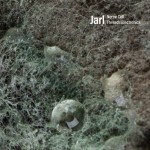
The mastering by Peter Andersson enhances this quality. Every layer feels carefully positioned, allowing dense analog textures to breathe without sacrificing their weight. The result is immersive but never overwhelming, detailed without becoming fussy. Meanwhile, the artwork by Karolina Urbaniak complements the album's conceptual framework, suggesting organic structures suspended somewhere between biology and abstraction.
There is an intriguing paradox at the heart of "Nerve Cell Threads Electronics". It is deeply rooted in the language of physiology, yet its emotional effect is surprisingly spiritual. Listening to these evolving patterns, one becomes aware not merely of neural activity but of consciousness itself: the strange phenomenon that arises from countless electrical exchanges and somehow produces memory, imagination, longing, and the persistent belief that buying another synthesizer will finally solve everything.
Perhaps that is why the album resonates beyond its conceptual premise. Jarl is not simply illustrating neurological processes. He is using them as metaphors for transformation. Sounds connect, separate, trigger reactions, and evolve into new forms, much like thoughts themselves. The listener becomes part of that circuit, following pathways whose destination remains uncertain but compelling.
In the end, "Nerve Cell Threads Electronics" feels less like a collection of compositions than a prolonged encounter with a living system. Darker than its predecessors yet equally rich in detail, it demonstrates that Erik Jarl remains one of the more distinctive voices in contemporary electronic music. Few artists can make sixty minutes of slowly shifting analog currents feel simultaneously scientific, mysterious, and quietly moving. Fewer still can make the firing of imaginary neurons sound this beautiful.
With "Nerve Cell Threads Electronics", he returns once again to the nervous system, effectively creating an unofficial fourth chapter to that ongoing investigation. The title sounds like something discovered in a laboratory notebook left unattended after midnight, and the music follows suit: part experiment, part hallucination, part patient observation of invisible processes unfolding beneath consciousness.
The album consists of four extended pieces, each titled simply "Electrical Impulse", as if individual chapters of a single transmission. Together they occupy nearly an hour, unfolding with the kind of patience that has become increasingly rare in a culture where attention spans are measured in notifications per minute. Jarl appears unconcerned by such matters. His music advances at the speed of thought itself: not the rapid-fire chatter of everyday cognition, but the deeper currents moving beneath it.
From the opening moments of "Electrical Impulse 1", thick analog tones begin their slow migration across the stereo field. Sequences emerge, mutate, dissolve, and reappear in altered forms. Nothing is static, yet nothing feels hurried. The music resembles a living organism adjusting itself molecule by molecule, allowing subtle transformations to become the primary narrative.
The longer central pieces reveal the album's greatest strength. "Electrical Impulse 2" and "Electrical Impulse 4" function almost like neurological voyages, propelled by sequencer patterns that repeatedly threaten to become hypnotic before drifting into darker territory. Percussive elements appear not as conventional rhythm but as signals travelling through a network, firing intermittently and triggering new developments. One can imagine synapses communicating through vintage synthesizers, which is admittedly not how neuroscience works, but it would make conferences considerably more interesting.
What distinguishes this release from some of Jarl's earlier explorations is its increased sense of shadow. The melodies remain present, but they are partially obscured, like distant lights viewed through fog. The psychedelic dimension has not disappeared; rather, it has matured. Instead of bright cosmic excursions, the listener encounters something more subterranean, a descent into hidden circuitry where beauty and unease coexist comfortably.
The mastering by Peter Andersson enhances this quality. Every layer feels carefully positioned, allowing dense analog textures to breathe without sacrificing their weight. The result is immersive but never overwhelming, detailed without becoming fussy. Meanwhile, the artwork by Karolina Urbaniak complements the album's conceptual framework, suggesting organic structures suspended somewhere between biology and abstraction.
There is an intriguing paradox at the heart of "Nerve Cell Threads Electronics". It is deeply rooted in the language of physiology, yet its emotional effect is surprisingly spiritual. Listening to these evolving patterns, one becomes aware not merely of neural activity but of consciousness itself: the strange phenomenon that arises from countless electrical exchanges and somehow produces memory, imagination, longing, and the persistent belief that buying another synthesizer will finally solve everything.
Perhaps that is why the album resonates beyond its conceptual premise. Jarl is not simply illustrating neurological processes. He is using them as metaphors for transformation. Sounds connect, separate, trigger reactions, and evolve into new forms, much like thoughts themselves. The listener becomes part of that circuit, following pathways whose destination remains uncertain but compelling.
In the end, "Nerve Cell Threads Electronics" feels less like a collection of compositions than a prolonged encounter with a living system. Darker than its predecessors yet equally rich in detail, it demonstrates that Erik Jarl remains one of the more distinctive voices in contemporary electronic music. Few artists can make sixty minutes of slowly shifting analog currents feel simultaneously scientific, mysterious, and quietly moving. Fewer still can make the firing of imaginary neurons sound this beautiful.